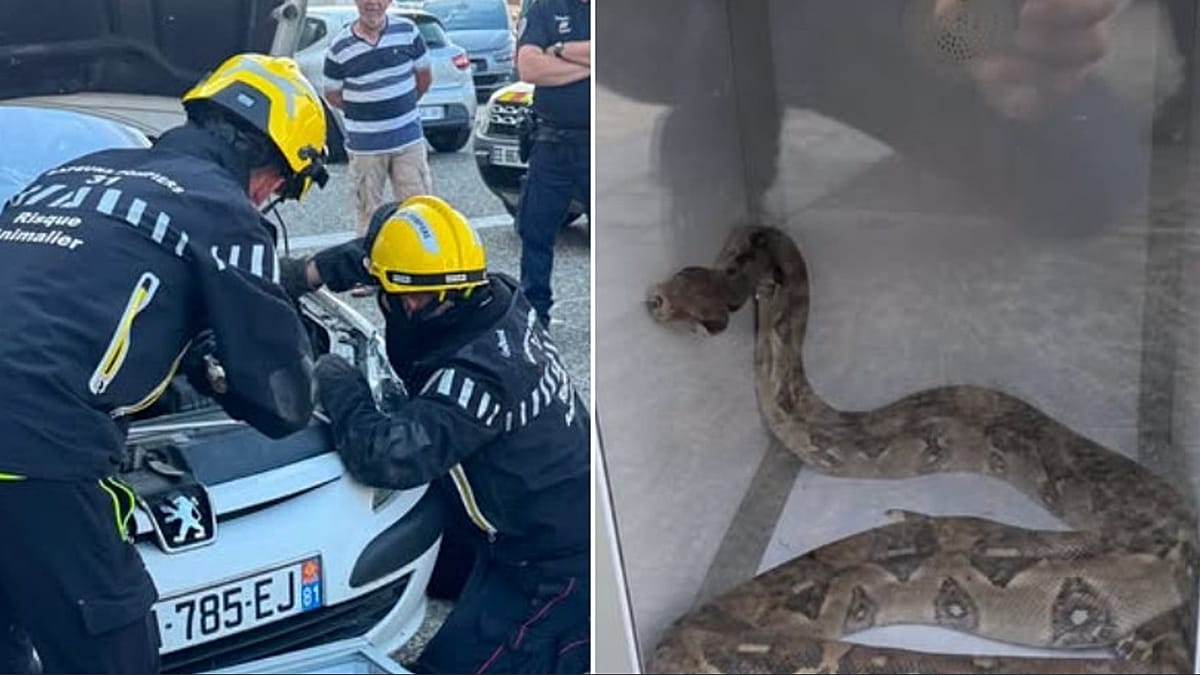
A routine battery change turned into an unexpected wildlife encounter for a motorist in Colomiers, a suburb of Toulouse in southern France. When the driver opened the bonnet of his car, which had been idle for a month, he found a 1.5-metre boa constrictor coiled among the engine components.
The discovery was reported by the Haute-Garonne fire brigade on its Facebook page. Five firefighters, including two from the unit specialised in animal rescues (RAN), carefully extracted the snake from the engine compartment and placed it in a glass container. The operation was filmed and shared on social media in an attempt to trace the animal's origin.
The boa was subsequently handed over to a local veterinary school. Authorities are investigating where the snake came from, as boa constrictors are not native to Europe. They are typically found in South America, ranging from Colombia to Argentina, and can grow to over three metres in length.
Why a boa in France?
Boa constrictors thrive in warm environments, and France has experienced successive heatwaves in recent years. These conditions may have allowed escaped exotic snakes to survive in the wild, increasing the likelihood of such encounters. Rescue services emphasise that keeping snakes in France is subject to strict regulations, which owners must follow to prevent escapes and ensure public safety.
Just days after the car bonnet incident, animal experts from the Toulouse fire brigade were called to Montesquieu-Volvestre, where another boa, this time one metre long, had escaped from a vivarium. The repeated incidents highlight the challenges posed by exotic pets in urban and suburban settings.
While boa constrictors are not venomous and generally pose little threat to adult humans, they can deliver a painful bite. Their name derives from their hunting method: they kill prey by coiling around it and constricting until the animal suffocates. Their diet consists mainly of small animals such as lizards and rodents, though they may occasionally take birds.
In a rare and dramatic case a few years ago, an American woman had to call emergency services after her pet boa latched onto her face. Such incidents, though uncommon, underscore the potential dangers of keeping large constrictor snakes as pets.
Boa constrictors are protected under the Washington CITES agreement, which regulates international trade in endangered species. The European Union has additional legal provisions governing the purchase, keeping, and breeding of these snakes. Owners must obtain proper documentation and ensure their animals are housed securely.
The incident in Colomiers serves as a reminder of the responsibilities that come with exotic pet ownership. As climate change makes European summers warmer, the survival of escaped tropical species may become more common, prompting calls for stricter enforcement of existing regulations.