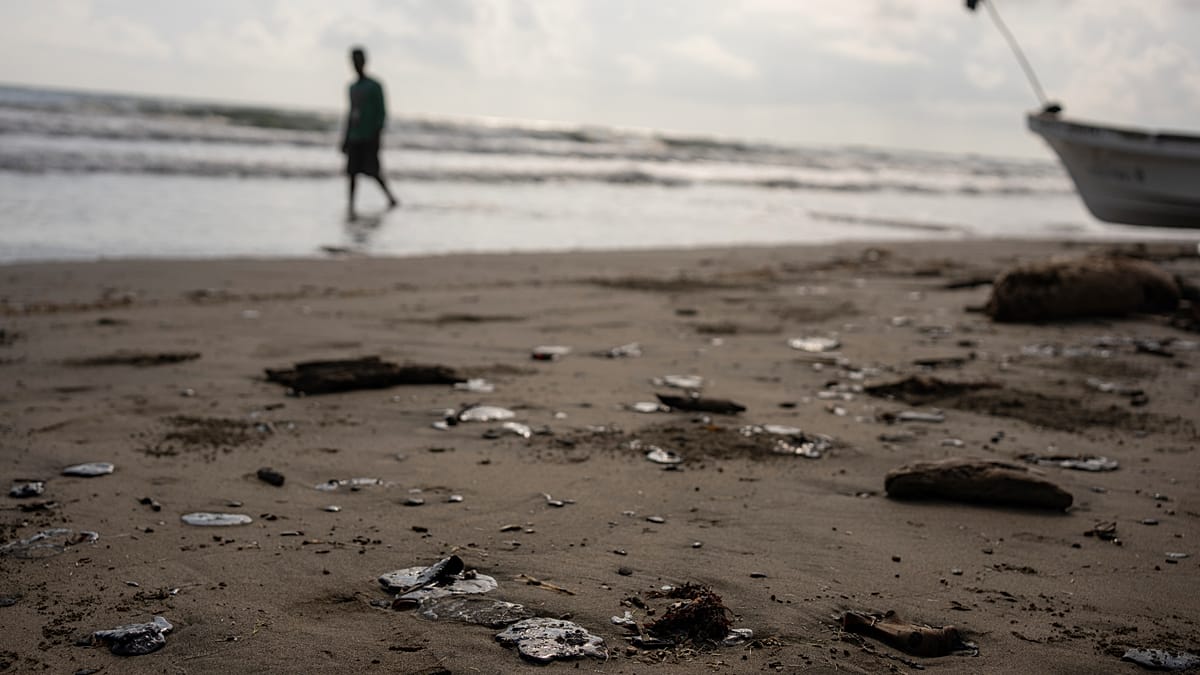
In a novel approach to marine pollution, a Brazilian NGO is using human hair to create floating barriers that absorb oil and plastics from the sea. The initiative, led by the organisation Fiotrar, has been deployed in Guanabara Bay near Rio de Janeiro, where decades of heavy maritime traffic have left the waters heavily contaminated.
The technology is not new—similar systems have been tested in Chile and the United States—but its application in Brazil marks a significant expansion. Mariana Robrahn, founder of Fiotrar, adapted the concept after seeing its potential to address local pollution. The barriers, which resemble large cylinders packed with hair, are attached to existing floating rubbish containment booms. Ana Beatriz Gonçalves, an environmental engineer responsible for weekly maintenance, explains: “These filters are fixed to the orange floating barrier that retains rubbish, and we use it as a support for Fiotrar's barrier.”
The hair-filled “eco blankets” can remain in the water for up to four months, capturing oil, biodiesel, and other contaminants from illegal discharges and vessel operations, according to chemist Caroline Carvalho. The project draws on an almost inexhaustible resource: hair clippings donated by around a dozen local salons, which would otherwise be discarded. Animal fur can also be used, adding to the versatility of the approach.
A local solution with global implications
Guanabara Bay was chosen as a test site because of its chronic pollution problems. Local fisherman Sérgio Carvalho described the impact on his livelihood: “When we go out to fish with nets, we come across many oil spills that harm our work. The oil stays on the surface but affects everything down to about a metre and a half in depth. The fish disappear.” The hope is that these barriers will help restore ecosystems and reduce pollution, benefiting both marine life and the fishing community.
Robrahn is no stranger to using hair for social good. In 2013, she launched “Cabelegria,” a project that makes wigs for cancer patients from donated hair. The new initiative extends that ethos to environmental protection, offering a low-cost, sustainable tool that could be replicated in other coastal regions.
While the project is based in Brazil, its implications resonate far beyond. As European nations grapple with their own marine pollution challenges—from the Baltic oil discovery near the Polish-German border to the broader debate on plastic waste—this simple yet effective technology could inspire similar efforts across the continent. The barriers are cheap to produce, rely on abundant waste material, and require minimal maintenance, making them an attractive option for municipalities and environmental groups.
Moreover, the project highlights the growing trend of circular economy solutions, where waste is repurposed to solve environmental problems. In Europe, where the debates over sustainability and resource management are intensifying, such innovations are increasingly relevant. The success of Fiotrar's initiative could encourage European ports and coastal towns to adopt similar measures, particularly in areas affected by oil spills or chronic shipping pollution.
As the Portuguese saying goes: “At first it feels strange, then it gets under your skin.” The same could be said for the idea of using human hair to clean the oceans—an unconventional solution that may prove to be a lasting one.