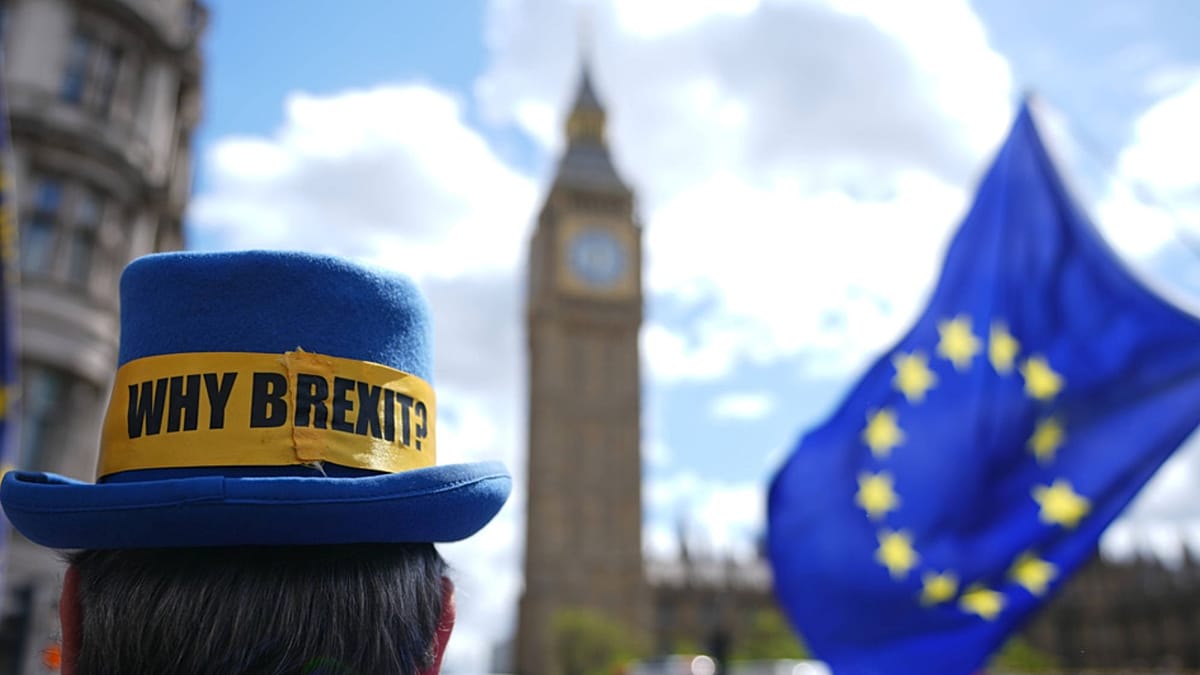
It has been a decade since 23 June 2016, when 52% of British voters chose to leave the European Union. The decision triggered years of fraught negotiations, political upheaval in Westminster, and ultimately the UK's formal departure from the bloc on 31 January 2020. As the anniversary passes, the competing narratives from the campaign—promises of economic revival and sovereign control versus warnings of decline and isolation—remain sharply contested.
Polls now show that a majority of Britons consider Brexit a failure, yet the arguments over its true impact persist. Data reveals a nation still divided over its European future. Here, we revisit the central claims made by both sides and measure them against the evidence.
Economic Damage: The Remain Warning That Came True
The Remain camp, led by figures such as then-Chancellor George Osborne, warned that leaving the EU would deliver an immediate and severe shock to the economy. Osborne predicted a recession, 500,000 job losses, a 3.6% contraction in GDP, lower real wages, higher inflation, a weaker pound, and rising public borrowing.
A decade later, the consensus among economists and official bodies is that these forecasts were broadly correct—though the damage has been gradual rather than sudden. The UK's Office for Budget Responsibility (OBR) estimates that productivity is 4% lower than it would have been, and that long-run trade with the EU will be 15% lower. New trade deals with non-EU countries have not compensated for this loss.
Mark English, policy advisor at the European Movement UK, told European Pulse: “There's no longer any question: Brexit has definitely harmed the UK economy, and it's done so very badly. Core estimates range from the UK being 4% poorer to 8% poorer than it otherwise would be.”
Jonathan Portes, professor of economics and public policy at King's College London, offered a slightly more cautious assessment: “The consensus among economists was that Brexit would harm the UK economy, and that has proved to be correct. Estimates range up to 8% of GDP, though my personal view is that 3% to 5% is more plausible.”
Experts note that the UK has secured a free trade agreement with India ahead of the EU, but the economic impact has been marginal. The COVID-19 pandemic and Russia's war in Ukraine have complicated the picture, but researchers agree that the underlying damage from Brexit is clear. Britain's economic reckoning and political turmoil continue to shape the debate.
Immigration: A Promise Broken by Numbers
Immigration was a central battleground in 2016. Leave campaigners Boris Johnson and Michael Gove argued that EU membership made it impossible to reduce net migration to the “tens of thousands” as successive governments had promised. Leaving, they said, would restore full border control.
In practice, EU net migration has indeed fallen sharply—it has been negative since 2022, with more EU citizens leaving than arriving. But non-EU immigration surged, pushing total net migration to a record 944,000 in the year ending March 2023. By 2025, that figure had dropped to 171,000, closer to pre-referendum levels but still far above the “tens of thousands” target.
The Migration Observatory at the University of Oxford notes that the composition of migration has changed dramatically: EU citizens, who once made up the majority of arrivals, now account for a small share. The overall numbers, however, have not fallen as Leave campaigners promised.
As the divorce that still defines Britain's politics and economy enters its second decade, the immigration debate remains unresolved. The UK now operates a points-based system similar to Australia's, but the political pressure to reduce numbers has not abated.
Other campaign claims—such as the promise of a swift trade deal with the United States, or the assertion that leaving the EU would free up £350 million per week for the National Health Service—have not materialised. The US-UK trade deal remains unsigned, and the NHS funding pledge was abandoned shortly after the referendum.
Ten years on, the Brexit experiment has delivered mixed results at best. The economy is smaller than it would have been, immigration patterns have shifted but not fallen, and public opinion has soured. Yet the political divisions that the referendum exposed remain as deep as ever.