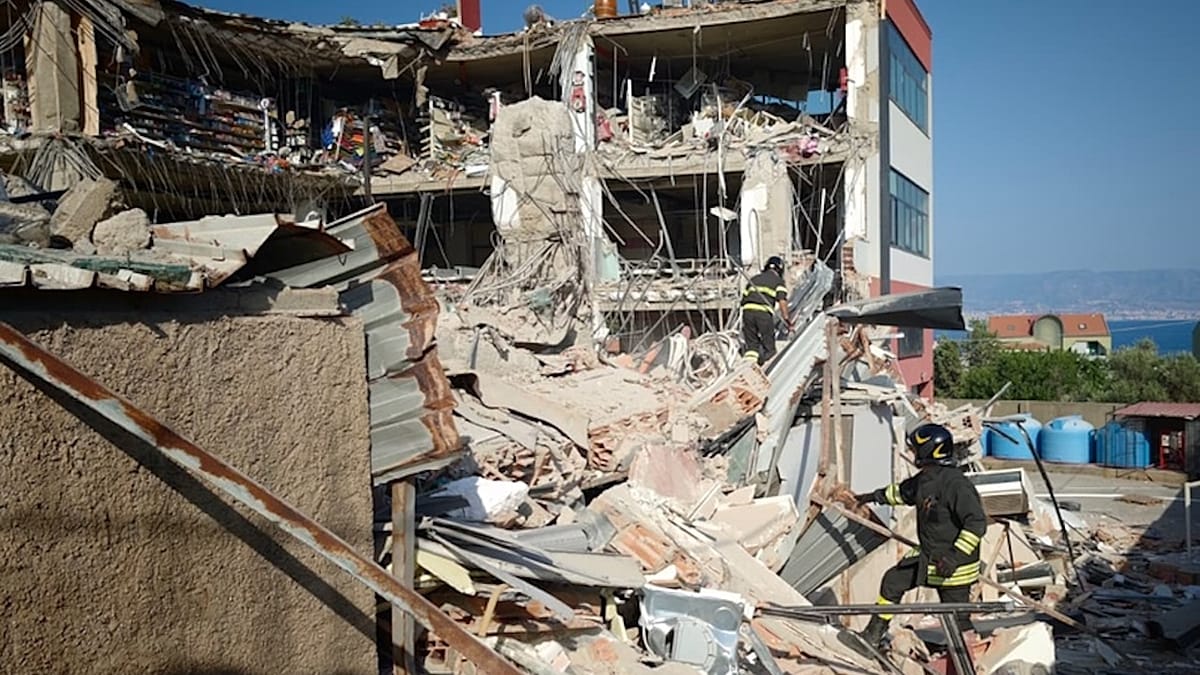
Rescue teams in the Sicilian city of Messina are working against the clock after a two-storey building collapsed on Thursday, killing at least one person and leaving five others unaccounted for. The structure, which housed a supermarket, a shop, and four apartments, gave way in the early afternoon, trapping people beneath the debris.
The body recovered from the rubble is believed to be that of Carmelo Leone, a local businessman. Firefighters found him during the initial search and transferred his remains to the mortuary at Messina's university hospital. The identification has not been formally confirmed, but relatives have been informed.
Search for the missing
According to the Italian news agency ANSA, the missing include Leone's two sisters, Sara and Rosa, his husband Santino Magazzù, and a Sri Lankan national who was with them, Lhairu Warnakulasuriya. The fifth person is Alessandra Frazzica, a shop assistant who was working on the first floor at the time of the collapse.
Firefighters are using mobile phone signals to try to locate the trapped individuals, as the first hours after a collapse are critical for survival. Relatives reported being unable to contact family members who were inside the building, prompting the initial rescue operation.
The cause of the collapse is still under investigation. Messina's mayor has ruled out an initial theory that a gas explosion triggered the disaster. Local media reported that the building shook before it fell, suggesting a possible structural failure. The building, which dated back several decades, may have suffered from neglect or previous damage, though officials have not yet confirmed any specific cause.
Rescue efforts complicated by gas risks
The rescue operation is being complicated by the danger of flammable gases trapped under the rubble. Authorities fear that these gases could ignite if exposed to oxygen, potentially causing further collapses or endangering the rescue teams. As a precaution, firefighters are working carefully, using specialized equipment to detect gas leaks and stabilize the debris.
The collapse has shocked the local community in Messina, a city that has faced economic challenges in recent years. The building was a mixed-use structure, common in Italian urban centers, where commercial activity on the ground floor coexists with residential units above. Such buildings are often older and may not meet modern seismic safety standards, a concern in a region prone to earthquakes.
Italy has a history of building collapses, often attributed to aging infrastructure and insufficient maintenance. In 2023, a similar incident in Naples raised questions about building safety across the country. The Messina collapse is likely to reignite debates about the need for stricter building codes and more rigorous inspections, especially in southern Italy.
As the search continues, the families of the missing are waiting anxiously at the scene, hoping for a miracle. The local authorities have set up a support center for relatives and are providing regular updates. The mayor has declared a day of mourning once the rescue operation concludes.
This tragedy comes as Italy prepares for the summer tourist season, with millions of visitors expected to travel to the country. While the collapse is unlikely to affect tourism directly, it highlights the need for investment in public safety and infrastructure, a topic that has been a point of contention between Rome and the EU.
The European Union has repeatedly urged member states to prioritize building maintenance and urban renewal, offering funds for such projects. Italy, like many other European countries, faces the challenge of balancing budget constraints with the need to modernize aging buildings. The Messina collapse may serve as a stark reminder of the consequences of neglect.
For now, the focus remains on the rescue effort. Firefighters are working in shifts, using heavy machinery to clear debris while carefully listening for any signs of life. The risk of explosion means that every move must be calculated, but the teams are determined to reach the missing as quickly as possible.
This incident is a somber reminder of the fragility of urban life, even in a modern European nation. As the hours pass, the hope of finding survivors diminishes, but the rescuers continue their painstaking work, driven by the possibility of a miracle.