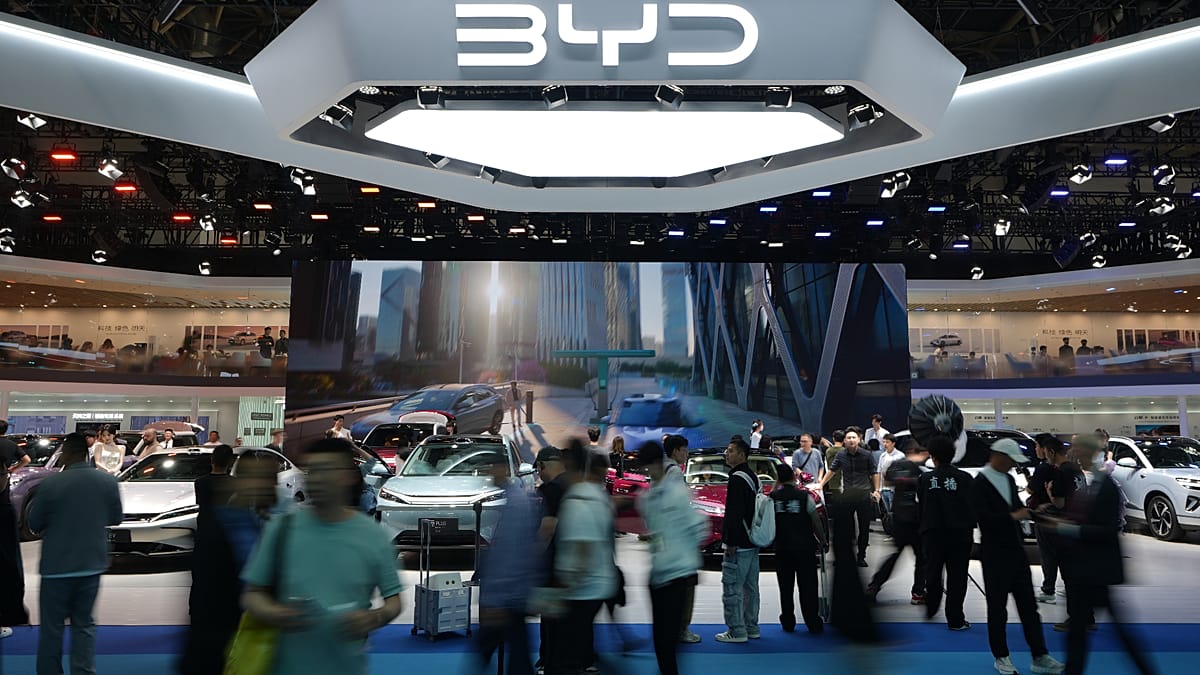
At the opening of the Paris Motor Show, BYD's vice-president Stella Li made clear that France is a serious candidate for the Chinese electric vehicle maker's next European factory. "France is on the shortlist," she said, adding that the company is "looking very closely" at the possibility of setting up a plant in the country.
Li's comments come as BYD prepares to open its first European plant in Hungary by January 2027. The company has already committed to building a second and third facility on the continent, and France is among the frontrunners. "We will try to open a second and a third plant in Europe," she told reporters.
A local identity in the making
Li's ambitions for France go beyond manufacturing. "I have simple objectives," she said. "I want people in France to think that BYD is a French company. I want them to like it." This sentiment reflects a broader strategy: BYD intends "to become a local company in every region of the world," as Li put it.
The company's push into Europe comes at a delicate moment for EU-China trade relations. On Friday, Beijing agreed to "moderate" the flow of hybrid vehicles bound for the bloc, a move that may ease tensions over Chinese EV subsidies and market access. The agreement could also smooth the path for BYD's expansion plans.
BYD is not starting from scratch in France. The manufacturer has built a network of partnerships with established French automotive groups, including Bymycar, Emil Frey, and Bodemer, which handle sales and after-sales service in major cities. As of 1 January 2026, BYD operated 90 sites across the country, covering roughly 60% of the territory. The brand continues to grow by relying on local players with deep roots in the market.
The prospect of a BYD factory in France would mark a significant step for both the company and the country's industrial landscape. For BYD, it would anchor its presence in one of Europe's largest car markets and help it navigate potential tariffs and regulatory hurdles. For France, it could bring jobs and investment to a sector undergoing rapid transformation.
Yet the move is not without challenges. French automakers and unions have watched the rise of Chinese EV brands with a mix of caution and competition. The Paris Motor Show has highlighted how Chinese brands are challenging Europe's traditional automakers, and BYD's local production plans could intensify that pressure.
Li's remarks also come amid broader economic and social tensions in France. The country is grappling with twin crises of student protests and debt turmoil, which could complicate any large industrial project. Still, BYD appears undeterred, viewing France as a key part of its European strategy.
For now, the company is focused on completing its Hungarian plant, which will serve as a gateway to the EU market. But Li's comments suggest that France could soon join Hungary as a manufacturing hub, further integrating BYD into the European economy.
As BYD expands its dealer network and considers new factories, its goal is clear: to be seen not as a Chinese outsider, but as a local player. Whether French consumers and policymakers embrace that vision remains to be seen, but the company is betting that proximity and investment will win them over.



