Canada has formally entered negotiations with the Swedish defence firm Saab to procure a new fleet of Arctic surveillance aircraft, Prime Minister Mark Carney announced on Wednesday. The decision sidelines two American contenders — the Aeris X by L3Harris and the E-7 Wedgetail by Boeing — and signals a deliberate shift in Ottawa’s procurement strategy away from its southern neighbour.
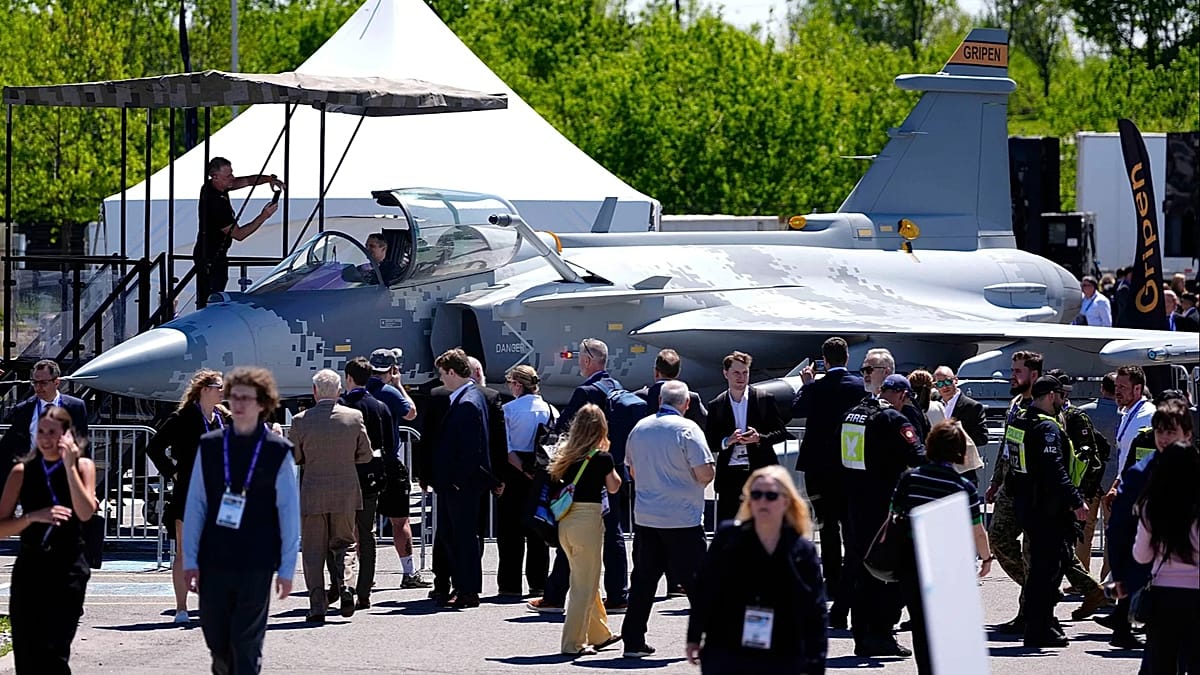
Speaking at the CANSEC defence industry trade show in Ottawa, Carney framed the choice as both a security imperative and an economic opportunity. “The GlobalEye procurement will help us secure our North and build our economy at once,” he said, referring to Saab’s airborne early warning and control system. Saab welcomed the announcement, emphasising plans “to transfer knowledge and technology to Canada that will grow the domestic defence industry.”
A Strategic Pivot Away from Washington
The decision comes amid a broader reassessment of Canada’s relationship with the United States under President Donald Trump. Carney has repeatedly stated that the historically close bilateral ties have been “permanently altered” and that Ottawa must diversify its economic and security partnerships. The Arctic, where geopolitical competition with Russia is intensifying, has been designated a strategic priority for Canada’s defence posture.
Choosing a European partner over US firms may further strain relations with the Trump administration, which has already expressed frustration over Canada’s decision to reconsider a multibillion-dollar deal for a fleet of US-made F-35 fighter jets. Earlier this month, US Undersecretary of Defence Elbridge Colby announced the suspension of cooperation on an 86-year-old joint defence advisory board with Canada, citing the stalled F-35 deal as an aggravating factor.
This shift mirrors a broader trend across Europe and its allies. A recent study revealed that German trust in the US as a NATO ally has plummeted, while NATO ministers confronted US security withdrawal at a summit in Sweden. The Sweden summit underscored growing unease among European capitals about Washington’s reliability as a security partner.
European Defence Cooperation Gains Momentum
Canada’s choice of Saab is the latest example of European defence firms winning contracts from non-EU partners. The deal also aligns with efforts by EU member states to bolster their own defence industrial base. The EU is racing to finalise a defence omnibus package, though divisions over eligibility criteria persist. Meanwhile, the UK and Poland signed a major defence treaty as London seeks closer ties with the EU on security matters.
For Carney, the Saab deal addresses two priorities simultaneously: upgrading Canada’s ability to monitor and defend its Arctic territory, and reducing the country’s economic integration with the US. “We need to rapidly improve our defence posture in the region,” he said, warning that the Arctic is becoming a theatre of heightened geopolitical competition, particularly with Russia.
The GlobalEye system, based on Saab’s Bombardier Global 6000/6500 business jet platform, offers advanced radar and sensor capabilities for surveillance and command-and-control missions. Saab has committed to establishing a technology transfer programme in Canada, which Carney said would create skilled jobs and strengthen the domestic defence supply chain.
Observers note that the decision also reflects a broader recalibration of Canada’s foreign policy. Ottawa has been exploring alternative energy partnerships, such as the LNG deal signed with Germany to diversify energy sources. The Saab procurement is another step in that direction, signalling that Canada is willing to look beyond North America for strategic partnerships.
Carney insisted that bilateral ties with the US will not return to a pre-Trump normal. “The relationship has been permanently altered,” he said. “We must adapt.”