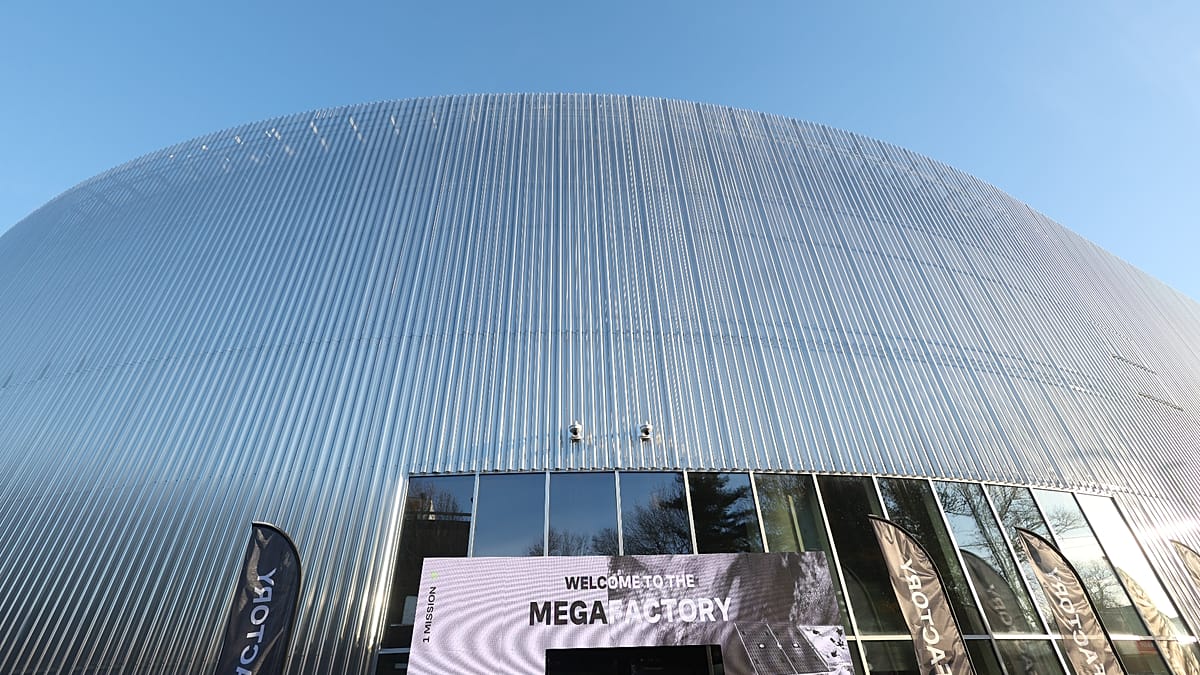
Belgium's King Philippe officially opened what will become the European Union's largest satellite manufacturing facility on Tuesday, marking a significant step in the continent's efforts to secure its own space infrastructure. The plant, located in the southern city of Charleroi, is operated by the Belgian firm Aerospacelab and is central to the EU's Iris2 project, a constellation designed to compete with Elon Musk's Starlink.
Speaking at the inauguration, Aerospacelab's CEO Benoit Deper highlighted the company's rapid ascent: "We've grown even faster than our own ambitions." He noted that the firm has evolved from a "tiny startup" in 2018 into a major player in Europe's "space sovereignty." The new "megafactory" has an annual production capacity of roughly 500 satellites, a scale unprecedented in the region.
A strategic asset for European autonomy
The Charleroi site, spanning approximately 20,000 square metres, is a striking contrast to the city's industrial past, once known for its abandoned factories and budget airport. The oval-shaped facility is currently idle, but staff will move in January, with production expected to commence by the end of 2028. This timeline aligns with the EU's broader push to reduce reliance on foreign space capabilities, a concern that has gained urgency amid geopolitical tensions.
In September, Aerospacelab and its partners secured a €2.4 billion contract to manufacture 264 of the 348 satellites planned for the Iris2 constellation. The project is a cornerstone of the EU's strategy to provide secure communications for governmental and commercial users, and to challenge the dominance of Starlink in low Earth orbit. The initiative also complements other European efforts, such as the NATO chief's warnings about hybrid threats, which underscore the need for resilient and sovereign infrastructure.
The factory's location in Wallonia, Belgium's French-speaking region, is a deliberate choice, leveraging local engineering talent and revitalising an area that has suffered from deindustrialisation. Aerospacelab's growth mirrors a broader trend of European investment in space technology, with countries like France and Germany also expanding their capabilities. The project is expected to create hundreds of high-skilled jobs, a boost for a region that has struggled with unemployment.
While the Iris2 constellation is still years from launch, the Charleroi factory represents a tangible commitment to European strategic autonomy. As Deper put it, the facility is not just about building satellites; it's about building Europe's future in space. The coming months will be crucial as the company transitions from inauguration to full-scale production, a process that will test its ability to deliver on ambitious timelines.
For now, the empty factory floor is a symbol of potential, awaiting the machinery and workforce that will bring it to life. The EU's investment in Iris2, and in facilities like this one, signals a determination to compete globally in a sector that is increasingly vital to security, communication, and economic growth. As Europe looks to assert its place in the new space race, Charleroi may well become a name to watch.



