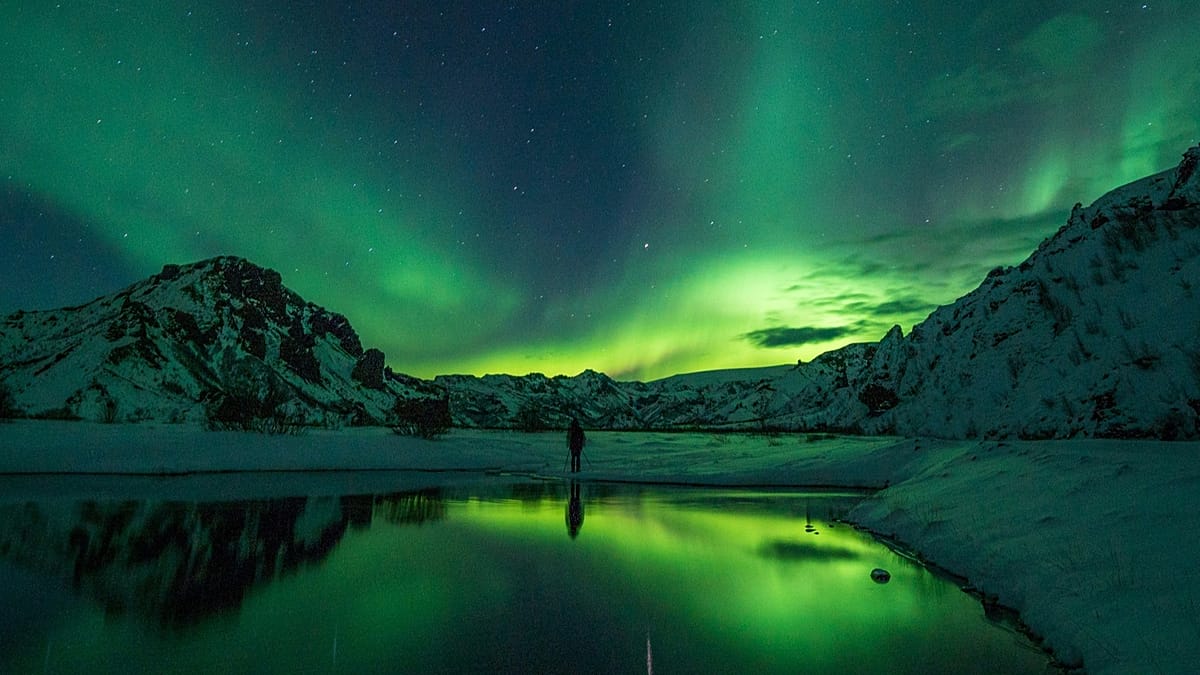
The aurora borealis, or northern lights, has long been a dream for many travellers. The phenomenon occurs when charged particles from the Sun interact with Earth's magnetic field and atmosphere, painting the night sky in ribbons of green, red, blue and purple. While the spectacle can be seen in both polar regions, the northern hemisphere offers the most intense displays, particularly within the so-called Aurora Belt that stretches across Iceland, Finland, Norway, Sweden, and parts of Canada.
For those planning ahead, the 2026 and 2027 seasons promise a range of unique ways to witness the lights. From luxury hotels with private observatories to a rare flight that climbs above the clouds, here are some of the most compelling options.
Where and when to see the northern lights
The best viewing months are generally from September to March, when nights are longest and skies darkest. However, the aurora is an elusive phenomenon, and sightings are never guaranteed. Clear, dark skies away from light pollution are essential, which is why remote locations in the Arctic and sub-Arctic are preferred.
Iceland, Finnish Lapland, and Norway's coastline are among the most accessible destinations, while the Yukon in Canada offers a more remote, wilderness experience. For those willing to travel further, Alaska and northern Canada also sit within the Aurora Belt.
Hotels designed for aurora viewing
Several properties have been built with the aurora in mind. Hotel Rangá in southern Iceland operates its own on-site observatory and turns off external lights to create optimal viewing conditions. Guests can also soak in geothermal hot tubs while scanning the sky.
In Finnish Lapland, the Kakslauttanen Arctic Resort is famous for its glass igloos, which allow guests to lie in bed and watch the stars and lights overhead. Similarly, Aurora Village Ivalo offers igloo cabins with sky views, combining comfort with the chance of a midnight spectacle.
Riding the Santa Claus Express
For a more adventurous approach, the Santa Claus Express overnight sleeper train runs from Helsinki and Turku to Rovaniemi, deep inside the Arctic Circle. The journey passes through frozen lakes and snow-covered forests, and with a bit of luck, passengers may catch the aurora from the carriage windows. Autumn and late winter are the best times for this route.
Horse riding on Iceland's Northern Lights Trail
Saddle Travel, a specialist in horse-riding holidays, offers a four-day trip along Iceland's Northern Lights Trail. For around £1,179 (€1,375) per person, riders spend about four hours a day for three days on Icelandic horses, traversing volcanic slopes before relaxing in thermal pools and outdoor hot tubs. It is a blend of adventure and comfort, set against a winter wonderland.
A flight above the clouds in Yukon
One of the rarest aurora experiences is the Aurora360 flight, which returns to Canada's Yukon in February 2027. Operated by Air North, this private charter takes passengers to 30,000 feet, above the cloud cover that often obscures ground-level views. Every passenger is guaranteed a window seat, offering an unobstructed perspective of the lights.
Canada As You Like It packages this into a seven-night holiday, including two nights in Vancouver, four nights at the Northern Lights Resort & Spa, one night in Whitehorse, and the Aurora360 flight itself. Prices start at £7,735 (€9,021) per person, including international flights.
Reykjavík and the Golden Circle
For a shorter break, Newmarket Holidays runs a five-day trip based in Reykjavík. Guests explore the Icelandic capital before heading out of the city to hunt for the aurora. Optional extras include a dip in the Blue Lagoon and a Golden Circle tour, which takes in Þingvellir, the historic site of Iceland's ancient assemblies. The trip runs from October 2026 to March 2028, with prices from £1,056 (€1,231) per person, including return flights from several UK airports.
Norway's northern lights guarantee
Norwegian cruise operator Havila Voyages is so confident in its winter sailings that it offers a unique promise: if passengers on a 12-day round voyage between 1 October and 31 March do not see the northern lights, the next voyage is free. The company says that if nature "plays shy" and the lights do not appear, guests will receive a complimentary six- or seven-day cruise. It is a bold claim, but one that reflects the high probability of sightings along Norway's coast.
As travellers increasingly seek meaningful, once-in-a-lifetime experiences, the northern lights remain a top draw. Whether you choose a glass igloo, a sleeper train, or a flight above the clouds, the key is to plan ahead and be flexible. And with the EU's ETIAS system still delayed, now is a good time to book without extra bureaucracy.