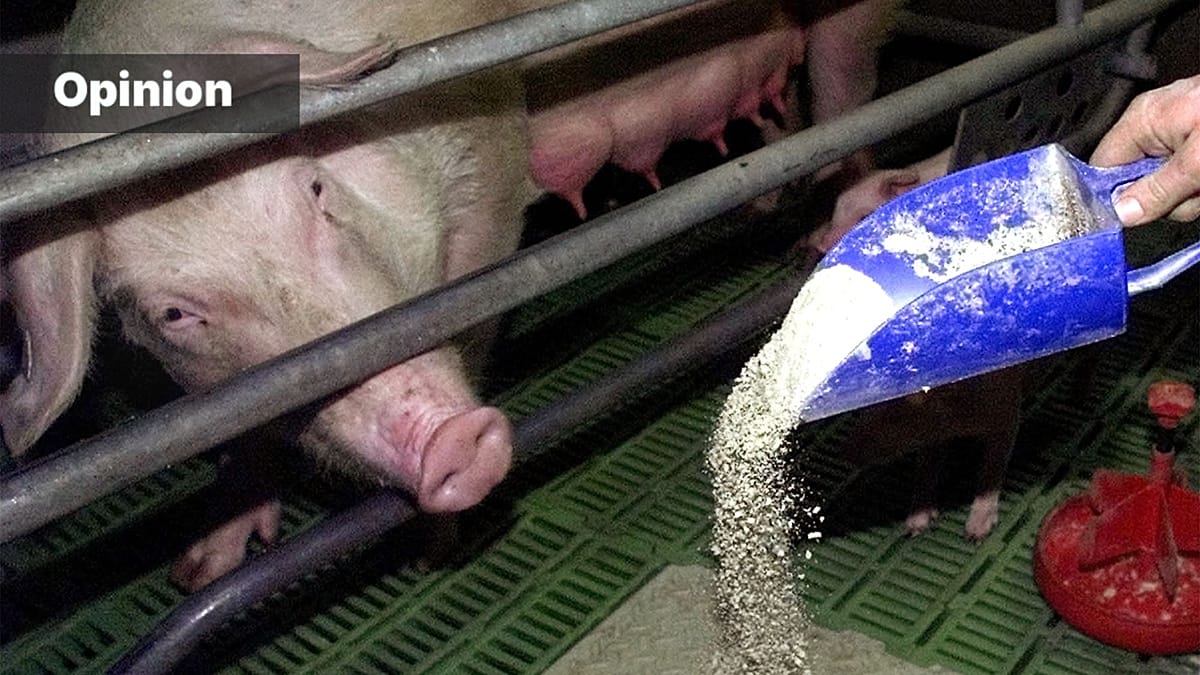
For decades, Europeans have assumed their food supply is secure. The continent produces enough calories, and its farms are among the most productive in the world. But that confidence masks a structural weakness: the EU's meat industry depends on imported high-protein feed, particularly soy and maize, for two-thirds of its requirements. When wars or extreme weather disrupt global commodity markets, the price of pork, chicken, and beef in Paris, Berlin, or Warsaw can spike overnight.
China, the world's largest meat producer, has recognised this vulnerability and is acting. In March, Beijing's National People's Congress unveiled the 15th Five-Year Plan, which for the first time identifies new proteins — including cultivated meat — as a national food security priority. The plan explicitly states that China will “include new protein sources in the national food security strategy” and promote biomanufacturing in areas such as microbial proteins. This is not a niche environmental gesture; it is a strategic pivot comparable to China's earlier bets on solar panels, batteries, and electric vehicles.
Europe's regulatory misstep
On the same rainy March day that China advanced its protein strategy, the EU took a different path. In Brussels, political representatives of all member states agreed to ban terms such as “beef,” “pork,” or “chicken” from being used to name cultivated meat products. The decision, however well-intentioned in protecting traditional livestock farmers, risks strangling a technology that could provide a reliable, home-grown source of protein whose price and availability would not yo-yo with world events.
“Leaving aside the ridiculousness of not allowing producers to call a muscle grown from a cow cell ‘beef,’ Europe’s decision demonstrates a total failure to address the critical issue of food security through protein diversification grown at home,” writes Nico Muzi in an OpEd for Euronews. The EU's industrial meat complex is structurally dependent on imported feed: soybean meals account for 17 percent of total feed protein use, and nearly all of it is imported. Domestic soya production covers only 10 percent of the bloc's usage, primarily for human consumption.
The Ukraine war and the conflict in Iran have already shown how fragile this system is. Supply chain disruptions have sent meat prices spiralling, hitting consumers across the continent. Diversifying protein sources — through precision fermentation, cultivated meat, or plant-based alternatives — could shore up food security without requiring a radical shift in diets overnight.
China treats new proteins as national security infrastructure. According to a report by global sustainability consultancy Systemiq, Beijing is applying its proven industrial strategy playbook: state-backed R&D, infrastructure investment, public procurement, and low-cost capital to accelerate domestic capability. The goal is to reduce dependence on imported feed and livestock systems. Systemiq analysts project that China's pivot could slash its soybean import dependency by roughly 25 percent by 2030 — a volume almost equal to current imports from the United States.
The EU risks creating new dependencies. If it fails to invest in new proteins now, it may find itself reliant on US and South American feed suppliers for decades to come, while China builds a self-sufficient protein industry. The bloc's recent decision to delay methane regulations, citing energy security concerns, suggests a pattern of prioritising short-term stability over long-term resilience. As eleven EU states seek delay on methane rules, the continent's agricultural strategy remains fragmented.
China's Five-Year Plans do not just transform its own economy; they reshape global markets. When Beijing backed electric vehicles in the 2011–2015 plan, adoption accelerated worldwide. Today, more than one in four cars sold globally is electric, and Chinese brands account for over half of battery electric vehicle sales. The same pattern could now play out in food. The EU's ban on meaty labels for cultivated products may protect traditional farmers in the short term, but it also signals to investors that Europe is not serious about protein diversification.
Food security is not just about calories; it is about control over supply chains. China understands that. The EU, still debating the semantics of what to call a lab-grown steak, has not yet grasped the urgency.