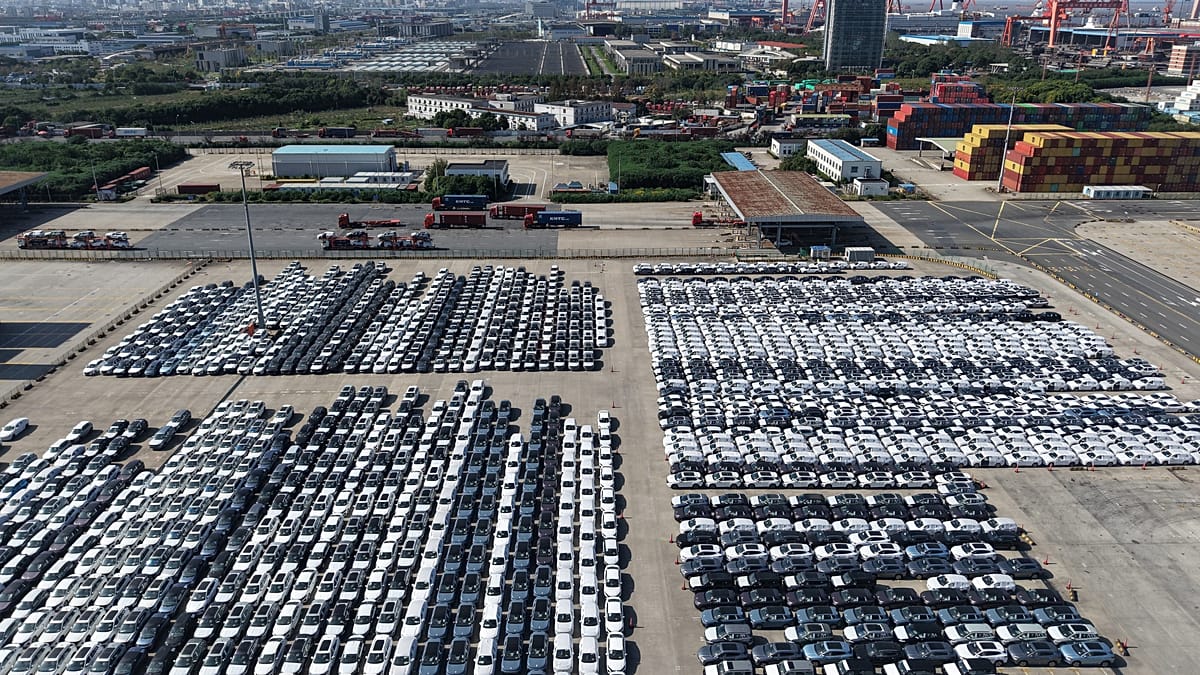
China's trade surplus has ballooned past the $1 trillion mark for the first ten months of the year, according to official data released on Tuesday. The milestone, reached earlier than last year's record-breaking pace, underscores the extent to which the world's second-largest economy is leaning on exports to sustain growth.
The surge is largely attributed to soaring global demand for artificial intelligence-related goods, including computer chips, data centre servers, and networking equipment. This boom has provided Beijing with a crucial economic lifeline as domestic activity remains weighed down by the prolonged slump in the property sector.
Record figures and their drivers
Exports jumped 35.2% year-on-year to $412.3 billion in October, while imports expanded 41.6% to $307.1 billion, according to the General Administration of Customs (GAC). These figures brought the cumulative trade surplus for January–October to a towering $1.04 trillion.
“Exporters have been the key driving force behind China's economy this year,” said Zhiwei Zhang, president and chief economist at Pinpoint Asset Management. “I expect they will continue to perform well in the foreseeable future,” he added, noting that he did not anticipate any significant shift in China's macro policy stance for the rest of the year.
China is now well on track to surpass last year's record surplus of $1.2 trillion, which was only reached in November. The acceleration has been driven by a combination of competitive pricing, technological advancement, and a global push for digital infrastructure.
Rising trade tensions with the EU and US
The export boom has, however, intensified frictions with key trading partners. The European Union, in particular, has seen its trade deficit with China swell to $310.7 billion in the first ten months, up from $241.6 billion in the same period last year. This lopsided flow has increased pressure on Brussels to shield local industries from what critics describe as unfair competition from Chinese exports.
In a bid to ease tensions, EU trade chief Maroš Šefčovič and Chinese Commerce Minister Wang Wentao met in Beijing last month, agreeing to limit exports of hybrid vehicles to Europe. The deal, while narrow, signals a willingness on both sides to manage the relationship, though broader concerns remain over subsidies, market access, and intellectual property.
Exports to the United States also surged by 32.9% in October, ahead of a high-stakes meeting between President Xi Jinping and US President Donald Trump at the Asia-Pacific Economic Cooperation (APEC) summit in Shenzhen next week. The two leaders have been navigating a fragile truce in their trade war, and the summit could also see trilateral talks involving Russian President Vladimir Putin, as reported by our coverage of the potential discussions.
Domestic challenges persist
Despite the export success, domestic consumption remains sluggish. Inflation data released on Monday showed prices still well short of the official target of around 2%, reflecting weak consumer demand. Analysts say Beijing is relying heavily on exports to achieve its official growth target of 4.5–5.0% for this year, its lowest in decades.
The reliance on exports is not without risks. Trade tensions with the EU and US could escalate, and the global demand for AI products may eventually cool. Yet for now, the export machine continues to power China's economy, even as it reshapes trade dynamics across Europe and beyond.
For European policymakers, the challenge is to balance the benefits of access to Chinese goods and technology with the need to protect domestic industries. The recent agreement on hybrid vehicles is a step, but the broader imbalance remains a contentious issue. As China's surplus grows, so does the pressure on Brussels to act, a topic that will likely dominate discussions at the next EU-China summit.