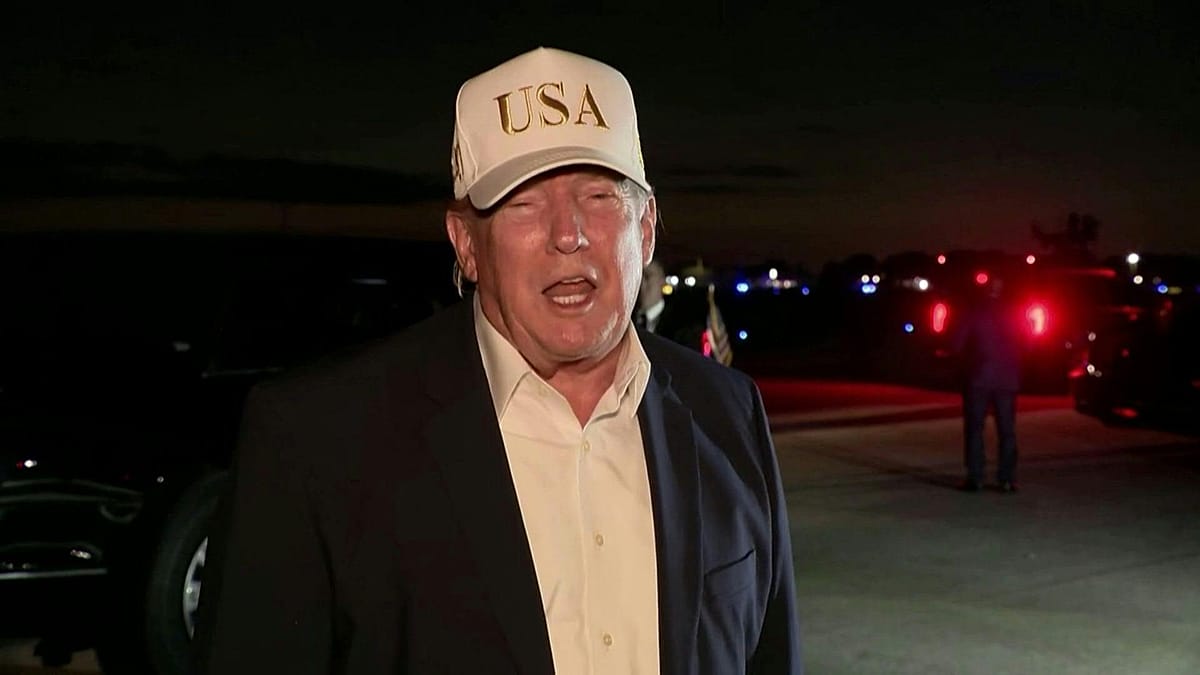
US President Donald Trump has publicly defended Nvidia chief executive Jensen Huang, calling him an “honorable guy” amid reports that Huang had an intimate relationship with a businesswoman suspected of working for Chinese intelligence. The remarks, made during a press appearance, come as the semiconductor giant faces mounting scrutiny over its leadership and its exposure to geopolitical tensions.
The allegations, first reported by American media, centre on Alice Huang (no relation to Jensen Huang), a businesswoman with ties to China who is suspected of having links to Chinese intelligence services. According to the reports, Jensen Huang and Alice Huang had a personal relationship, raising questions about potential conflicts of interest and vulnerabilities in one of the world’s most valuable technology companies. Nvidia’s board has reportedly launched an investigation into the matter, and the company’s shares have slipped as investors weigh the implications.
Trump’s defence of Huang is notable given his administration’s aggressive stance on China, particularly in the technology sector. The president’s comments suggest a willingness to shield a key American tech leader from the fallout, at least rhetorically. “He’s an honorable guy,” Trump said, without elaborating on the specifics of the allegations.
European stakes in the Nvidia affair
While the story is rooted in Washington and Silicon Valley, its ripple effects are being felt across Europe. Nvidia is a linchpin of the global artificial intelligence supply chain, and European tech firms, research institutions, and governments rely heavily on its graphics processing units (GPUs) for AI development. Any instability at the company could have significant consequences for Europe’s digital ambitions, from data centres in Frankfurt to AI startups in Paris and Stockholm.
The European Union has been working to bolster its own semiconductor industry, aiming to reduce dependence on foreign suppliers. The bloc’s €43 billion Chips Act, which seeks to double Europe’s share of global chip production by 2030, is partly a response to the kind of geopolitical vulnerability that the Nvidia case highlights. If the allegations against Huang lead to sanctions or restrictions on Nvidia’s operations, European companies could face supply disruptions and increased costs.
European investors are also watching closely. Nvidia is a major holding in many European tech funds and pension portfolios, and its stock performance has a direct impact on markets from London to Zurich. The recent dip in Nvidia shares has already contributed to volatility in the tech sector, echoing broader concerns about the sustainability of the AI boom.
Broader implications for transatlantic relations
The controversy also touches on transatlantic relations, as the US and Europe navigate a complex landscape of export controls, data flows, and technological competition. The Biden administration’s restrictions on advanced chip exports to China have already forced European companies to adapt, and any new developments in the Nvidia case could further complicate the picture. European leaders, including French President Emmanuel Macron and German Chancellor Olaf Scholz, have called for a more coordinated approach to technology policy, but the Nvidia affair underscores how quickly individual corporate scandals can become geopolitical flashpoints.
For now, the focus remains on the investigation and on Trump’s unusual intervention. The president’s defence of Huang may be aimed at reassuring markets and maintaining stability in the tech sector, but it also raises questions about the independence of corporate governance when political figures weigh in on sensitive matters. As the story develops, European observers will be watching to see whether the allegations lead to concrete actions—such as sanctions or changes in Nvidia’s leadership—and what that might mean for the continent’s tech ecosystem.
In the meantime, European tech leaders are urging calm. “We need to separate unverified allegations from facts,” said a spokesperson for a major German AI research institute, speaking on condition of anonymity. “Our collaboration with Nvidia is based on technical merit, and we hope that any issues are resolved quickly and transparently.”
The Nvidia case is a reminder that the global technology industry is increasingly intertwined with national security concerns. For Europe, the challenge is to maintain its technological sovereignty while continuing to benefit from international partnerships. As the investigation unfolds, the continent’s policymakers and business leaders will be weighing those priorities carefully.