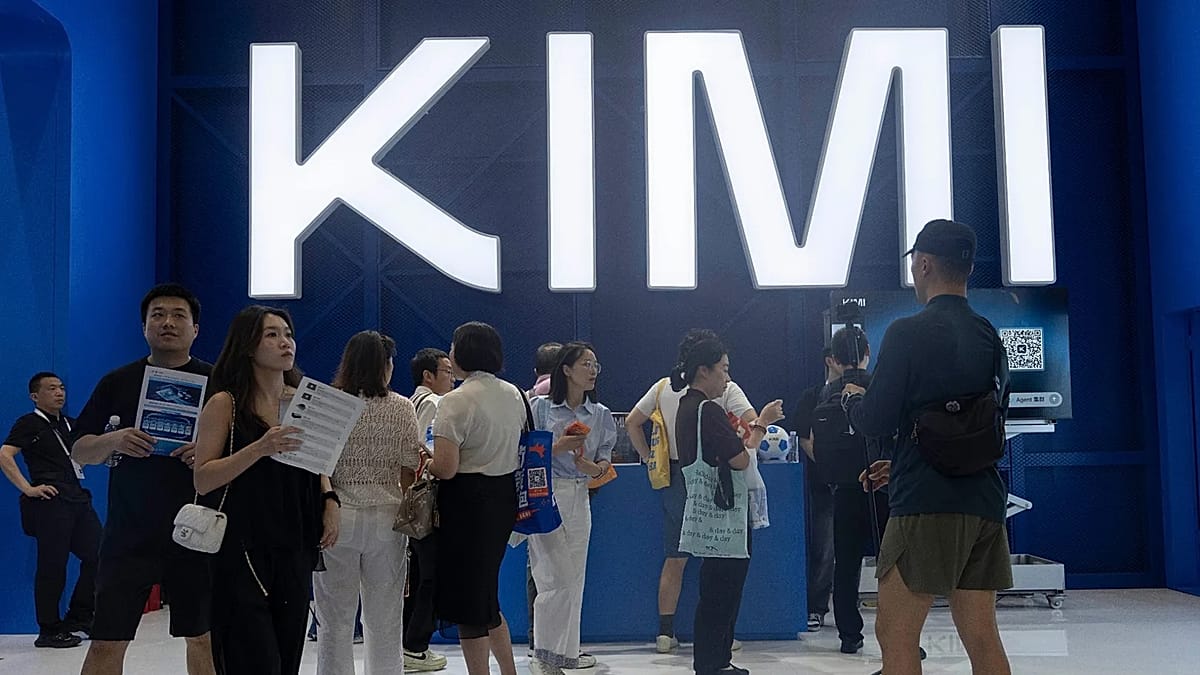
Just days after its launch, Moonshot AI has suspended new subscriptions to its Kimi K3 model, as surging demand pushed the company's computing infrastructure to its limits. The Beijing-based firm announced the pause on X late Sunday, stating that interest had "pushed close to the limits" of its systems within 48 hours. Existing users remain unaffected, but new signups will resume only gradually, "in batches," as capacity is expanded.
The move is becoming a familiar pattern in China's AI sector: labs produce headline-grabbing models, only to find themselves scrambling for server capacity. This latest episode highlights the intensifying rivalry between Chinese and US AI developers, a contest that has global implications for technology supply chains and market dynamics.
A Crowded Field of Chinese Challengers
Kimi K3 is part of a wave of low-cost, openly available Chinese models that have gained international traction in recent months. It follows DeepSeek's V4 release and the market shock caused by DeepSeek's original model in early 2025, which prompted many to view China as a serious AI rival to the US. Unlike many Western models, Chinese frontier models tend to be open-weight, allowing developers to examine and adapt the underlying system rather than accessing it only through a paid interface.
Moonshot launched Kimi K3 last week as a 2.8 trillion-parameter model, making it the largest open-weight system released to date. According to the South China Morning Post, it has outperformed rivals including GPT-5.6 Sol and Claude Fable 5 on some benchmarks, notably topping Arena's ranking for front-end coding capability after its public release.
Lian Jye Su, chief analyst at technology research firm Omdia, said new model releases typically generate a spike in interest that can strain existing infrastructure. "This does show Moonshot AI does not have sufficient compute chips to serve the current surge in demand," he said. Su added that the more likely explanation was that Moonshot underestimated how popular K3 would become, noting the model is unusually demanding in terms of compute, which makes allocating capacity both difficult and costly.
The release has weighed on shares of major US technology firms, amid concern that cheaper Chinese alternatives could squeeze the pricing power of American AI companies. This comes despite US-led export restrictions that have already limited China's access to some of the most advanced chips on the market. The situation echoes broader trends in the semiconductor industry, where demand for AI chips continues to surge, as seen in ASML's recent sales forecast upgrade.
Kimi K3 is the latest in a string of Chinese releases to draw international attention. Over the weekend, Alibaba previewed its Qwen3.8 Max model, which it said has 2.4 trillion parameters and ranks "second only to" Anthropic's Fable 5 among frontier systems — a claim made by Alibaba itself, with no independent benchmarks yet published to support it. This flurry of activity underscores the rapid pace of innovation in China's AI ecosystem, even as geopolitical tensions and export controls shape the competitive landscape.