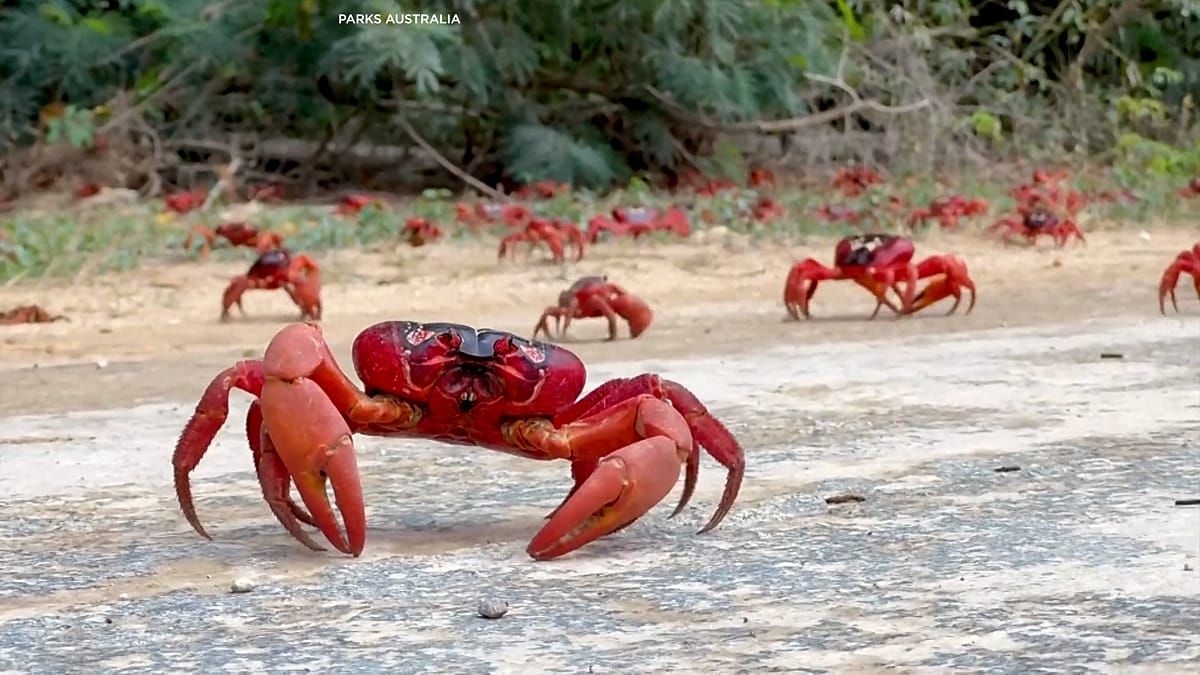
On Christmas Island, a remote Australian territory in the Indian Ocean, one of nature's most spectacular migrations is underway. Millions of red crabs (Gecarcoidea natalis) have emerged from the island's rainforest floor and are making their way to the coast, where they will mate and release eggs into the sea.
The annual event, which typically begins with the onset of the wet season, transforms the island's landscape. Roads, gardens, and even golf courses become temporary crab highways, as the bright red crustaceans march in dense waves toward the shoreline.
A journey fraught with obstacles
The migration is not without peril. Crabs must cross busy roads, where they are vulnerable to vehicles. To mitigate this, park rangers and volunteers have installed temporary barriers and 'crab bridges'—elevated walkways that allow the animals to pass over roads safely. These structures, along with road closures, help protect the crabs during their peak movement days.
According to the Christmas Island National Park, the migration is one of the largest land animal movements on Earth, with an estimated 40 to 50 million crabs participating. The crabs spend most of the year in the island's forests, but during the wet season they undertake this synchronized journey to breed.
Once at the coast, males dig burrows and compete for females. After mating, females incubate eggs in their abdominal pouches for about two weeks, then release them into the ocean during high tide. The larvae develop at sea before returning to land as tiny crabs.
The timing of the migration is closely linked to the lunar cycle and rainfall, making it a delicate natural phenomenon. Climate change and extreme weather events, such as droughts, can disrupt the timing and success of the breeding season.
While this story unfolds far from Europe, it resonates with broader environmental themes that European audiences care about, from biodiversity conservation to the impacts of climate change. For those planning winter escapes, the migration is a reminder of the natural wonders that exist beyond the continent—though Europe's own festive displays offer a different kind of spectacle.
Christmas Island's red crab population is considered healthy, thanks in part to successful eradication programs for invasive yellow crazy ants, which had threatened the crabs' survival. The ants, introduced accidentally, formed supercolonies that sprayed formic acid on crabs, killing thousands. Conservation efforts have significantly reduced their impact.
Visitors to the island during the migration season are advised to respect the crabs' path and avoid driving on roads where they are crossing. Local authorities set up temporary signage and guide tourists to designated viewing areas.
The migration typically lasts several weeks, with the peak occurring in late November or early December. For those unable to travel, live webcams and park updates offer a glimpse of the event.
This natural phenomenon, while geographically distant, underscores the interconnectedness of global ecosystems—a theme that also resonates in debates over carbon footprints and conservation efforts across Europe.