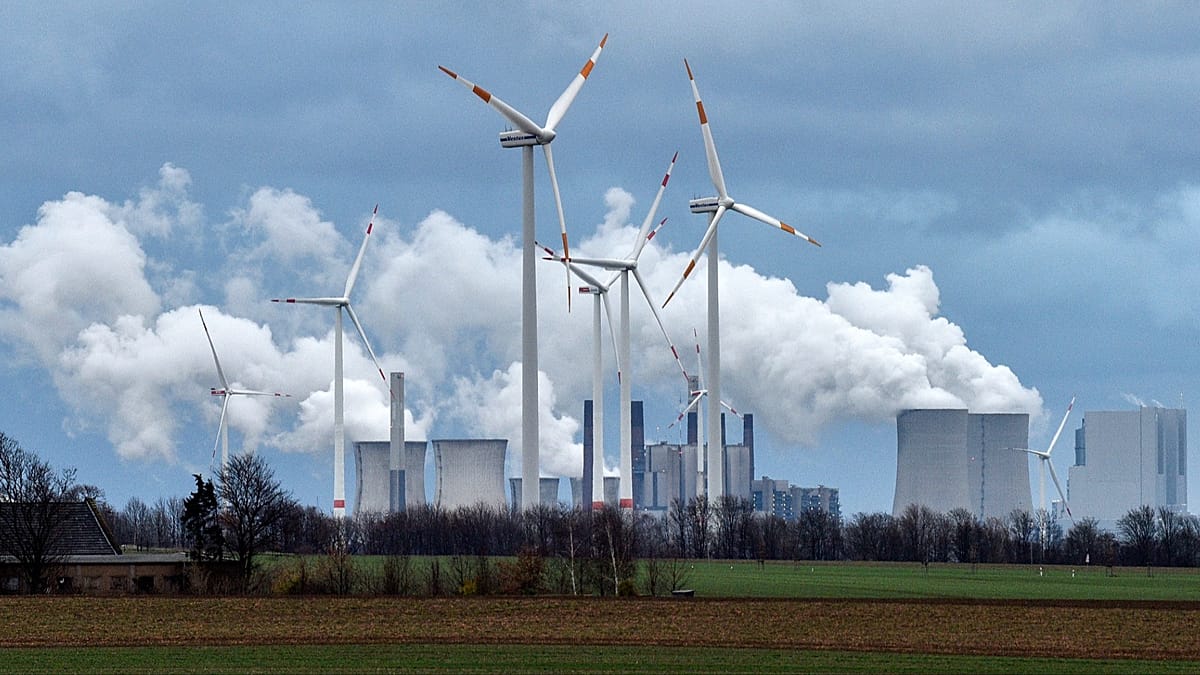
Consumers in five European Union member states are set to save a combined €8.5 billion on their energy bills this year, according to a new analysis by the Centre for Research on Energy and Clean Air (CREA). The report highlights how Denmark, Finland, France, Sweden, and Slovakia—countries with the highest share of clean energy in their electricity mix—will see bills 58% lower than those in nations still heavily reliant on fossil fuels, such as Poland, Italy, Greece, Estonia, and the Netherlands.
The savings come against a backdrop of renewed volatility in European gas markets. Following recent strikes in the Middle East, the Dutch TTF benchmark—the reference for wholesale gas prices across the continent—spiked by 68% to €52.8 per megawatt-hour, its highest level in two years. Although prices eased to €40.2 per MWh after a two-week ceasefire, they remain significantly above pre-conflict levels of €31.5 per MWh. Much of the instability stems from Iran's control over the Strait of Hormuz, a narrow 38-kilometer passage that carries roughly one-fifth of global oil and gas supplies. In March, liquefied natural gas (LNG) exports to the EU dropped by 11%.
“There are no price spikes for sunlight and no embargoes on the wind,” UN Secretary-General António Guterres remarked last month, underscoring the strategic value of renewables in insulating economies from geopolitical shocks.
How Clean Energy Reduces Price Sensitivity
The CREA report finds that the EU as a whole is now “better protected” from gas price sensitivity than in 2022, following Russia’s full-scale invasion of Ukraine. The boom in renewables—which hit new records in 2025—could save the bloc €5.8 billion in 2026 by displacing expensive gas. However, experts note that savings would be even greater if not for the EU’s marginal pricing mechanism, which allows gas prices to set the cost of electricity across many markets.
In 2025, every €1 per MWh rise in gas prices led to a €0.37 per MWh increase in electricity prices—an 8% reduction from 2022. “This is directly linked to decoupling [the price of electricity] from gas and investments in clean energy, whose share towards electricity generation in the EU grew by 14% in 2025, compared to 2022,” the report explains.
Sweden emerged as the least sensitive EU state to gas price shocks. For every €1 rise in gas, Sweden sees only a €0.04 per MWh increase in wholesale electricity prices, thanks to 99% of its electricity coming from clean sources. “While Sweden is one of the nine countries currently with gas storage significantly below the EU average, its lack of reliance on the source for power further insulates the electricity market from price shock,” the report states.
Spain and Portugal have also benefited from accelerating renewable investment, with clean energy growing 21% between 2022 and 2025, driven by a 74% surge in solar. Their joint production zone now records the third-lowest sensitivity in the bloc, at €0.089 per MWh for every €1 gas rise—a 53% drop. France has halved its gas sensitivity over the same period, largely due to growth in clean power.
Fossil Fuel Reliance Still Costs Some States
Not all EU countries are reaping the benefits. The Netherlands, despite a 31% increase in clean power generation, remains more sensitive to gas prices than in 2022. Gas still serves as the single largest source of electricity, and the country’s deep integration into the European gas market—often as a price taker—makes it vulnerable to shocks transmitted from neighbors like Germany. “Solar in the Netherlands is heavily used through daytime hours, but in the evening, other sources need to be ramped up—often requiring gas,” the report notes.
Poland presents another anomaly. Although renewables have grown 48% year-on-year since 2022, the country’s sensitivity to gas prices remains high. This is because Warsaw has turned to gas-powered electricity to replace coal, which still accounts for over half of total production. “Poland’s redirection towards gas, rather than clean energy sources, has seen power generation from the commodity rise by 132% in 2025 compared to 2022,” the study explains.
The findings underscore a broader lesson for European energy policy: while the EU has made strides in decoupling electricity prices from volatile gas markets, the pace of transition varies widely. As the bloc continues to navigate geopolitical tensions—including ongoing efforts to diversify supply through initiatives like the TRIPP Corridor talks with Azerbaijan—the case for accelerating home-grown renewables grows ever stronger.