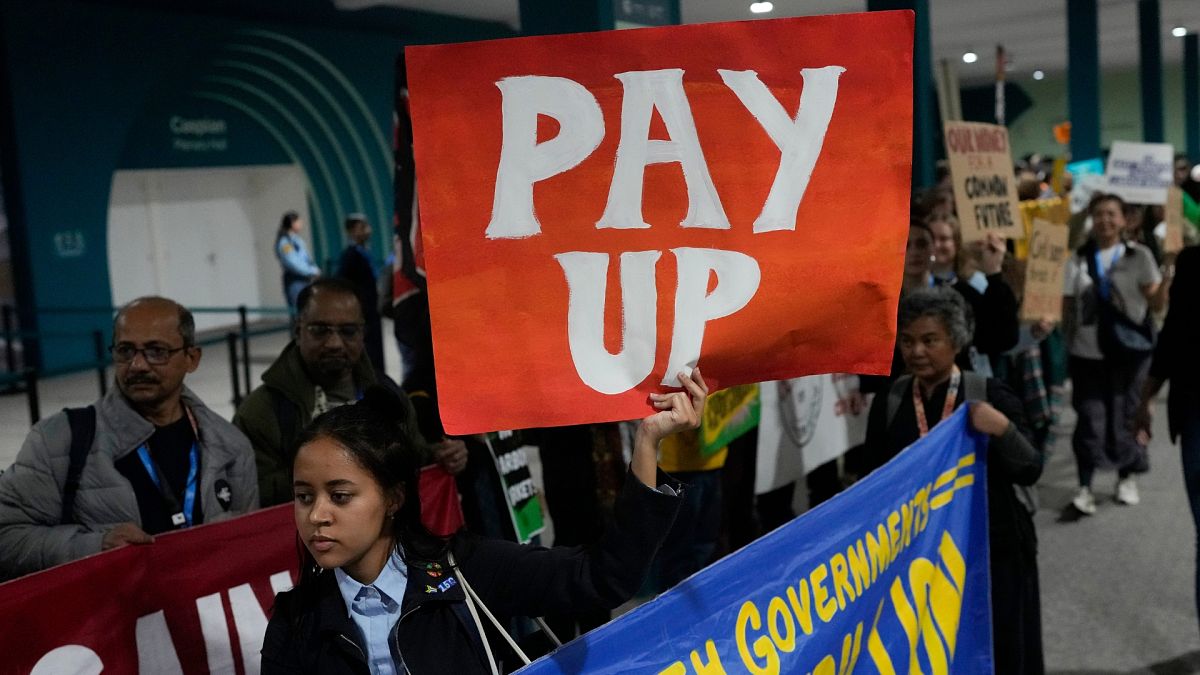
The first week of the UN's COP29 climate summit in Baku, Azerbaijan, concluded with palpable frustration, as negotiations on the central issue of climate finance for developing nations made little headway. Beyond an early agreement on a global carbon credit system championed by the Azerbaijani presidency, observers noted a worrying lack of momentum on the core financial question.
"The pace of negotiations in week one reminds me how climate COPs felt before the Paris Agreement reinvigorated these UN talks," said Clare Shakya, global climate chief at The Nature Conservancy. Her comments evoked the often glacial progress that characterised the two decades before the landmark 2015 accord, which set the goal of striving to limit global heating to 1.5°C.
The 'Finance COP' and Its Core Dispute
This summit has been dubbed the 'finance COP' because its primary task is to agree on a New Collective Quantitative Goal (NCQG). This new target must succeed the $100 billion per year pledge that developed nations and the EU made in 2009—a goal they failed to meet until 2022. From 2025 onward, the required sum needs to be massively increased, running into the trillions of dollars annually to fund the energy transition and climate adaptation in the Global South.
However, a fundamental rift has emerged over who should pay. The European Union, along with other traditional donor nations, insists the contributor base must be broadened to include major economies currently classified as developing countries, such as China, Saudi Arabia, and India. This demand for an expanded donor pool has become a major sticking point, creating significant tension as the summit enters its decisive phase.
"There is still only a zero in the NCQG discussions. No number, no ambition," warned Diego Pacheco, Bolivia's chief negotiator, speaking on behalf of the Like-Minded Developing Countries (LMDC) bloc. "Let us remember that this is a finance COP, and we expect developed countries to deliver."
This stance is significant; the LMDC bloc represents over half the world's population and includes major fossil fuel producers and economic powers. Their position underscores the geopolitical complexity of the talks, where the lines between historical responsibility and current economic capacity are fiercely contested.
From Draft Text to Political Deal
The technical negotiations have produced a sprawling draft text. What began as a nine-page document for the NCQG agreement ballooned to 35 pages, filled with bracketed options, caveats, and blanks. A revised 25-page draft published at the weekend still contains over 400 alternative wordings and unresolved choices. Key questions remain unanswered: What will the final annual figure be? How much will come from direct government grants versus 'mobilised' private finance? And crucially, who will be listed as contributors?
Experts note that as the sums increase, the balance will inevitably tip towards leveraging private capital and using financial instruments to de-risk investments, rather than relying solely on direct public grants. The role of multilateral development banks (MDBs) is seen as critical. A recent pledge by the World Bank and others to collectively increase climate finance for low- and middle-income countries was hailed as a positive step.
"The MDBs have already signalled they can scale up by 2030 to 120 billion [dollars], so it’s a very big step forward from the 75bn that we had," Eleonora Cogo, a senior associate for international finance at the Italian think tank ECCO, told reporters in Baku. "I think it's a very encouraging signal because, if they can do it, all of a sudden it makes the bigger core goal less scary."
The failure to secure adequate climate finance has direct consequences for Europe's own security and stability. As highlighted in the recent Lancet report, climate inaction exacerbates heat deaths, disease, and food insecurity, pressures that can spill over into geopolitical instability. Furthermore, the immense capital required for the global transition is reshaping financial systems, a trend parallel to the tokenisation drive on Wall Street that is altering global finance.
Discussions have now moved to the political level, with ministers arriving in Baku for the final negotiations. According to the official schedule, they have until Friday, 22 November, to forge a compromise, though UN climate summits frequently run into overtime. The credibility of the entire Paris Agreement framework hinges on demonstrating that developed nations can fulfil their financial promises and that a broader coalition of capable economies will step up. With the clock ticking, the pressure is on for European leaders and their counterparts to bridge a deep divide and deliver a credible outcome from the 'finance COP'.