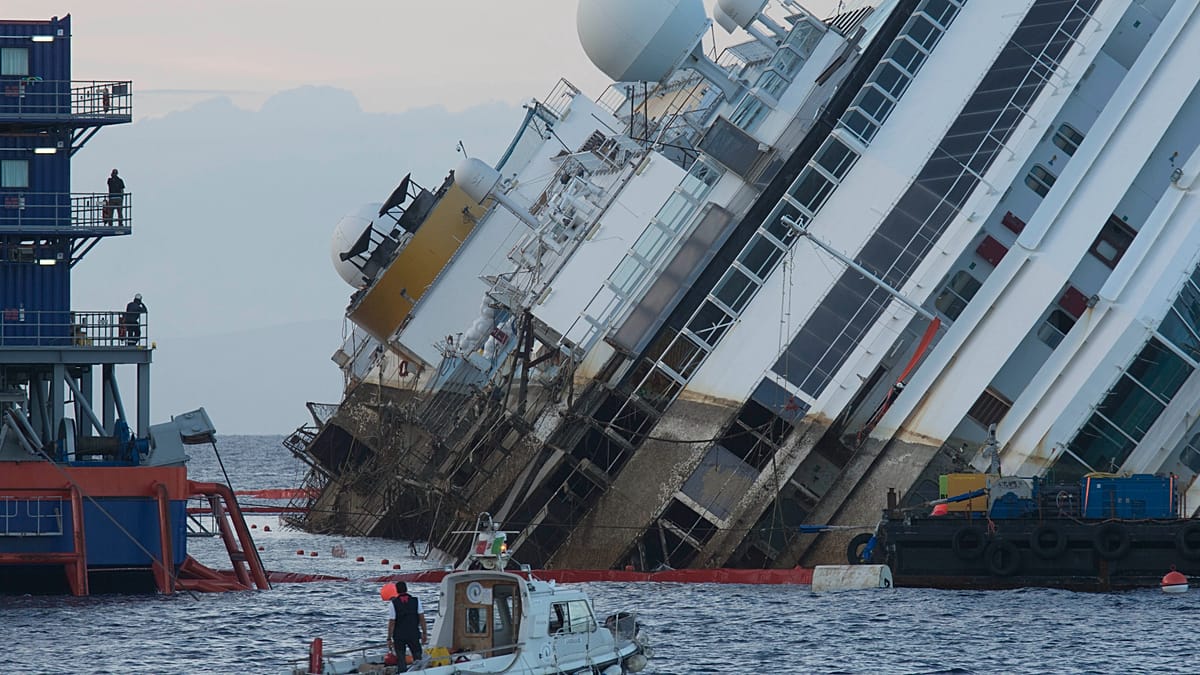
Francesco Schettino, the former captain of the Costa Concordia cruise ship, walked out of Rebibbia prison in Rome on Friday evening after more than nine years behind bars. The Rome Supervisory Court granted him release under probation, following a review of his rehabilitation progress and conduct during detention, according to Italian daily Quotidiano Nazionale.
His lawyer, Francesca Carnicelli, welcomed the decision, noting that prison staff had given an “extremely positive assessment” of his participation in the rehabilitation programme. “In our view, all the conditions were in place for this alternative measure to be granted, as it represents the correct continuation of the process after the conviction,” she said.
A disaster that reshaped cruise safety
The case dates back to January 2012, when the Costa Concordia, operated by Costa Crociere, struck rocks off the coast of Isola del Giglio in the Tyrrhenian Sea. The impact tore a 35.59-metre gash in the port side of the hull, causing the vessel to list heavily before it ran aground on a rocky outcrop near Punta Gabbianara, where it partially sank. The disaster claimed 32 lives, including passengers and crew members.
In the subsequent legal proceedings, Schettino was sentenced to 16 years in prison. The Florence Court of Appeals upheld the sentence on 31 May 2016, along with a five-year ban from working in the maritime industry. The court also increased provisional compensation for survivors who joined the case as civil claimants to between €40,000 and €65,000 each.
The tragedy prompted a broader reassessment of safety protocols across the European cruise industry, with regulators and operators tightening emergency procedures and crew training. The case also became a symbol of accountability in maritime law, as Schettino faced accusations of abandoning the ship before all passengers were evacuated.
His release on probation marks the latest chapter in a legal saga that has drawn attention across Europe and beyond. While some see the decision as a recognition of his rehabilitation, others remain critical of the man widely dubbed “Captain Coward” in the Italian media.
Schettino’s release comes at a time when European institutions are debating broader questions of justice and reintegration. For instance, the European Union has recently discussed probationary periods for new member states, a different but parallel theme of conditional trust. The EU’s approach to enlargement, as outlined by European Council President António Costa, treats such processes as an investment rather than a burden, reflecting a philosophy of gradual integration and oversight.
In Italy, the decision to release Schettino under probation will likely fuel debate about the balance between punishment and second chances. His legal team has consistently argued that he has shown remorse and has been a model prisoner. The supervisory court’s ruling appears to accept that view, allowing him to serve the remainder of his sentence in the community under conditions.
For the families of the victims, the release may reopen old wounds. The 2012 disaster remains one of the deadliest maritime accidents in recent European history, and the legal aftermath has been closely followed by maritime lawyers and safety advocates across the continent.
As Schettino begins his probation, the spotlight once again turns to the lessons learned from the Costa Concordia. The ship itself was eventually salvaged in a complex operation and scrapped in Genoa, a process that took years and cost hundreds of millions of euros. The tragedy also led to changes in international maritime regulations, including stricter requirements for lifeboat drills and passenger muster procedures.
Whether Schettino’s release will prompt further legal challenges remains to be seen. For now, the former captain is free, but the shadow of the Concordia will likely follow him for the rest of his life.