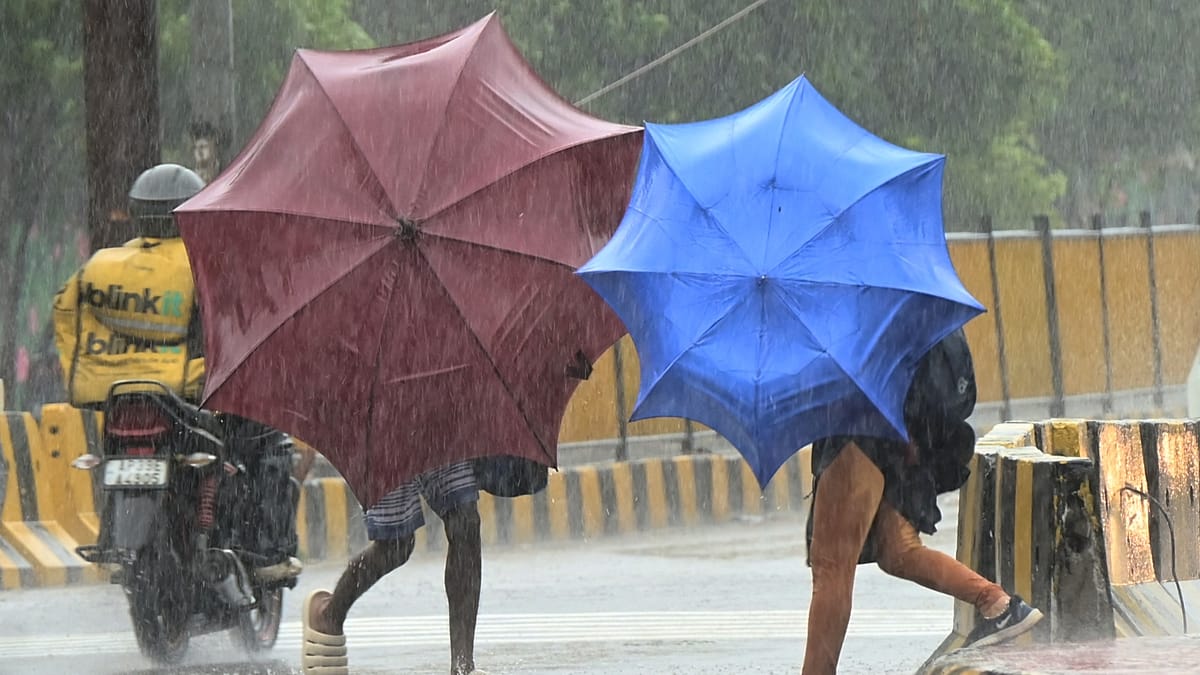
Cyclone Arnab slammed into India's southeastern coastline on Wednesday, bringing ferocious winds and torrential rain that forced nearly 100,000 people to flee their homes in two states. The storm, which intensified into a "very severe cyclonic storm" shortly before landfall, made its way ashore between Bapatla and Visakhapatnam in Andhra Pradesh, according to the India Meteorological Department (IMD).
The IMD reported sustained winds of 125–135 kilometres per hour, with gusts reaching up to 150 kph. The agency warned of "total destruction" of thatched houses, localised flooding, uprooted power and communication poles, and "widespread damage" to standing crops. As the storm churned inland, authorities in Andhra Pradesh and neighbouring Odisha ordered tens of thousands of residents to move to safer areas or take shelter in designated facilities.
Preparing for the worst
Andhra Pradesh Chief Minister Nara Chandrababu Naidu said protecting every life was the "foremost priority" as the storm approached. The state's disaster management authority reported that more than 12 million people live along the cyclone's expected path. In response, officials set up over 2,000 cyclone shelters across 20 districts and sent emergency alerts to millions of mobile phones, said Prakhar Jain, head of the Andhra Pradesh state disaster management authority.
More than 30,000 fishing boats were secured along the coast, and nearly 1,100 medical teams were deployed to affected areas to provide emergency assistance, Jain added. In Andhra Pradesh, around 50,000 people were told to evacuate, while Odisha saw 48,000 residents moved to safety. The storm also prompted weather warnings in neighbouring Sri Lanka and Nepal.
The scale of the evacuation underscores the region's vulnerability to extreme weather events, a challenge that resonates far beyond South Asia. As Europe grapples with its own climate-related disasters—from flash floods in eastern Spain to heatwaves and wildfires—the need for robust disaster preparedness and cross-border cooperation has never been more apparent.
Cyclone Arnab is the latest in a series of powerful storms to hit the Bay of Bengal coast, a region that has seen an increase in cyclone intensity in recent years, a trend scientists link to warming ocean temperatures. While India has made significant strides in early warning systems and evacuation protocols, the sheer scale of such events continues to test the limits of local infrastructure.
For European readers, the Indian response offers a case study in managing large-scale natural disasters—a topic of growing relevance as the continent faces more frequent extreme weather. The European Union's Civil Protection Mechanism, for instance, has been activated in response to floods and wildfires across member states, highlighting the importance of coordinated action.
As the storm continues to weaken over land, authorities are now focusing on relief and recovery. The full extent of the damage will become clearer in the coming days, but the immediate priority remains ensuring the safety of those displaced. The evacuation of nearly 100,000 people, while disruptive, is a testament to the effectiveness of early warning systems and the willingness of communities to heed official advice.
In a world where climate change is making extreme weather events more common, the lessons from Cyclone Arnab—both in terms of preparation and response—are likely to inform disaster management strategies well beyond India's borders.