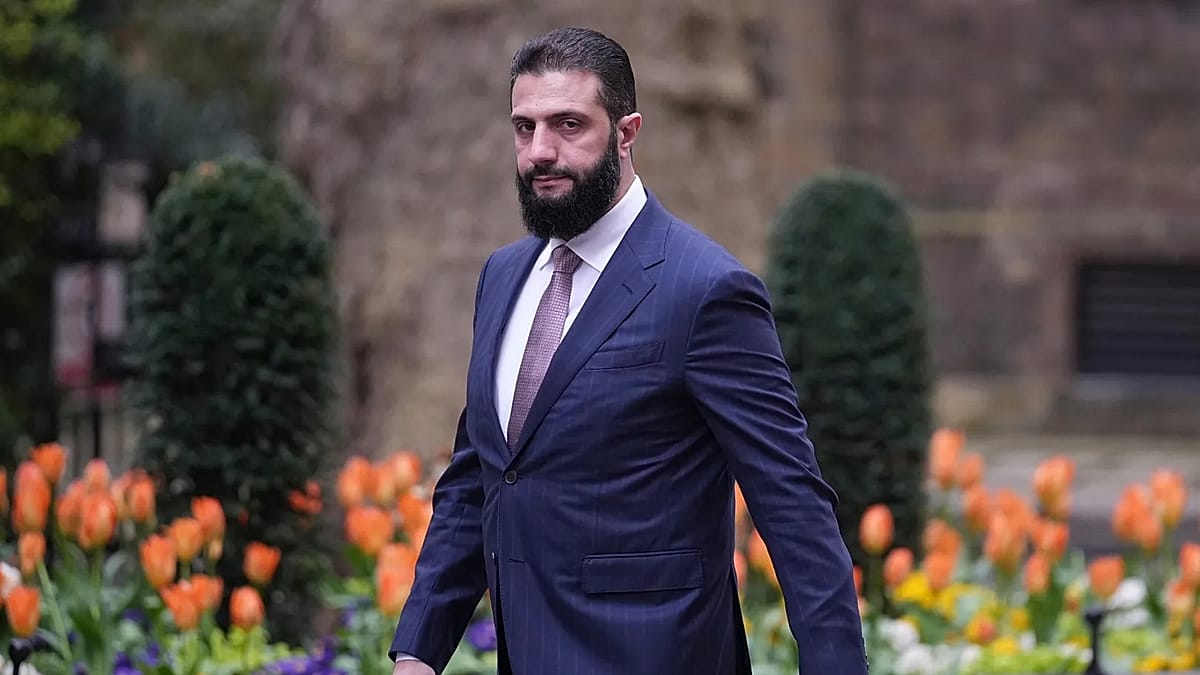
A brief transaction at a café in Damascus's Old City has become a potent symbol of Syria's re-entry into the international financial order. President Ahmed al-Sharaa, flanked by central bank governor Mohammed Safwat Raslan, tapped a Visa card to pay for coffee in a video released by an official government account. The clip was posted to mark Washington's decision to remove Syria from its list of state sponsors of terrorism.
“For more than 15 years, this simple transaction was impossible,” the accompanying message read. Raslan described the delisting as “a historic step that restores the country to its natural place in the global economic system.”
What the lifting of sanctions means
The US State Department formally rescinded Syria's designation as a state sponsor of terrorism on Monday, ending a listing that had been in place since 1979. The change followed a 45-day congressional review period triggered by President Donald Trump's notification to lawmakers in July. Alongside the delisting, the US also removed Hayat Tahrir al-Sham—the former paramilitary group that led the offensive that toppled Bashar al-Assad—from its specially designated global terrorist list.
Most US sanctions had already been lifted earlier. The comprehensive sanctions programme was terminated in mid-2025, and Congress repealed the Caesar Act, the most severe secondary sanctions regime, in a defence spending bill passed in December 2025. However, the terrorism designation continued to impose restrictions on financial transactions, deterring banks and investors from engaging with Syria.
The US Treasury has now confirmed that American financial institutions may service Syrian clients, process payments involving Syrian banks, and establish correspondent banking relationships. Treasury Secretary Scott Bessent said the action “will help foster additional investment in Syria to promote political and economic stability.”
According to Tellimer, a Dubai-based emerging markets research firm, the delisting amounts to “effectively, a green light” for reconstruction investment. The firm expects banking, technology, and telecommunications to benefit most from restored access to the SWIFT messaging system.
Sanctions remain in place against associates of the ousted dictator Bashar al-Assad, human rights abusers, and captagon traffickers. Syria also remains on the Financial Action Task Force's grey list over money-laundering concerns.
Europe's parallel move
Brussels has followed a similar trajectory to Washington in easing restrictions on Syria. The European Council lifted all economic sanctions in May 2025, retaining only those imposed on security grounds, including arms and technology that could be used for internal repression. This year, the Council went further: on 11 May it restored full application of the EU-Syria Cooperation Agreement, which had been partially suspended since 2011, and held its first high-level political dialogue with Damascus since before the civil war.
The EU's engagement reflects a broader European interest in Syria's stabilisation, particularly given the country's role in migration flows and regional security. For European businesses, the reopening of Syria's financial system could offer opportunities in reconstruction, though many will remain cautious until the FATF grey-listing is addressed.
As Damascus reconnects to global finance, the symbolic coffee purchase underscores how far the country has come—and how much remains to be done. The path to full reintegration will depend on continued political progress and the ability to attract sustained investment, both of which require a stable and transparent economic environment.