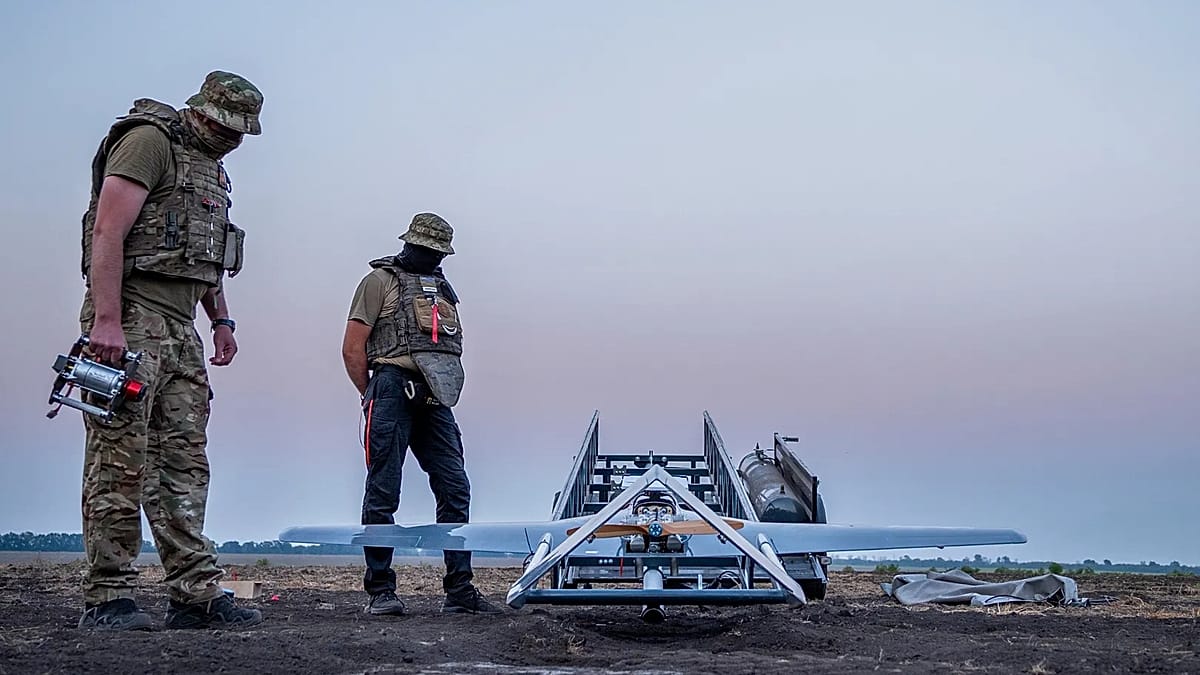
The Danish Defence Command has conceded that its official account of a series of drone incursions over Danish territory in 2025 contained significant errors, according to a statement released this week. The admission follows sustained scrutiny from Danish media and independent experts who questioned the initial findings.
The incursions, which occurred over several weeks last autumn, prompted temporary airspace restrictions around Copenhagen and several military installations. At the time, the Defence Command described the incidents as coordinated and likely state-sponsored, without naming a specific actor. That assessment now appears to have rested on incomplete or misinterpreted data.
What went wrong in the report
According to the revised statement, the original report conflated several unrelated observations, including civilian drone activity and misidentified aircraft. Radar data from at least two locations was processed incorrectly, leading to an overstatement of the number of confirmed incursions. The command also failed to properly document the chain of custody for some sensor readings.
“We have identified weaknesses in our internal reporting procedures that we are now correcting,” a Defence Command spokesperson said. “The errors do not change the overall assessment that Denmark faces a complex hybrid threat environment, but we must be precise in how we communicate that threat.”
The admission is awkward for Copenhagen, which has been among the more vocal European capitals warning about Russian sabotage and reconnaissance activities in the Baltic region. It also comes as NATO allies step up intelligence-sharing on unmanned aerial systems, or UAS, following similar incidents in Norway, Sweden, and the Baltic states.
Political reaction in Copenhagen
Danish defence minister Troels Lund Poulsen faced questions in the Folketing on Wednesday. Opposition parties demanded a fuller accounting of how the errors occurred and whether they affected operational decisions. The government has promised an internal review, but stopped short of announcing an independent inquiry.
Analysts note that the episode could complicate Denmark's push for greater investment in counter-drone capabilities. The country has already committed to acquiring new radar and electronic warfare systems, partly in response to the 2025 incidents. If the original threat picture was overstated, critics may argue that resources were misallocated.
Others caution against drawing that conclusion too quickly. “The fact that one report contained errors does not mean the underlying threat is imaginary,” said a researcher at the Danish Institute for International Studies. “It means the machinery for assessing it needs to be more robust.”
Wider European context
The Danish case is not isolated. Across Europe, authorities have struggled to distinguish between hobbyist drones, commercial flights, and hostile surveillance. In Germany, prosecutors have investigated suspected Russian drone flights over critical infrastructure. In Norway, police have reported unidentified drones near offshore oil platforms. And in the Baltic Sea, NATO has increased patrols after damage to undersea cables.
Compounding the challenge is the rapid spread of disinformation. As European Pulse has reported, fake AI protest videos and pro-Russian ballot fraud clips have circulated widely, sometimes amplifying real incidents or inventing them outright. In that environment, official errors can be seized upon by hostile actors to undermine public trust.
The Danish Defence Command says it will publish a corrected version of the 2025 report and introduce new verification protocols. Whether that will be enough to restore confidence remains to be seen. For now, the episode serves as a reminder that even well-resourced militaries can stumble when confronting the opaque tactics of hybrid warfare.
For readers following broader European security developments, our morning bulletin from late September provides additional context on the region's shifting threat landscape.