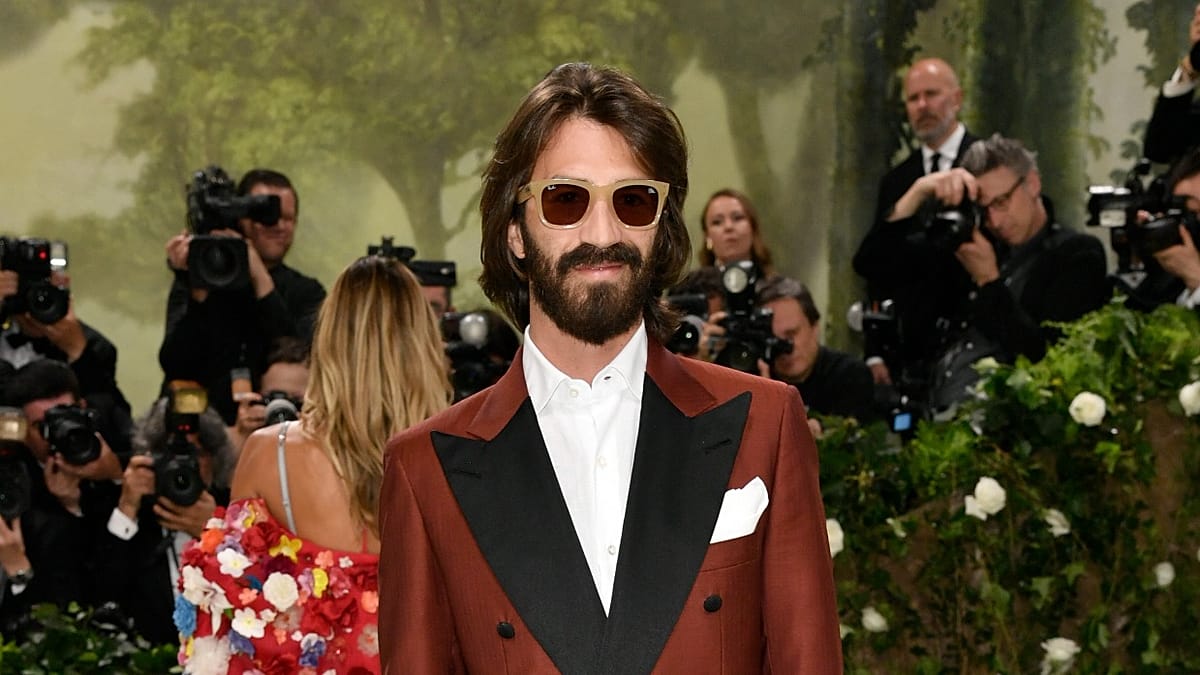
Leonardo Maria Del Vecchio, the 31-year-old son of Luxottica founder Leonardo Del Vecchio, has resigned from all his managerial positions at EssilorLuxottica, the Italian-French eyewear giant. He steps down as chairman of Ray-Ban and as chief strategy officer, effective 31 August, following a letter to group chairman and CEO Francesco Milleri and the board.
In his resignation letter, reported by Italian financial daily Milano Finanza, Del Vecchio criticises a corporate culture he describes as “distant” and “impersonal”, far removed from the people who “must once again be put at the centre” of the group. He contrasts this with the ethos of “Luxottica twenty years ago”, when his father’s hands-on leadership fostered a strong sense of belonging.
A group spokesperson confirmed the resignation, thanking Del Vecchio “for contributing to the group’s growth and to the implementation of the strategic vision pursued by his father” and wishing him “equal success in his new venture”.
A call to return to people-centred leadership
Del Vecchio, known by his initials LMDV, has long emphasised the importance of personal contact within the company. “I keep talking to people in the company. I did it when I was a store manager and I have never stopped doing it,” he writes. But today, he adds, “the enthusiasm is not what it was. The sense of belonging is not what it was. The distance can be felt. And people sense it before the markets. Always.”
He insists his departure is not a defeat. “I am not leaving after a defeat. I am leaving after doing my job.” His three-year mandate at Ray-Ban, he notes, “came to an end this year with the targets exceeded”, leaving “a stronger brand, projects that will continue and, above all, a team that does not need me to know what it has to do. For me that matters more than any title”.
Despite stepping back from management, Del Vecchio reaffirms his commitment as a shareholder. “I will continue to fully exercise my responsibility as a shareholder through Delfin. I will continue to defend the company’s independence, its ability to grow and the need for it to have stable ownership and a long-term vision.”
Remembering his father’s legacy
Del Vecchio links his decision to his father’s founding philosophy. Leonardo Del Vecchio senior built Luxottica “by asking a great deal of people” but understood that demanding loyalty meant giving it in return. “You cannot be a team only when you are presenting results,” the younger Del Vecchio argues, nor can you “put people at the centre of presentations and at the margins when they become inconvenient”.
“This is not the Luxottica I grew up in. And it is not the Luxottica I remember alongside my father.” He recalls that his father “could be extremely tough. Anyone who knew him knows that.” Yet beyond the discipline, the founder had an “almost physical” relationship with his company and its employees, always aware of what was happening and when to intervene.
For Del Vecchio, the transition to a multinational should not lead to a “depersonalisation” of relationships, because that erodes the sense of belonging that underpins the company’s success. “People must be put back at the centre. Not in slogans. In behaviour. Because my father did not just build one of the biggest Italian companies. He built a place where hundreds of thousands of people believed they could build something together with him. Losing that would be far more serious than missing a budget target.”
The Del Vecchio family’s financial empire
Leonardo Maria Del Vecchio holds a 12.5% stake in Delfin, the family’s controlling holding company. Delfin owns around 32.4% of EssilorLuxottica, which generates €28 billion in annual revenue, and also holds significant stakes in Italian financial institutions: more than 17% of Banca Monte dei Paschi di Siena, roughly 10% of Generali, and 2.7% of UniCredit. The holding also has de facto control of the international property group Covivio.
The eight heirs of Leonardo Del Vecchio have yet to reach an agreement on executing the founder’s will, more than four years after his death. This latest resignation adds another layer to the ongoing family dynamics, as the younger generation charts its own course. The move also echoes broader concerns about corporate leadership across Europe, where workers at Volkswagen have similarly criticised management communication during recent restructuring.
Del Vecchio’s departure is not expected to alter EssilorLuxottica’s strategic direction, but it signals a generational shift in how the founder’s legacy is interpreted. As he embarks on new entrepreneurial projects, his critique of “remote” management may resonate beyond the eyewear sector, touching on wider debates about the balance between scale and human connection in modern corporations.