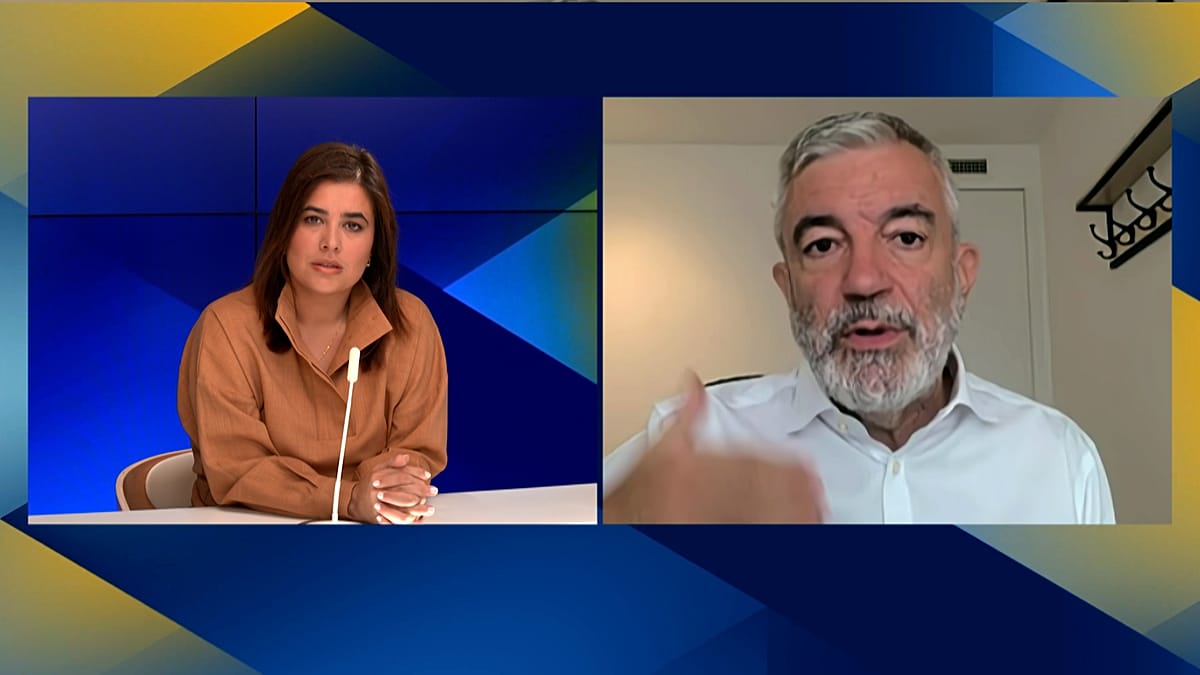
Mario Draghi, the former Italian prime minister and European Central Bank president, has launched a new initiative called the Rhine Group, aiming to tackle the structural weaknesses that have left Europe lagging behind the United States and China. The group, named after the river that flows through the heart of the continent, brings together a mix of former heads of state, business leaders, and academics from across the EU and beyond.
The Rhine Group's formation comes at a critical moment. Europe's economy is facing a perfect storm: an aging population, sluggish productivity growth, high energy costs, and the accelerating climate transition. Draghi, who authored a landmark report on European competitiveness last year, has warned that the continent risks falling into a "slow agony" unless it acts decisively.
What Does the Rhine Group Want?
The group's agenda is ambitious. It calls for a coordinated industrial policy, deeper capital market integration, and a massive increase in joint investment in digital infrastructure and clean energy. Draghi has argued that Europe needs an additional €800 billion per year to fund these priorities, a sum that would require significant changes to the EU's fiscal rules and a greater willingness among member states to pool resources.
One of the key proposals is the creation of a "European sovereign fund" to finance strategic projects, similar to the US Inflation Reduction Act. The group also wants to streamline decision-making in Brussels, reducing the bureaucratic hurdles that slow down everything from state aid approvals to cross-border energy projects.
But the Rhine Group is not just about economics. It also has a political dimension. Draghi has been vocal about the need to strengthen the EU's democratic legitimacy, arguing that citizens must see tangible benefits from integration. The group's members include figures like Christine Lagarde, the ECB president, and Emmanuel Macron's former chief of staff, Alexis Kohler, though they participate in a personal capacity.
Can It Succeed Where Others Have Failed?
Critics are skeptical. Similar initiatives, such as the "Hamilton Alliance" or the "Coalition of the Willing," have fizzled out in the past, failing to overcome the deep divisions between northern and southern member states on fiscal matters. Germany, in particular, has resisted any move towards debt mutualization, a stance that has not changed despite the recent constitutional debates over climate spending.
Moreover, the Rhine Group is a private initiative, not an official EU body. It has no formal power to set policy. Its influence will depend on its ability to shape the debate and persuade national governments to act. Draghi, however, has a track record of turning ideas into action. His "whatever it takes" speech in 2012 saved the euro, and his report on competitiveness has already influenced the EU's strategic agenda.
The group's first test will come in the autumn, when it plans to publish a detailed roadmap with specific policy proposals. It will also engage with the new European Commission, which is set to take office after the June elections. The hope is that the Rhine Group can provide the intellectual firepower and political momentum needed to break the inertia that has plagued European reform efforts.
Some observers draw parallels with the Rhine's dual nature – a river that connects and divides. The group's success will depend on whether it can bridge the gaps between member states with very different economic models and political priorities. As Draghi himself has said, "Europe is not a zero-sum game. We either swim together or sink separately."
The Rhine Group also faces the challenge of relevance in a world where geopolitical crises often overshadow economic policy. The war in Ukraine, the Middle East conflict, and the rise of populism are all competing for attention. Yet Draghi insists that economic strength is the foundation of Europe's geopolitical influence. Without a competitive economy, he argues, Europe cannot afford its social model or its security commitments.
In the coming months, the Rhine Group will need to demonstrate that it is more than a talking shop. It must produce concrete proposals that can be implemented at the national and EU levels. The stakes are high. As Draghi has warned, "If we fail to act, the next generation will inherit a Europe that is weaker, poorer, and less influential."
Whether the Rhine Group can deliver remains to be seen. But its launch has already reignited the debate about Europe's future, and that in itself is a valuable contribution. As the continent's leaders return from summer recess, they will be watching closely – and so will the markets.