For weeks, the heliport at Strasbourg's Hautepierre University Hospital has been silent after dark. The decision, taken on 28 July, came after repeated sightings of civilian drones hovering over the landing zone—drones that were not carrying cameras or packages for curious hobbyists, but illicit deliveries bound for the nearby Elsau remand prison.
The nocturnal shutdown has forced a reorganisation of emergency air transport in the Alsatian capital. Helicopters carrying critically ill patients are now redirected to the Nouvel Hôpital Civil, a neighbouring facility, where patients are transferred to ambulances for the final leg of their journey. Hospital staff say the extra step costs between 30 and 40 minutes—time that can be decisive for patients with multiple trauma or stroke.
A growing problem for French prisons
Drone-based contraband drops have become a recurring headache for prison authorities across France. The Hautepierre heliport, situated just a few hundred metres from the prison walls, has become an unintended staging ground for these operations. Since April, security teams have logged 19 drone flights over the heliport area. Two incidents in July directly interfered with incoming rescue helicopters, prompting the suspension of night-time landings.
According to the hospital, no patient has yet suffered serious harm as a result of the diversions. But the margin for error is thin. “We cannot rule out that among them there will be patients for whom this additional delay of 30 or 40 minutes could pose a risk to life, to functional recovery, lead to a longer recovery, or require heavier or longer treatment,” Julien Pottecher, head of the anaesthesia and intensive care department at Hautepierre, told AFP.
The hospital typically receives around 40 patients by air during night-time hours each year—about 13% of its total air rescue activity. The night window, defined as 30 minutes after sunset to 30 minutes before sunrise, is when the heliport is now off-limits.
Searching for alternatives
The prefecture and the regional health agency are scrambling for a solution. One option under consideration is using a football pitch near the hospital as a temporary landing site. But any fix must contend with the persistent presence of drones, which are cheap, easy to operate, and difficult to track.
The problem is not unique to Strasbourg. Prisons across France have reported a surge in drone deliveries of drugs, phones, and other contraband. The phenomenon has also drawn attention from security officials beyond the prison system, as drone smuggling becomes a broader security concern.
Two convictions, but questions remain
On 18 August, two young men, aged 18 and 19, were convicted of complicity in an attempted delivery to an inmate. The prosecutor, Félix Delaporte, used the trial to highlight the wider consequences. “The stakes are serious,” he said. “There is a real risk to people!”
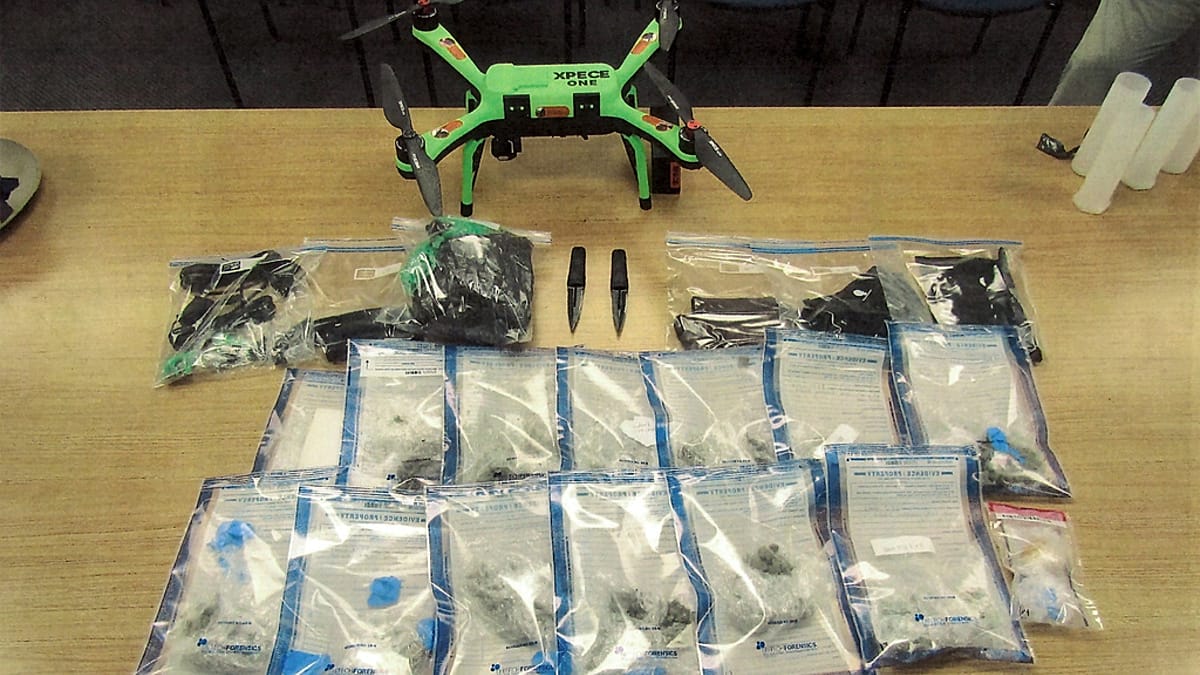
The arrests followed a police operation that uncovered parcels ready for delivery: nearly 200 grams of cannabis resin, herbal cannabis, cocaine, cigarettes, SIM cards, and even meat.
While the immediate threat to patients has been mitigated by the diversion protocol, hospital staff remain uneasy. The extra medical team required for each road transfer stretches resources, and the added delay is a constant worry. As one emergency physician put it, “Every minute counts.”
The situation in Strasbourg echoes broader concerns about drone misuse across Europe. From border security in the Baltics to new counter-drone initiatives in Germany, authorities are grappling with how to regulate and intercept unauthorised flights. For now, the heliport at Hautepierre remains closed at night, and the search for a safe landing alternative continues.