For the first time since the outbreak of the US-Iran war in February, Egyptian territory has come under direct attack. A drone struck a US-owned liquefied natural gas vessel at the Mediterranean port of Damietta on Wednesday, triggering a fire that spread to a second ship, according to Egyptian authorities and maritime security firms.
Egypt's cabinet confirmed on Thursday morning that preliminary investigations had identified a drone as the cause of the incident. “The relevant authorities found that the incident was caused by a drone,” the cabinet said in a statement, marking the first official acknowledgment of the attack's nature. No group has claimed responsibility, and an investigation remains ongoing. Authorities are taking measures “to protect Egypt's interests and national security,” the cabinet added.
The drone struck the Energos Winter, a Marshall Islands-flagged floating storage and regasification unit owned by US company New Fortress Energy, on its starboard side at approximately 3:20 pm CET, according to maritime security firm Ambrey and British firm Vanguard. The fire spread to the nearby Bermuda-flagged LNG tanker Gaslog Salem. Both crews were evacuated, and the fire was brought under control. No injuries were reported. Both vessels were subsequently moved offshore for assessment.
Egypt's Petroleum Ministry had earlier confirmed the fire without identifying the cause. Petroleum Minister Karim Badawi travelled to the port to oversee the response.
Iranian state television flagged Damietta as a potential target
Egyptian authorities and multiple maritime sources confirmed that Iranian state television had identified Damietta as a possible target for “retaliation against Ukrainian interests” two days earlier, following a Ukrainian strike on an Iranian vessel in the Caspian Sea over the weekend. The map shown on state-run TV described Damietta as “a gateway for gas exports to Europe.” Iranian Foreign Minister Abbas Araghchi said on Tuesday that Iran “does not seek escalation” but was demanding “compensation” from Kyiv.
Energy analytics firm Kpler said the attack disrupted operations at the terminal and forced both vessels to move offshore. Former head of the Damietta Port Authority, Major General Ayman Salah, noted that the regasification process occurs at very high pressure and that any leak could cause a fire.
The incident comes as the region enters one of its most volatile periods since the war began. On Wednesday, the IRGC launched ballistic missiles at US forces in Jordan, the US and Saudi Arabia struck Iran-linked militia sites across Iraq, and Yemen's Houthi group declared a maritime embargo against Saudi Arabia, raising fears of the widest simultaneous regional escalation since the war began on 28 February.
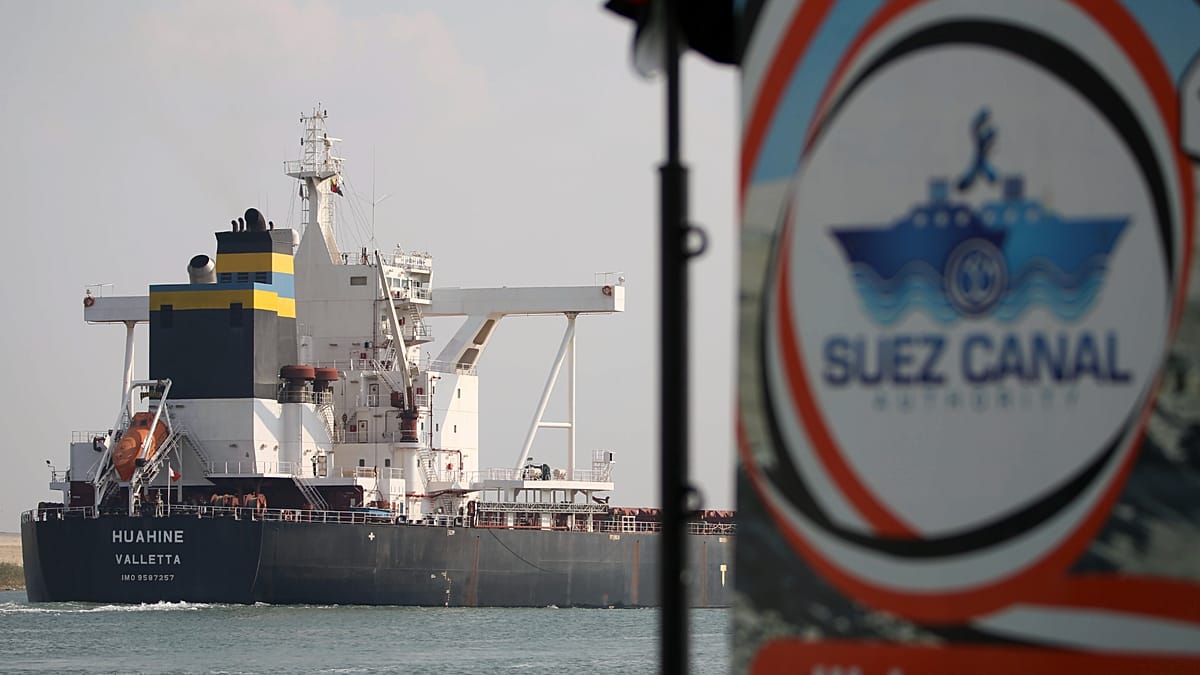
Egypt has so far been spared from attacks during the US-Iran war, maintaining relations with both Washington and Tehran. The Suez Canal, through which roughly 12% of global trade normally passes, has already seen a dramatic drop in traffic since the war began. It is now further imperilled by reported plans by Yemen's Houthi group to impose a toll on passing cargo ships and threats of strikes on noncompliant vessels, which could severely reduce traffic through the Bab el-Mandeb strait in the Red Sea.
This attack underscores the widening geographic scope of the conflict, which now directly threatens European energy security. Damietta is a key hub for LNG exports to Europe, and any disruption to its operations could have ripple effects on gas supplies across the continent. The European Union has been closely monitoring the situation, as member states like Italy, Spain, and France rely on Egyptian LNG to diversify away from Russian gas. The attack also raises questions about the vulnerability of critical energy infrastructure in the Mediterranean, a region that has become a flashpoint in the broader US-Iran confrontation.
As the investigation continues, European policymakers will be watching for any signs of further escalation that could affect energy markets or maritime security in the Mediterranean. The incident also highlights the growing use of drones in asymmetric warfare, a trend that has already prompted EU sanctions targeting drone technologies and calls for enhanced maritime surveillance.