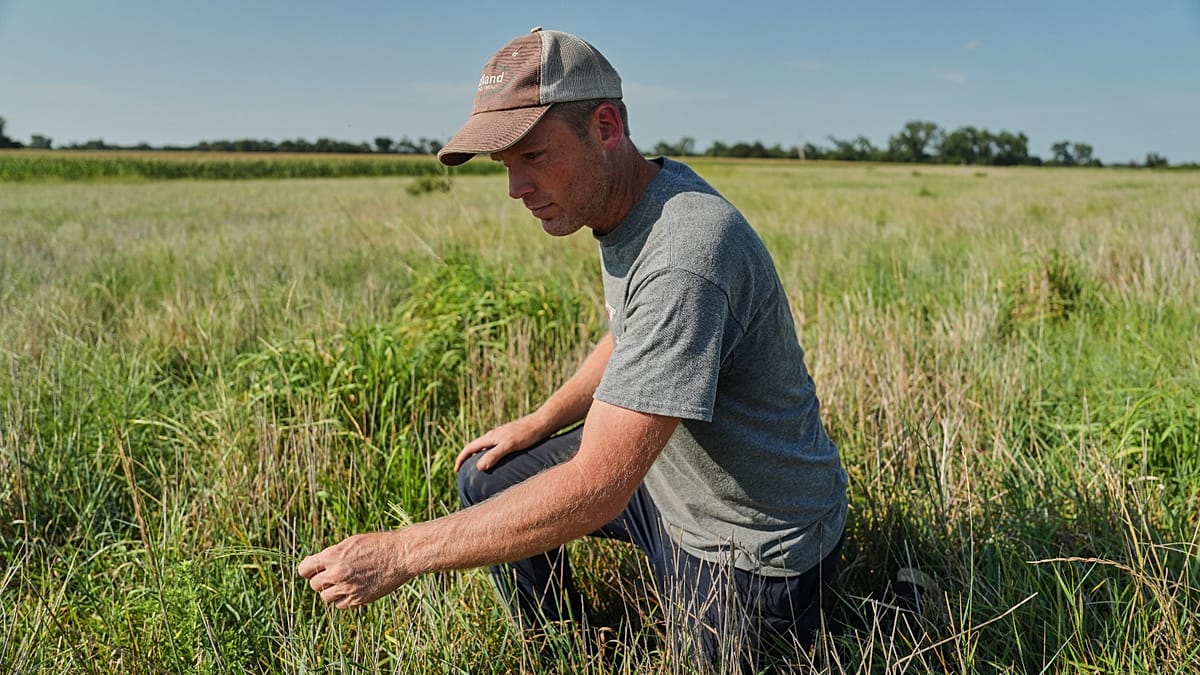
In the wheat fields of Kansas, Bryce Black holds up two strands of grain, their seed heads pitifully small after months without rain. The fourth-generation farmer had hoped for a decent harvest from his 1,800 acres of winter wheat, but a dry winter and spring left the crop struggling. He eventually cut about 1,500 acres, yet the yield was the worst since he took over the family farm in 2017.
“It was just a grit your teeth and get through it type of deal,” says Black, who also grows corn, soybeans and milo. “It is disheartening, you know? And it’s kind of hard to know what to do.”
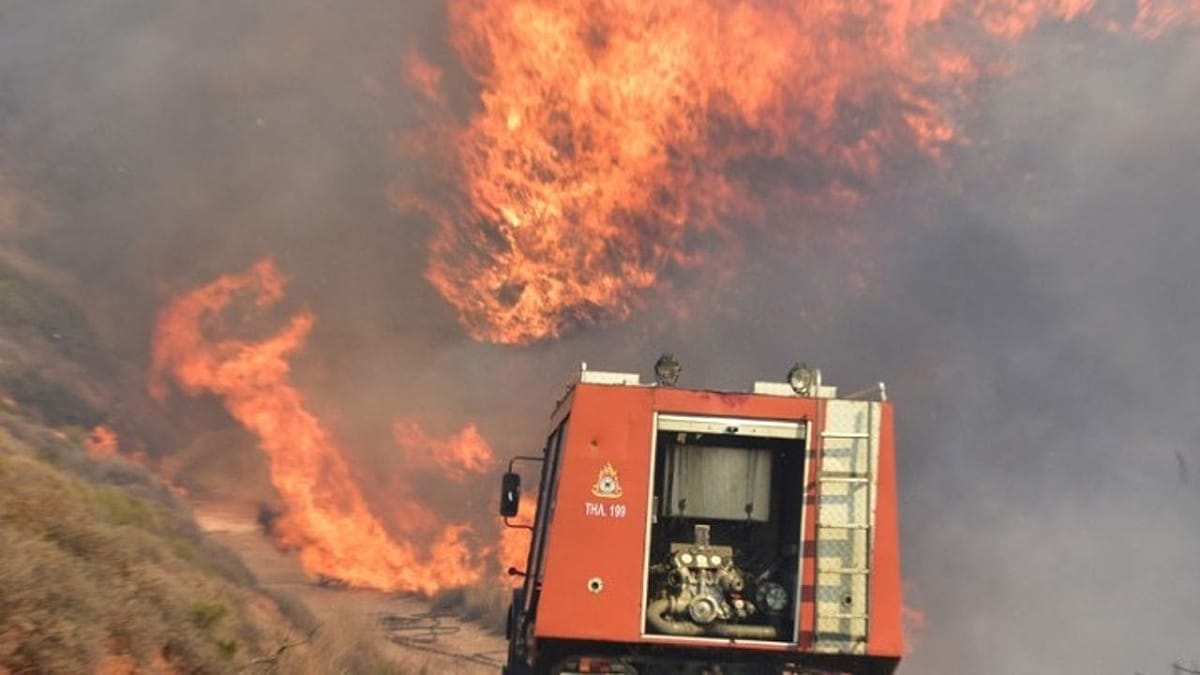
His frustration echoes across Europe, where farmers from Andalusia to Brandenburg are confronting similar conditions. Repeated heatwaves have drained reservoirs and parched soils, prompting many to rethink what they plant and how they manage the land.
Perennial grains: a new tool in the fight against drought
One option gaining attention is perennial grains. Unlike annual crops such as wheat or rice, which must be sown every year, perennials are planted once and regrow for several seasons. Their deep root systems can tap moisture far below the surface, helping them survive short dry spells. When heavy rain does come, those same roots absorb water that would otherwise run off and erode the soil.
David Mueller, a farmer in Halstead, Kansas, planted his first field of Kernza—a perennial grain related to wheat—five years ago. He now has nearly 100 acres of it, using the crop to restore degraded fields and rebuild organic matter. “Not only are we able to utilise those acres profitably, but then we also build up that soil and work on some benefits to make it hopefully profitable to raise other crops on those fields in the future,” he says.
Kernza is being developed at The Land Institute in Salina, Kansas, which has been domesticating the grain since 2001. Researchers there are also working on perennial versions of rice, sorghum and other staples. In parts of Southeast Asia and Africa, farmers have already begun harvesting perennial rice. Kernza, however, is the most advanced, with the first commercial harvest taking place in 2010.
Yet adoption remains limited. In the United States last year, Kernza was grown on just 3,511 acres, compared with more than 37 million acres of conventional wheat. The gap reflects the crop’s challenges: yields are only 20 to 40 percent of what a farmer would expect from wheat, and harvesting can be tricky.
Lee DeHaan, who leads the Kernza domestication program, explains that perennials must invest energy in both seeds and roots, unlike annuals that channel everything into grain production. “That’s why the yield is lower,” he says. “But the trade-off is resilience.”
For Mueller, the benefits outweigh the drawbacks. Kernza uses about a third of the fertiliser that wheat needs, and because it doesn’t require annual replanting, he spends less time running fuel-hungry machinery. “If you can plant something and then you don’t have to go back for four or five years… that would save so much money, so much labour, everything,” says Black, who is intrigued by the idea despite his own struggles.
Soil health: a growing concern across Europe
The stakes are high. A 2024 United Nations report warns that soil degradation could cost the global economy more than $20 trillion by 2050. Perennial crops, with their extensive root systems, help sequester carbon and improve soil structure, making farmland more resilient to both drought and flooding.
Laura van der Pol, a soil ecologist at The Land Institute, argues that incorporating perennials into agriculture is essential for long-term food security. “It’s hard to imagine getting to a place where we could have soil and abundant food without a perennial option,” she says.
In Europe, pilot projects are testing perennial grains in different climates and soils, from the loess plains of northern France to the dry hills of southern Spain. Farmers in Alsace are already experimenting with pulses as an alternative, while others are looking at perennial wheat hybrids developed by research institutes in the Netherlands and Sweden.
But progress is slow. Establishing a Kernza field can be difficult, and the market for the grain is still nascent. EU agriculture officials have so far offered little financial support for such transitions, leaving farmers to bear the risk themselves.
Despite the hurdles, Black remains open to change. “I’m in survival mode,” he says. “If there’s a way to make the land work with less water, I’ll try it.”
As climate models predict more frequent and severe droughts across the continent, the search for resilient crops is no longer a niche experiment—it is becoming a necessity. Whether perennial grains can scale up in time remains an open question, but for many farmers, they offer a glimmer of hope in an increasingly uncertain future.