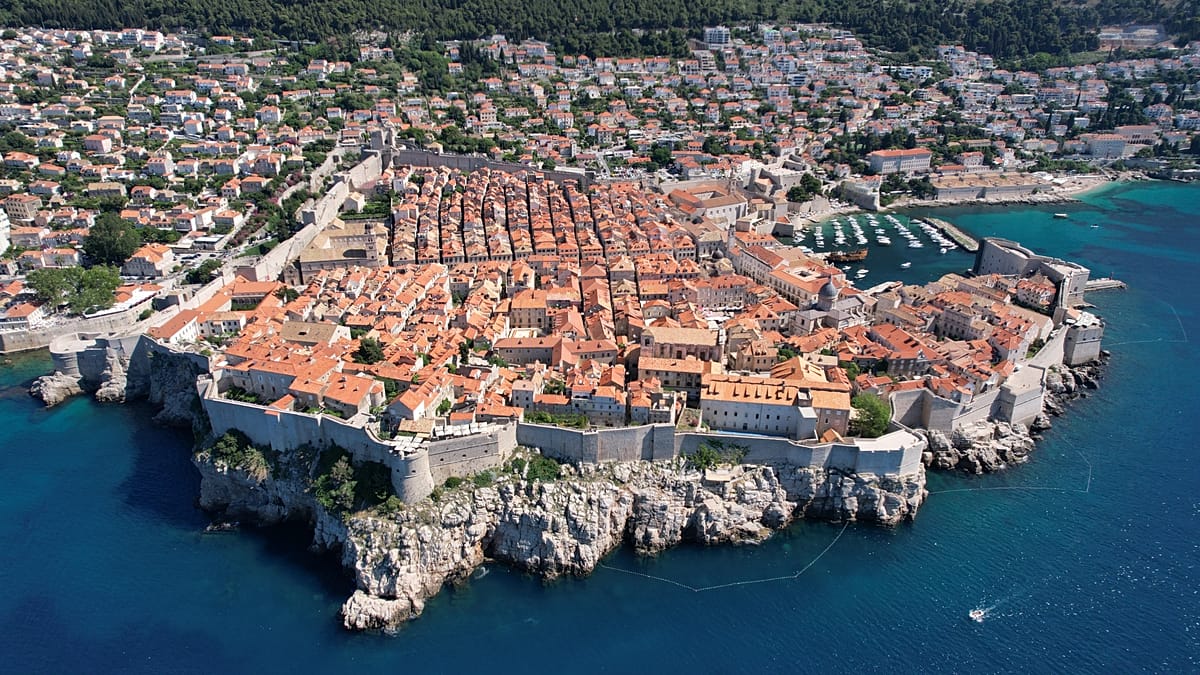
For nearly a decade, Dubrovnik has been grappling with a question that many European tourist hubs now face: how to remain a magnet for global travellers without being crushed by their numbers. The Croatian city, perched on the Dalmatian coast, has moved from crisis management to a more systematic approach—one that relies on data, scheduling, and a firm message of mutual respect.
From January to mid-July 2025, Dubrovnik recorded almost 650,000 arrivals and two million overnight stays. The largest source markets include the United Kingdom, the United States, France, Germany, Poland, Ireland, Spain, Canada, and Australia, alongside strong domestic tourism. The challenge, according to Mayor Mato Franković, is not attracting visitors but ensuring that growth does not erode the city’s heritage or the daily lives of its residents.
“Here, it’s not just about the numbers,” Franković told Euronews Travel. “Also important is how the flow of numbers is spread throughout a day and across the week.”
From chaos to coordination
Until the mid-2010s, tourism in Dubrovnik unfolded with little oversight. “For years, tourism in Dubrovnik wasn’t managed, it simply just ‘happened’ on its own,” Franković said. The Old Town, a UNESCO World Heritage site, bore the brunt of this unplanned boom. At peak times, five or six cruise ships would dock simultaneously, disgorging thousands of day-trippers into narrow medieval streets. The city’s profile, boosted by its role as a filming location for HBO’s Game of Thrones, only intensified the pressure.
In 2017, the city launched the “Respect the City” (RtC) initiative. The programme treats tourism not as a single mass but as distinct sectors: cruise passengers, day visitors, and overnight guests. Each is managed with specific tools.
Cruise ships are now limited to two per day, with a maximum of 4,000 passengers combined. Port stays must last at least eight hours. The aim is to encourage passengers to explore beyond the Old Town—visiting nearby islands, the surrounding region, or Mount Srđ, which offers panoramic views of the Adriatic. “We’ve seen that visitors are now choosing to explore more excursions elsewhere,” Franković said. “Of course, they still visit the Old Town at some point, but the traffic is now not all at the same time.”
Figures from the Dubrovnik Port Authority show that cruise tourism remains robust: 2026 is expected to bring more than 661,000 passengers across 461 ship calls. But the rhythm of arrivals has changed.
Staggering the flow
For day visitors arriving by coach—from neighbouring Bosnia and Herzegovina, Montenegro, or Croatian islands—the city has introduced a mandatory online booking system called the bus webshop. Operators must reserve arrival slots, allowing officials to spread arrivals throughout the day and adjust capacity based on events or demand fluctuations.
Overnight guests are managed partly through the Dubrovnik Pass, a digital card that grants access to museums and public transport. The pass also functions as a communication channel: the city can send recommendations on the best times to visit popular attractions, such as the Old City. “Because it's digitalised, we are able to message visitors with the best times to visit attractions,” Franković said. “We want people to choose the best times so they can enjoy the city with their families.”
Data collection has become central to policy-making. People counters installed throughout the Old Town monitor footfall in real time. The University of Dubrovnik analyses this data to identify trends and suggest improvements. The city is also exploring ways to further fine-tune the system, aiming to avoid the kind of congestion that once made summer days unbearable.
“Respect for Dubrovnik is something we ask of everyone: citizens, people working in the city, those who come to enjoy Dubrovnik – this is our message to everyone,” Franković said.
The approach has drawn attention from other European destinations struggling with similar pressures. While Dubrovnik’s solution is tailored to its geography and scale, the principles—data-driven scheduling, sector-specific management, and a clear public message—offer a template that could be adapted elsewhere. As the continent’s tourism sector continues to rebound, the question is no longer whether to manage growth, but how to do so without losing the character that makes a place worth visiting in the first place.