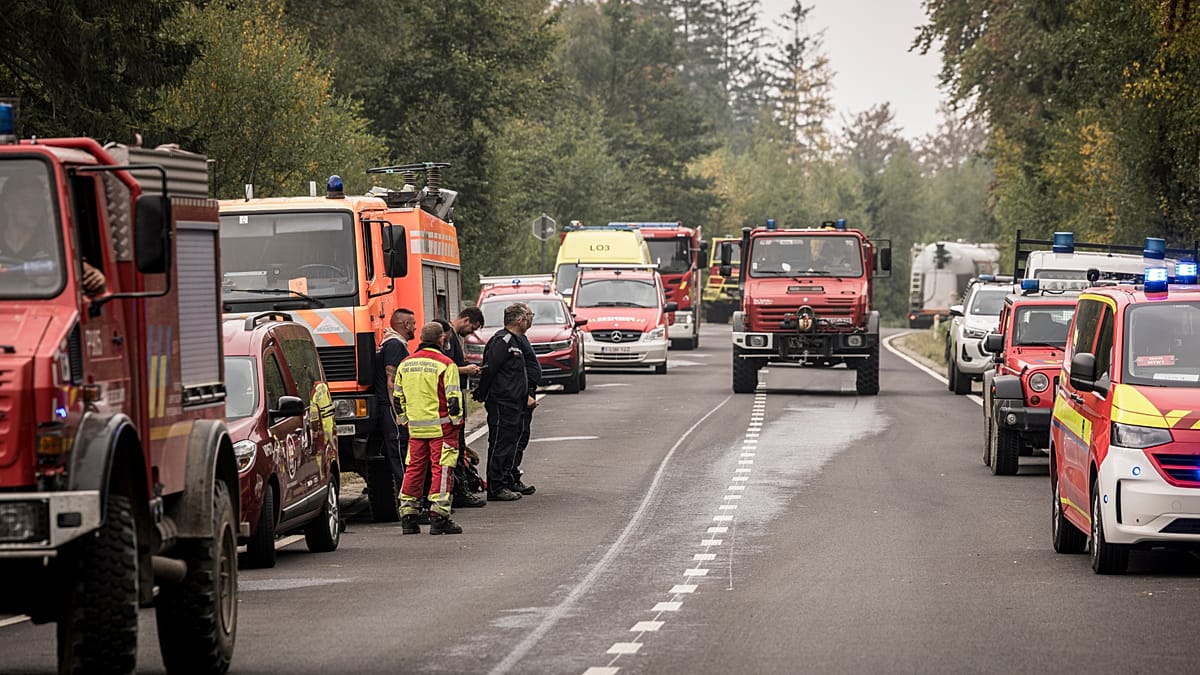
Wildfires are scorching parts of North America and Europe, heatwaves are gripping cities from Madrid to Warsaw, and the world's oceans are running hotter than ever recorded for this time of year. A strengthening El Niño is forecast to be among the strongest on record, which could push global temperatures to new extremes and disrupt weather patterns across the continent.
So far, 2026 ranks as only the third-hottest year on record, behind 2024 and 2025, according to climate statistics. But scientists say that could change by year's end. With human-caused warming accelerating and a supersized El Niño building in the Pacific, there is a growing chance that 2026 will surpass 2024 as the hottest year ever measured—or at least come very close.
Even if 2026 sets a record, it may not hold for long. While experts disagree on whether 2026 will top the charts, many agree that 2027 is nearly certain to beat any modern year for heat, possibly by a wide margin.
Rising odds of a record year
Zeke Hausfather, a climate scientist at Berkeley Earth, calculates a 35 per cent chance that 2026 will overtake 2024. That figure has climbed steadily from just seven per cent in March, reflecting updated forecasts and ocean heat data. James Hansen, the former top NASA climate scientist often called the godfather of climate science, predicts 2026 will edge out 2024 by the end of the year.
The world's daily sea surface temperature has been at or above record levels since May, and since June it has been record-hot nearly every day. Because oceans cover more than 70 per cent of the globe, there is typically a lag of about six weeks before ocean heat translates into global average temperature, Hansen explains. That suggests the full impact is still to come. About 82 per cent of the world's ocean surface is currently experiencing marine heatwaves, according to Europe's Copernicus climate service.
The US National Oceanic and Atmospheric Administration (NOAA) forecast about a month ago that 2026 had only a 0.1 per cent chance of becoming the hottest year, with a 66 per cent chance of ranking fourth. But Russell Vose, NOAA's monitoring chief, says those odds will rise once July data is fully analysed.
Hausfather attributes the shifting outlook to increasingly strong forecasts for a “mind-numbing” El Niño. This natural phenomenon, which involves a warming of the equatorial Pacific, typically releases pent-up ocean heat and can amplify global temperatures. Because greenhouse gases trap heat and about 90 per cent of that excess energy goes into the seas, there is more heat available to be released, says Zachary Labe, a climate scientist at Climate Central.
The amount of heat stored in the world's oceans—a key marker of human-caused climate change—continues to set new records, Labe notes.
This summer's heat is human-caused
Climate scientists stress that the heatwaves and wildfires of summer 2026 cannot be blamed on El Niño, whose effects typically emerge months later. The extreme conditions are what researchers have long warned about as a result of burning coal, oil, and gas.
“The driver of the record warmth is climate change in the background. And it’s a much larger—much, much larger—contribution than El Niño, which is just a tenth to two-tenths of a degree on top of that long-term trend,” Labe says.
Hansen says warming is accelerating, partly because traditional industrial pollution that produces cooling aerosols—such as soot and smog—is declining. This unmasking effect allows greenhouse-gas warming to show through more strongly. He also suggests the climate may be responding to greenhouse gases more sensitively than previously thought.
Europe's exceptional heatwave season
This summer's heatwaves have hit hard in regions unaccustomed to extreme temperatures, unlike the tropics. They have been especially intense at night, making it difficult for people to sleep and affecting health and productivity, says Samantha Burgess, global strategic lead at Copernicus.
Burgess points to Europe, which has experienced an “exceptional” heatwave in May, another in June, two in July, and another ongoing in France and Spain. “European heatwaves are not in isolation. So there’s also been shocking heatwaves in North America. There’s been shockingly hot conditions in South America as well. There’s been devastating heatwaves in India,” she says. “There’s always heatwaves somewhere in the world sometime, but what is very unusual for Europe for this particular year is the frequency and extent of the heatwaves.”
Princeton University climate scientist Michael Oppenheimer says these events are exactly what scientists have been predicting. “These are vivid pictures of not just the future, which is what we used to say, but on the whole of what climate change is doing. There’s no question that climate change is here and now.”
The situation is compounded by record-low hydropower across Europe as drought persists, and the Danube at record lows has forced emergency energy measures in central Europe. These developments underscore the continent's vulnerability to climate extremes.