The European Commission's Joint Research Centre (JRC) has confirmed that El Niño is 'virtually certain' to develop this year, with a high probability of persisting until 2027. The phenomenon, which involves abnormal warming of sea surface temperatures in the Pacific Ocean, is expected to reach 'very strong' intensity, potentially surpassing the event of 12 years ago. While its direct effects on Europe are limited, the JRC warns of global food risks due to drought, compounding high energy and fertiliser prices and threatening crops like durum wheat, maize, rice, soya, and winter wheat.
The World Meteorological Organization (WMO) earlier this month estimated an 80% probability of El Niño developing between June and August, with a 90% chance of lasting through the end of the year. UN Secretary-General António Guterres called it a 'climate alarm bell,' noting that it will intensify global heating and cross borders at devastating speed.
Indirect Effects on Portugal
Portugal, though far from the Pacific, is not immune. The Portuguese Institute for Sea and Atmosphere (IPMA) acknowledges that while El Niño's effects on Portugal are neither direct nor straightforward, it can influence global climate patterns. Climatologist Carlos da Camara, a senior researcher at the Dom Luiz Institute, compares the phenomenon to throwing a large stone into a pond: the disturbance spreads in concentric ripples, losing strength as it travels. 'The direct influence on the European continent is small, very small. In particular on the Iberian Peninsula, it is smaller still,' he explains.
However, da Camara warns of an 'explosive cocktail' when El Niño's indirect effects combine with climate change. In Mediterranean Europe, where climate change is felt intensely, the impact could be amplified. 'My concern is that there may be a heatwave like the one in 2003, which was the most severe heatwave ever recorded in Europe,' he says. That summer, an estimated 70,000 excess deaths occurred across the continent.
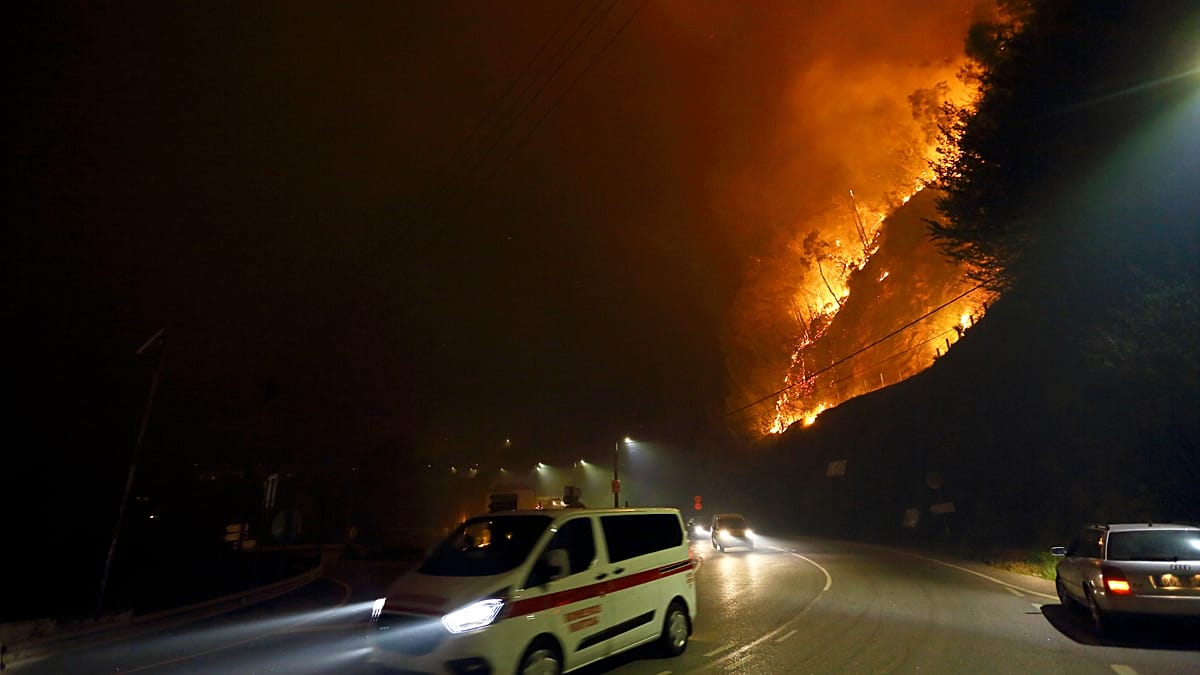
Da Camara points to a specific risk: the sequence of storms linked to the Kristin depression earlier this year brought down millions of trees across Portugal, leaving abundant biomass on the ground. Combined with a very rainy spring, this fuel load could feed large-scale wildfires if a heatwave strikes. 'We could, for example, see a large-scale wildfire, and that in a very tricky time of year,' he warns.
The IPMA is forecasting very high temperatures from the weekend, with values exceeding 40°C in several inland areas. Some private models have suggested thermometers could reach 50°C, but da Camara calls that figure 'an upper threshold with a high degree of uncertainty.' He says he does not yet have enough information to predict whether the 2003 level will be reached in the coming days.
Da Camara sums up: 'Will El Niño have direct influences? No. Indirect influences? Very probably, yes. Indirect influences on top of a background that has been worsened and degraded by climate change, which can lead to much greater impacts? The answer is yes, certain.'
Portugal has already experienced devastating wildfires in recent years, including the 2017 Pedrógão Grande fires that killed 66 people. The country has since invested in prevention and response, but the combination of El Niño and climate change raises new concerns. For more on Portugal's heatwave preparations, see our earlier report: Portugal Braces for Heatwave as IPMA Warns Against Alarmist Online Forecasts.
As Europe faces a summer of potential extremes, the need for vigilance is clear. The EU's Joint Research Centre continues to monitor the situation, while national authorities like IPMA urge preparedness. For those planning summer travel, consider Five Central European Summer Destinations Beyond the Beach as an alternative to fire-prone regions.