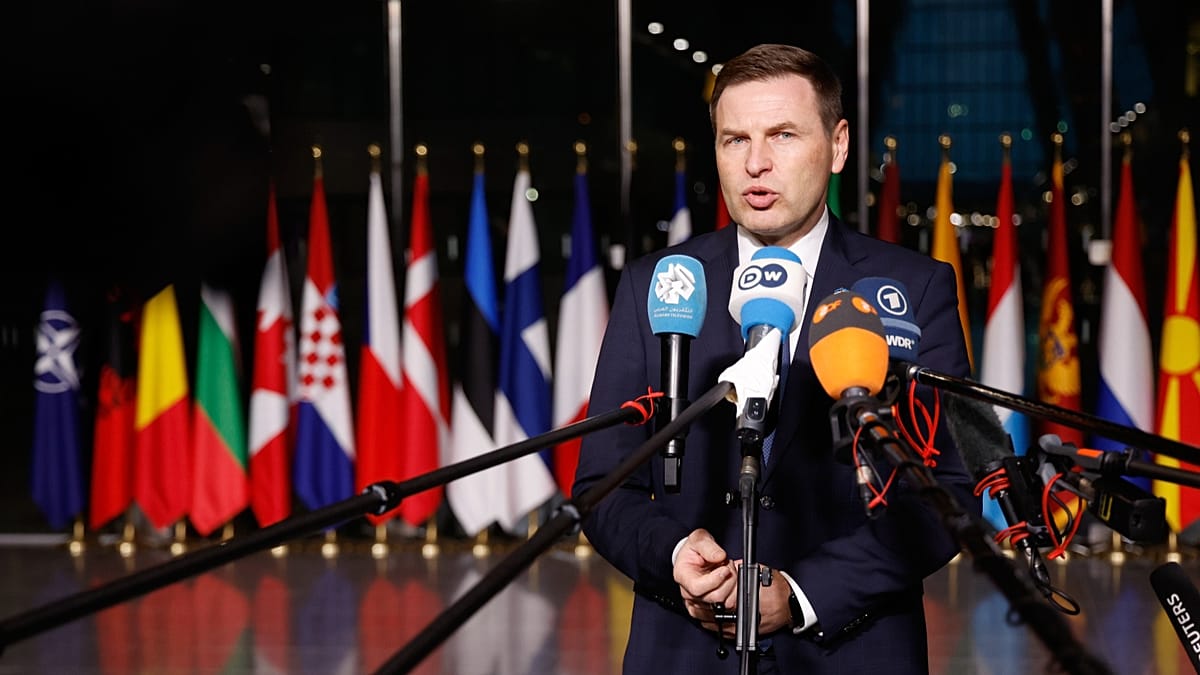
Estonia's defence minister, Hanno Pevkur, announced his resignation on Wednesday, taking political responsibility for a procurement scandal involving European Union funds meant to supply artillery shells to Ukraine. The deal, worth €70 million, was paid upfront from the EU's European Peace Facility, but the companies selected had never produced a single artillery shell.
According to Estonian public broadcaster ERR, the government signed the contract in 2024 with firms that lacked any proven manufacturing capability. The state is now disputing the agreements before the European Court of Arbitration in Strasbourg, seeking to recover the funds or force delivery.
Pevkur, who has led the defence ministry since 2022, announced his departure on public television, acknowledging that the criticism from the National Audit Office raised questions of political accountability. "Although the minister does not count socks and ammunition or conduct contract negotiations, the National Audit Office's criticisms, primarily concerning the activities of the Defence Forces and the Centre for Defence Investments, raise the question of political responsibility," he said.
The National Audit Office had issued a scathing report last month, highlighting serious deficiencies in defence spending and procurement practices. It specifically flagged the Estonian Centre for Defence Investments, the agency responsible for military acquisitions, for failing to conduct adequate due diligence.
Pevkur defended his own role, insisting that defence ministers are not involved in the minutiae of individual contracts. "The defence minister does not conduct contract negotiations. The defence minister does not count socks and ammunition," he said, adding that his fundamental decision was to support Ukraine. He also admitted he had not personally read the disputed contracts.
The scandal comes at a delicate time for European defence cooperation. The European Peace Facility, established before Russia's full-scale invasion of Ukraine in 2022, has become a key instrument for channelling military aid to Kyiv. It has financed everything from lethal weapons to training and equipment, but this case exposes the risks of rushing procurement in a crisis.
Estonia, a frontline state bordering Russia, has been one of the most vocal advocates for increased military support to Ukraine. Tallinn has consistently pushed allies to do more, and its own defence spending is among the highest in NATO as a share of GDP. The resignation of a minister known for his hawkish stance is a significant blow to the government's credibility.
The affair also raises broader questions about oversight in EU-funded defence projects. While the European Commission has proposed new mechanisms to accelerate joint procurement, this episode suggests that speed can come at the cost of accountability. As Brussels assembles expert panels to close defence gaps, the Estonian case serves as a cautionary tale.
Meanwhile, the EU is preparing a multibillion-euro package for Ukraine's air defence, as Patriot stocks dwindle. The bloc is also debating how to use frozen Russian assets, with Sweden urging the EU to tap those assets for Kyiv's benefit. But the Estonian scandal may prompt calls for stricter vetting of suppliers before funds are released.
Pevkur's resignation is unlikely to end the controversy. The National Audit Office has called for a full review of the procurement process, and prosecutors may become involved if criminal negligence is suspected. For now, Estonia's government faces the difficult task of restoring trust in its defence institutions while continuing to support Ukraine in its war against Russian aggression.