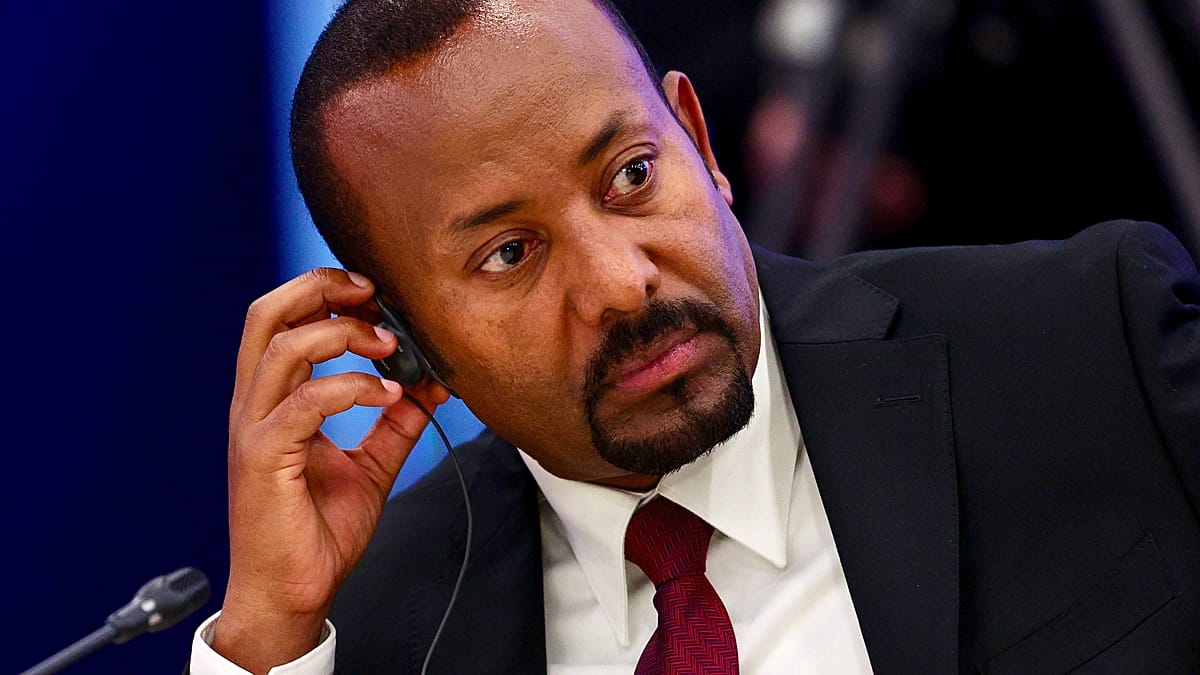
Ethiopia's army chief has accused Egypt and Sudan of supporting a newly formed alliance of armed groups intent on removing Prime Minister Abiy Ahmed, warning that these groups cannot succeed without foreign backing. Field Marshal Birhanu Jula said the rebels would be unable to operate unless they were "pushed, supported and supplied" from abroad.
In an interview with the Ethiopian army's media outlet, Birhanu also accused Eritrea of acting as a conduit between foreign backers and armed factions inside Ethiopia. He did not provide evidence for the allegations, and neither Egypt nor Sudan had publicly responded by Sunday morning.
The alliance, announced last Sunday, brings together seven groups, including the Tigray People's Liberation Front (TPLF), the Oromo Liberation Army, and the Amhara Fano National Movement. Its members say they aim to dismantle Abiy's government and install a transitional administration.
Renewed fighting in the north
The accusation comes as clashes intensify in northern Ethiopia. Tigrayan forces have seized airports and engaged federal troops in the neighbouring Amhara and Afar regions. UN human rights chief Volker Türk has called for an urgent end to the fighting, warning that Ethiopia could slide back into full-scale war.
This is not the first time the region has been destabilised. A previous conflict between federal forces and Tigrayan fighters from 2020 to 2022 left tens of thousands dead and displaced millions. The current escalation threatens to undo the fragile peace agreement that ended that war.
Nile dam dispute adds to tensions
Birhanu's accusation against Egypt follows a sharp exchange over the Grand Ethiopian Renaissance Dam (GERD) on the Blue Nile. Egyptian Water Resources Minister Hani Sewilam said last week that Ethiopian politicians needed to understand that building a dam on a shared river was "not like laying a carpet in their homes." He rejected Ethiopia's position that decisions about the dam fall solely under its national sovereignty.
Ethiopia's Water and Energy Ministry responded two days later, calling Sewilam's remarks a reflection of a "crude colonial mentality." It accused Cairo of acting as though its approval were required before upstream countries could use the Nile's waters.
Egypt and Sudan have long demanded a legally binding agreement on how the dam is operated, particularly during droughts, and on information sharing about water releases. Ethiopia insists the dam is vital for electricity generation and development, and maintains it will not cause significant harm downstream. Egypt, which relies on the Nile for more than 90% of its freshwater, sees the dam as an existential threat. Ethiopia formally inaugurated the GERD in September 2025 without reaching a binding accord.
Relations with Sudan and Eritrea deteriorate
Tensions between Ethiopia and Sudan have also worsened. In May, Sudan accused Ethiopia and the United Arab Emirates of involvement in drone attacks on Khartoum airport, claiming the drones had taken off from Ethiopia's Bahir Dar airport. Ethiopia dismissed the accusation as baseless and in turn accused Sudan of supporting Tigrayan fighters. Neither claim has been independently verified.
Eritrea, which fought alongside Ethiopia's federal army during the 2020–2022 war, has seen its relations with Addis Ababa sour following the peace agreement that ended that conflict. Birhanu's latest remarks suggest that Eritrea may now be playing a more ambiguous role, potentially facilitating external support for rebel groups.
The convergence of these disputes raises the spectre of a broader regional conflict. As the Ethiopian government faces internal rebellion and external pressure, the stability of the Horn of Africa hangs in the balance. European observers, who have invested in peace efforts in the region, are watching closely. The EU has previously called for restraint and dialogue, but the current trajectory suggests that diplomatic solutions remain elusive.
For now, the immediate focus is on the ground in Tigray, where the seizure of Mekelle airport by Tigrayan forces marks a significant escalation. The international community, including the UN and the African Union, has urged an immediate ceasefire, but with both sides seemingly entrenched, the path to peace appears uncertain.