Good morning from Brussels. I’m Mared Gwyn, holding the newsletter pen again this Tuesday.
We start with historic changes to the EU’s migration laws, rubber-stamped late last night by EU negotiators. Our reporter Vincenzo Genovese, who followed the talks, writes that the new rules will allow member states to dramatically expand their deportation powers — marking the most hardline turn in EU migration policy in decades.
What the New Rules Entail
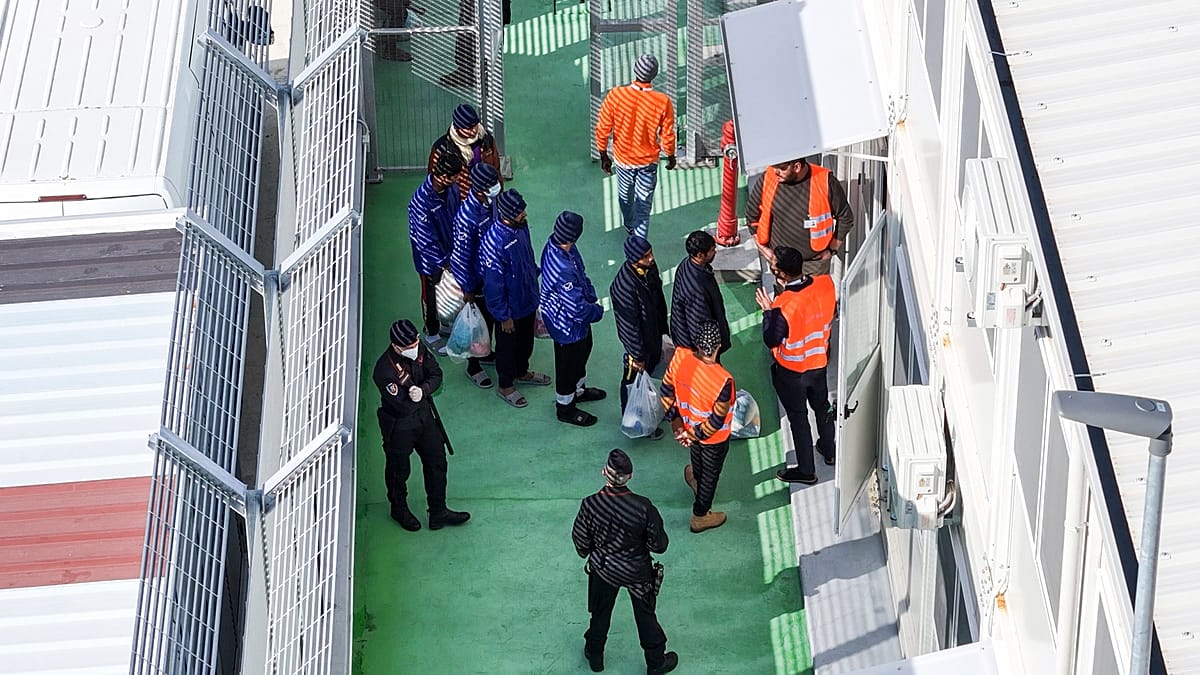
EU member states can now strike bilateral deals with distant countries to build so-called ‘return hubs’ on their territory and send irregular migrants there. These hubs may serve as transit points or long-term holding locations. National authorities are also permitted to conduct raids on sites associated with irregular migrants — a provision critics have likened to the tactics of the US Immigration and Customs Enforcement (ICE). Deportation orders can be expedited, and the maximum legal detention period for irregular migrants awaiting return will increase from six months to two years, with unlimited detention for individuals deemed a security risk.
“This is a really very important step in making sure that we have control over what is happening in the EU, over who comes but also who has to leave the EU,” Home Affairs Commissioner Magnus Brunner told reporters, including Vincenzo, at the end of the talks. “The next step is working more on migration diplomacy, together with third countries,” Brunner added, without specifying which non-EU countries might host return hubs.
The measures, which would have been considered taboo only a few years ago, have been driven by public opinion pressure and the rapid rise of anti-immigration parties. Conservatives across the continent have increasingly converged with far-right positions, pushing for a tougher approach. The low rate of successfully executed return orders — only 29% of migrants ordered to leave are returned, according to official figures — has been a growing concern.
But the new rules have long been condemned by opponents. The Greens wrote last night that the “shameful” rules put “xenophobic ideas and rhetoric into writing at the expense of the fundamental rights of migrants whose only mistake was to be born with the wrong passport.” Particularly controversial is the provision allowing raids on any site associated with an irregular migrant, raising fears that aggressive US-style tactics could become reality in Europe.
The topic is likely to shape several major upcoming elections across EU countries, with France, Italy, and Spain set to hold pivotal ballots in 2027. The issue has fuelled the rise of far-right forces such as National Rally in France and Vox in Spain, despite data showing a substantial drop in irregular arrivals in 2026 and 2025. Speaking to Europe Today earlier, Charlie Weimers, an MEP for the hard-right Sweden Democrats and a proponent of the new laws, said that “the era of deportations has begun.”
Frederiksen Holds On in Denmark
Another champion of an EU clampdown on irregular migration is Denmark’s Mette Frederiksen, who last night announced she had formed a centre-left coalition minority government after months of negotiations. Elections in late March had delivered a bruising setback for the incumbent Social Democratic Prime Minister, but she has successfully steered coalition talks and held her grip on power.
Middle East Tensions and European Implications
US President Donald Trump has said that Israel’s Benjamin Netanyahu agreed “not to go into a major raid of Beirut, Lebanon” and that Hezbollah fighters also agreed to “stop shooting” after he spoke to both sides. This came after Iran withdrew from negotiations with the US in protest at the situation in Lebanon, with the foreign ministry in Tehran saying a ceasefire in Lebanon is an “essential condition” for future talks. On Monday, Israeli forces struck the southern suburbs of Beirut after extending their incursion into Lebanon’s south over the weekend. Crude prices spiked while US bonds dipped on dampened peace prospects.
Speaking to Europe Today earlier, Lebanese MP and former deputy prime minister Ghassan Hasbani said: “I don’t trust any side to stop anything,” referring to both Israel and Hezbollah. “Effectively what the Lebanese state is trying is to de-escalate and avoid further destruction in Lebanon in a war that is not for Lebanon to be part of anyway.”
Hungary’s Péter Magyar Heads to Berlin and Paris to Seal EU Reset
Hungary’s Prime Minister Péter Magyar will visit German Chancellor Friedrich Merz on Tuesday and French President Emmanuel Macron on Wednesday, in his second major European diplomatic tour since taking office, our correspondent Sandor Zsiros reports. Magyar, who swept to power in early May after a landslide election victory over Viktor Orbán’s Fidesz party, has made restoring Hungary’s standing within the European mainstream the centrepiece of his foreign policy agenda, following years of tensions between Budapest and EU institutions. He will be received by Merz at noon, with a joint press conference scheduled for 1pm, a statement from the German Chancellor’s Office said. “During their subsequent talks, bilateral and European matters will be discussed, with continued support for Ukraine and Euro-Atlantic security also taking centre stage,” the statement said. Details of the Paris meeting have not yet been disclosed.
For more on the migration shift, see our analysis: EU Migration Law and US-Iran Tensions: Europe's Dual Challenge. Also read: EU Set to Approve Return Hubs and Tougher Deportation Rules in Major Migration Shift.