The European Union's ambition to weave its member states into a single, resilient electricity network is colliding with the realities of geopolitics in the eastern Mediterranean. The Great Sea Interconnector (GSI), a €1.9 billion subsea cable designed to link the grids of Greece, Cyprus, and Israel, has faced repeated delays as maritime disputes and financing questions cloud its future.
For Brussels, the project is more than a commercial venture. It would end Cyprus's status as the only EU member state without a physical electricity link to the bloc's grid, a situation that has left the island's energy supply isolated and dependent on costly imported fuels. The European Commission has already pledged €657 million and designated the GSI a strategic project, part of a broader push to modernise Europe's ageing power infrastructure and integrate rising volumes of renewable energy.
But the cable's route cuts through waters where Turkey contests Greek and Cypriot maritime claims. Greece asserts its sovereign rights over the continental shelf and exclusive economic zone around Crete and Kasos under the UN Convention on the Law of the Sea. Turkey, which is not a signatory, argues that islands should not automatically generate full maritime zones when they overlap with the mainland's continental shelf.
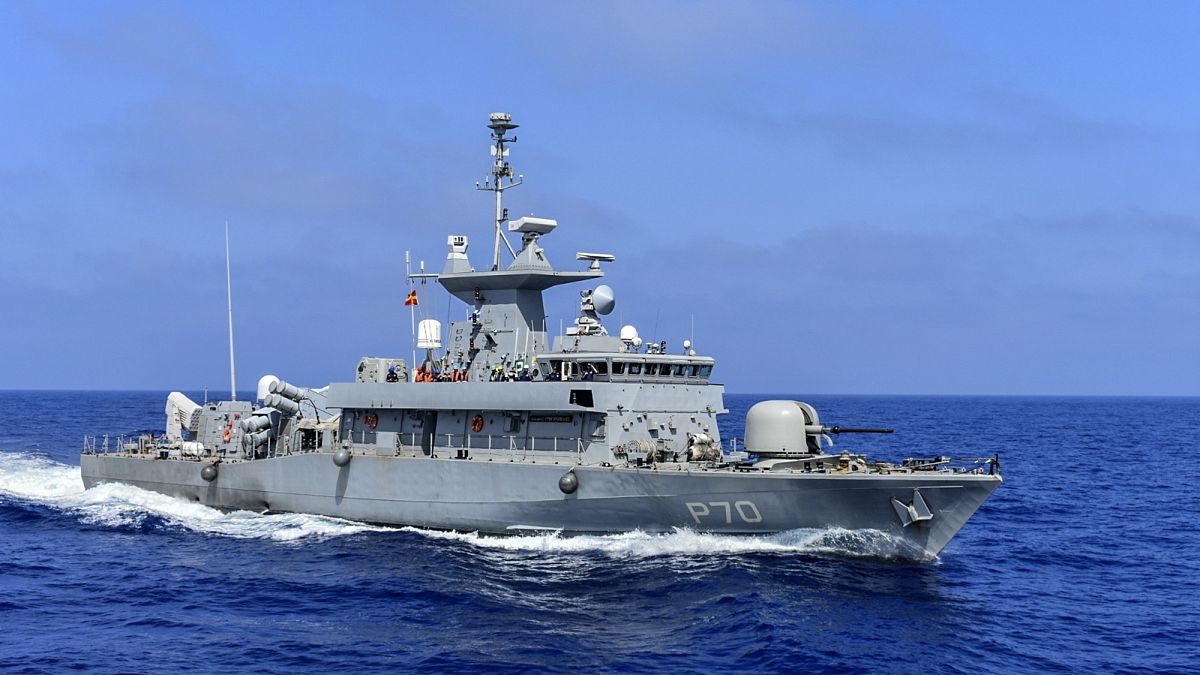
These differences have had practical consequences. In 2024, Greek authorities paused parts of the offshore survey after Turkish naval vessels appeared in areas where survey ships were scheduled to operate. While there was no direct confrontation, the incident underscored the risks of building critical infrastructure in contested waters.
Klaus Dodds, professor of geopolitics at Royal Holloway, University of London, told Euronews that Turkey views the GSI as a challenge to its own maritime vision. “The GSI, if completed, is more than a power transmission cable,” he said. “It would also demonstrate a close alignment between Greece, Cyprus, and Israel — a geopolitical combination Ankara views with suspicion.”
Turkey's rival vision
Ankara has its own plans for energy connectivity in the region. Dodds noted that Turkey would prefer to develop a separate underwater link between itself and the Turkish Republic of Northern Cyprus, a breakaway state recognised only by Ankara. The European Commission, however, has made clear that the GSI is the only project it supports to end Cyprus's isolation, reflecting a wider struggle over the future of the eastern Mediterranean.
“The EU has a strategic interest in a stable and secure environment in the Eastern Mediterranean and remains committed to defending its interests and those of its member states as well as to upholding regional stability,” a Commission spokesperson said.
Turkey's “Blue Homeland” doctrine emphasises its expansive maritime claims, while closer cooperation between Greece, Cyprus, and Israel has added another layer to the rivalry. Since the fall of the Assad regime in Syria in December 2024, Turkey and Israel have increasingly viewed each other as security threats, according to Haşim Tekineş, policy researcher at the Institute for Diplomacy and Economy. He said Turkey sees the strengthening relationship between Greece and Israel as a potential attempt to encircle and isolate it.
Tekineş also argued that Ankara could see the completion of the GSI as a loss of both geopolitical leverage and economic opportunity, particularly because Turkey seeks to position itself as an energy bridge between Europe, the Middle East, and other regions.
Financing and cost recovery
Beyond geopolitics, the project has struggled for years over financing. Greece and Cyprus have been unable to agree on how the multi-billion-euro interconnector should be funded and how costs should be recovered from electricity consumers. The original target of operational status in 2024 has long passed, and no new completion date has been set.
Energy Commissioner Dan Jørgensen has stressed the importance of international law and multilateralism in maintaining stability in the eastern Mediterranean and developing a cooperative relationship between the EU and Turkey. The Commission has also warned against Turkish plans for a separate subsea connection between Cyprus and Northern Cyprus.
Turkey, meanwhile, has been preparing a revised maritime doctrine. Ankara announced in May that it intended to enshrine its maritime doctrine in law, although parliamentary consideration was subsequently delayed until October. The final wording remains unclear.
Tekineş said that even closer ties between Turkey and the EU or the US were unlikely to make Greek-Israeli cooperation, or projects such as the GSI, acceptable to Ankara. That leaves the cable exposed to a broader geopolitical rivalry that could continue to complicate its development.
The GSI's fate is a test of whether the EU can turn its vision of a connected energy system into physical reality in one of the world's most contested maritime regions. As the bloc pushes ahead with its Green Deal and seeks to reduce dependence on external energy suppliers, the ability to build such infrastructure will be crucial. But the project also highlights the limits of Brussels' influence when national interests and regional rivalries intersect.