Imagine a future where your medicine is chosen not just by your symptoms, but by your DNA. That future is edging closer, thanks to a major European initiative that aims to map the genetic makeup of the continent's diverse populations.
The Genome of Europe programme brings together 49 partners from 27 countries to create a shared reference base of at least 100,000 human genomes. The goal is to reflect the genetic diversity of European populations, which is far richer than any single national dataset can capture.
With a budget of €45 million—€20 million of which comes from the European Commission's Digital Europe programme—the project officially began in autumn 2024 and will run for three and a half years. It is one of the largest population genomics projects ever attempted in Europe.
Why Europe needs its own genetic map
Human DNA is largely identical across all people, but small variations matter. They influence our susceptibility to diseases, how we inherit traits, and how we respond to medicines. These variations are not evenly distributed across populations, so a database built mainly from one group may miss crucial differences in others.
Genome of Europe aims to close that gap by building a representative dataset that researchers across the continent can use as a reference. As Katerina Strati, an associate professor at the University of Cyprus, explains, local knowledge is essential: "Populations, such as that of Cyprus, have their own specific characteristics." She told Euronews that understanding the genome at a local level is vital because "the relevant information cannot simply be inferred from research in other populations."
For scientists, a reference genome acts as a yardstick. It allows them to compare a patient's genetic variants against a known baseline, helping to determine whether a particular variant is common or rare in that population.
Cyprus maps its own DNA
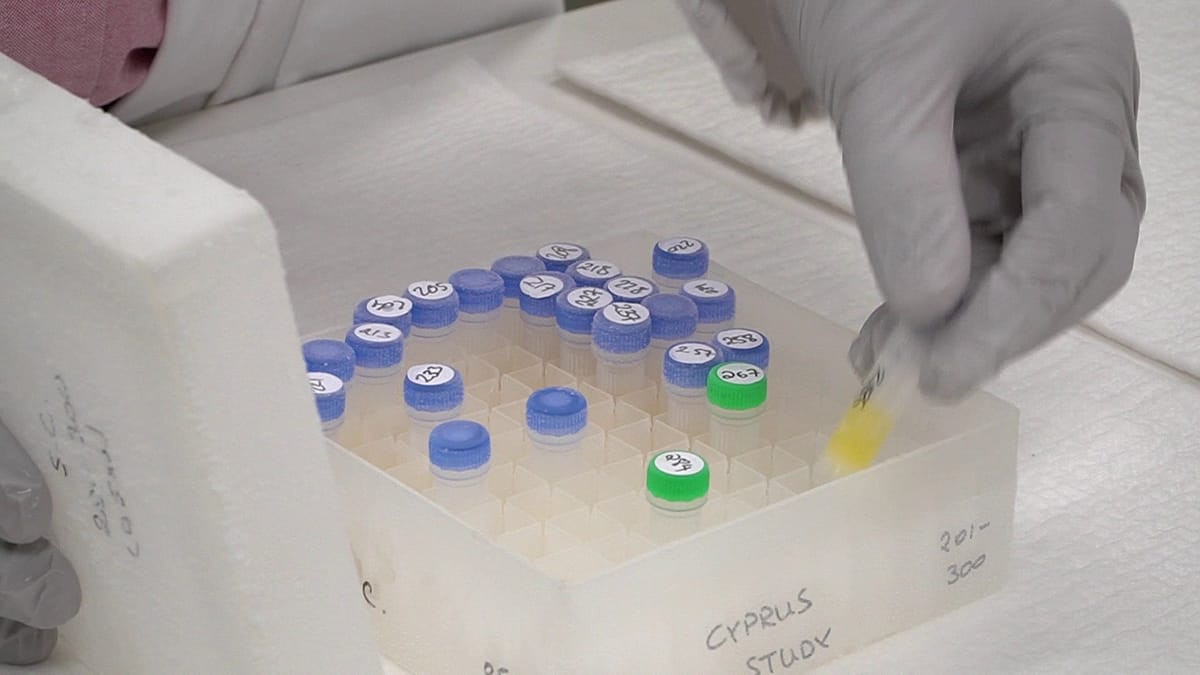
Cyprus is contributing to the European effort through the Centre of Excellence for Biobanking and Biomedical Research (biobank.cy) at the University of Cyprus. The centre will sequence the whole genomes of at least 310 Cypriot volunteers, feeding into the European reference base.
This work builds on the Cypriot Human Genome Project (CYPROME), which began in 2019. So far, more than 1,000 exomes—the protein-coding parts of the genome—have been analysed from Cypriot volunteers. The centre also holds more than 123,000 biological samples from over 12,200 participants, supporting 14 research programmes.
Studies at the biobank focus on hereditary kidney diseases, heart conditions, and other illnesses. One area of particular interest is Alport syndrome, a rare genetic kidney disease. Mariel Voutounou, a project manager at the centre, describes the search for treatments as a marathon: "When a doctor or scientist is interested in starting research into a condition, we say that they are starting a time-consuming marathon. It takes a great deal of time and effort to collect all these data and samples." She adds that having a biobank with such a wealth of information means "their starting line is 10 kilometres ahead of everyone else."
Protecting patients' DNA
DNA is among the most sensitive personal data, revealing not only an individual's health risks but also those of their biological relatives. The Cyprus Biobank operates under the approval of the National Bioethics Committee and in line with the European General Data Protection Regulation (GDPR).
Dr Georgia Charalambidou, responsible for ethical, legal and social issues at the centre, stresses that protection begins before any sample is taken. "When a volunteer comes here, the first thing we do is provide them with sufficient information," she says. "We make sure they have understood it, give them time to process it, and a consent form is always signed, recording all their rights." Participation remains voluntary even after signing, and volunteers can withdraw at any time.
The Genome of Europe project is still in its early stages, but its potential is vast. If successful, it could pave the way for medicines tailored to individual genetic profiles, faster diagnosis of rare diseases, and new preventive strategies. As the project gathers momentum, it may also help address the concerns raised by EU cancer groups about future health funding, ensuring that genomic research continues to benefit patients across the continent.