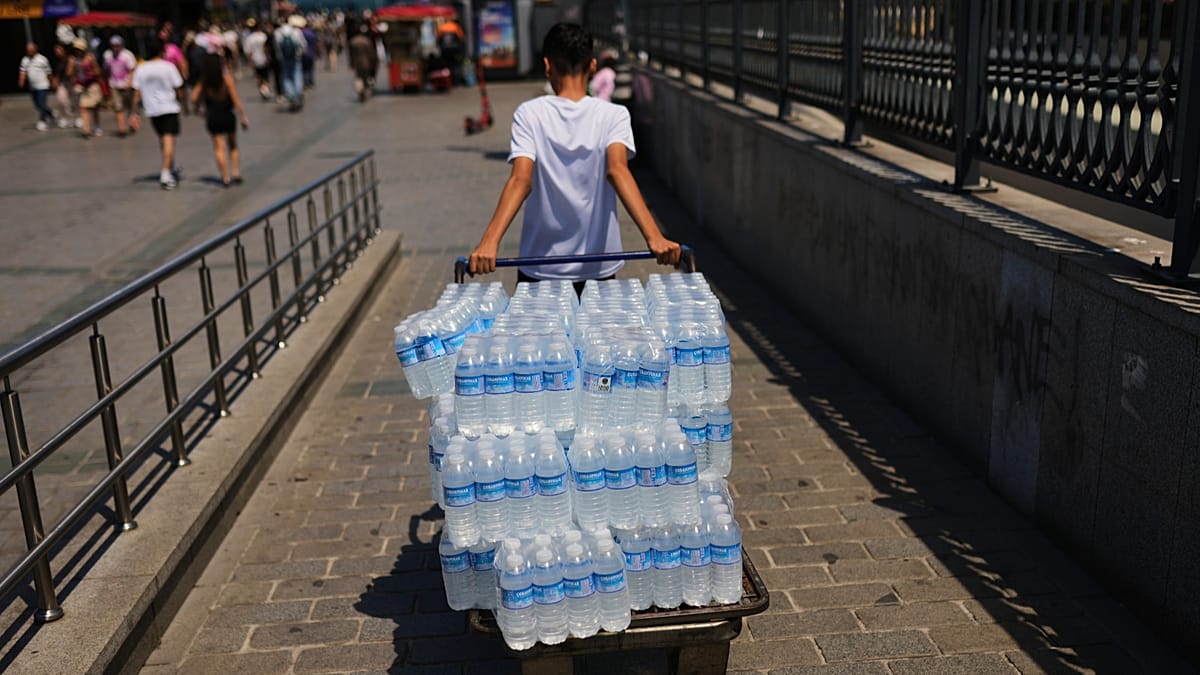
Claims circulating on social media, amplified by far-right French MEP Virginie Joron of the National Rally and Patriots for Europe group, suggest that the European Union will ban the sale of traditional shrink-wrapped multipacks of bottled water from this summer. The posts reference the EU's new Packaging and Packaging Waste Regulation (PPWR), but a closer examination reveals a more nuanced picture.
The regulation, part of a broader EU effort to reduce packaging waste and improve recyclability across the bloc, does introduce new measures taking effect on 12 August 2026. However, these do not constitute a blanket ban on bottled water multipack rings or wrappings. Instead, the first provisions primarily target limits on PFAS—persistent chemicals known as 'forever chemicals'—in food-contact packaging materials. These substances have drawn increasing scrutiny due to their resistance to degradation and environmental accumulation.
What the Regulation Actually Says
The PPWR aims to curb the growth in packaging waste across the EU. According to Eurostat, the bloc generated 79.7 million tonnes of packaging waste in 2023, equivalent to 35.3 kg of plastic packaging waste per person. The regulation sets a goal for all packaging placed on the European market to be recyclable or reusable by 2030.
Some confusion stems from provisions targeting grouped plastic packaging. The regulation does restrict certain forms of plastic shrink wrap used to bundle products together, including some multipacks. However, these restrictions apply only to plastic grouped packaging; packaging made from other materials remains permitted. Crucially, the regulation includes exemptions where grouped packaging is necessary for handling or transporting goods.
For bottled water, multipacks are expected to qualify for this exemption because they are used to transport relatively heavy loads safely. The European Commission has yet to publish detailed guidance confirming how the rules will apply in practice, but the restrictions are primarily aimed at unnecessary single-use plastic grouped packaging intended to encourage consumers to buy multiple items together—such as plastic wrapping around multipacks of drinks cans and other retail products.
After her initial post, Joron published a press release on X in response to a fact-check by French broadcaster TF1. She denounced what she described as 'total regulatory uncertainty' for the mineral-water industry and clarified that her original post had used the phrase 'in the long term' to refer to the regulation's overall objectives, rather than a blanket ban on 12 August.
This episode highlights the challenges of communicating complex EU regulations in an era of viral misinformation. For an informed European audience, the key takeaway is that while the PPWR will tighten rules on plastic packaging, the specific claim of an imminent ban on bottled water multipacks is misleading. The regulation's exemptions for transport needs mean that, for now, consumers in Paris, Berlin, or Rome are unlikely to see their water bottles sold individually anytime soon.