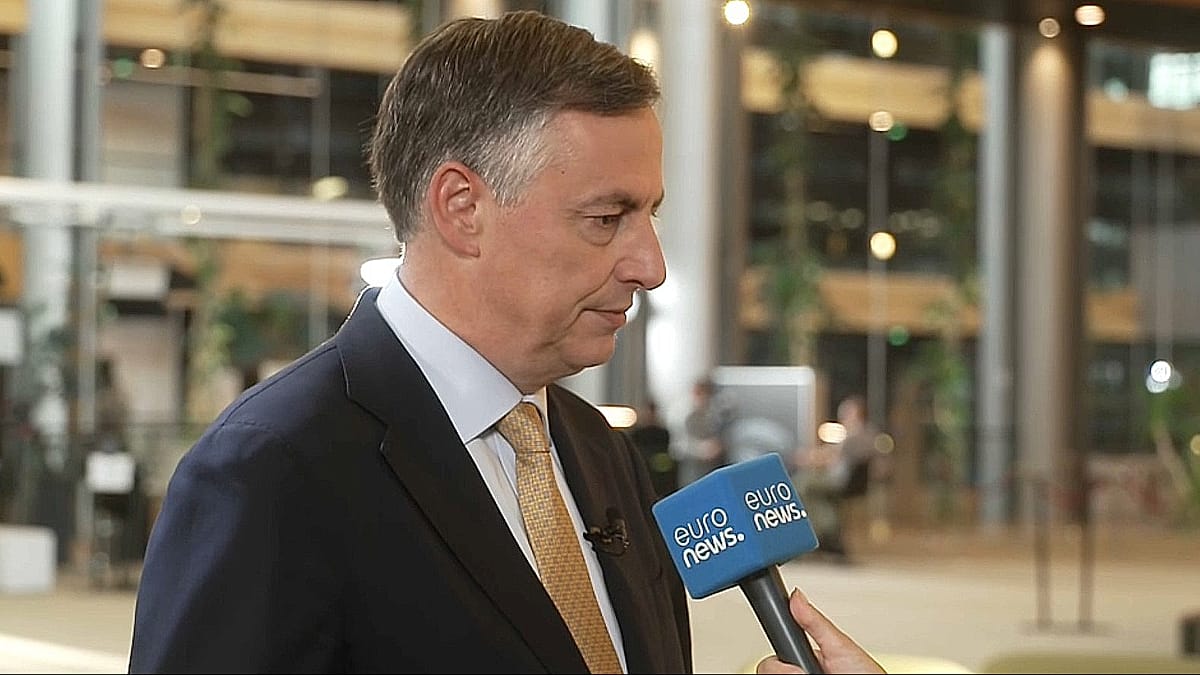
BRUSSELS — The European Union's push to deepen its partnership with Canada is not a hostile gesture toward any other nation, according to David McAllister, a senior German MEP from the European People's Party. Speaking to European Pulse, McAllister described the EU-Canada relationship as "very unique" and said European Commission President Ursula von der Leyen is determined to take it "to the next level" by offering Ottawa a bespoke form of "associate membership."
The proposal, which would give Canada privileged access to EU programs and policy coordination, has drawn sharp criticism from Washington. US President Donald Trump has threatened retaliatory tariffs against the EU over the announcement, framing the move as a challenge to American interests. But McAllister pushed back, insisting that a strengthened EU-Canada partnership "is not against any third country."
A relationship built on shared values
McAllister, who chairs the European Parliament's Committee on Foreign Affairs, emphasized that the EU and Canada already enjoy one of the most comprehensive trade agreements in the world — the Comprehensive Economic and Trade Agreement (CETA), in force provisionally since 2017. The new associate status would go beyond trade, covering areas such as research, education, and digital policy.
"Canada is a like-minded partner," McAllister said. "We share values, we share a commitment to rules-based international order, and we have a long history of cooperation. This is about deepening that relationship, not about excluding anyone."
The associate membership concept, first floated by von der Leyen in her 2024 political guidelines, is designed for countries that are not EU members but want closer integration in specific policy areas. Canada would be the first to receive this status, setting a precedent for other like-minded nations.
Ottawa has signaled strong interest. Canadian Prime Minister Mark Carney is expected to address the European Parliament in the coming weeks, and talks are underway for Canada to join the Erasmus+ student exchange program. Such moves would give Canadian students and researchers access to EU funding and networks, while European institutions would gain a new transatlantic partner.
US reaction and European resolve
The White House has reacted with alarm. Trump has repeatedly accused the EU of unfair trade practices and has threatened tariffs on European goods, including cars and agricultural products. The Canada announcement has added fuel to that fire, with Trump suggesting that the EU is trying to build an anti-American bloc.
McAllister dismissed such interpretations. "We are not building alliances against anyone," he said. "We are building partnerships for our citizens. The EU and Canada both benefit from this, and so does the broader transatlantic relationship."
His comments echo those of European Parliament President Roberta Metsola, who defended the Canada plan during Carney's address to the chamber. Metsola argued that closer EU-Canada ties are a natural extension of their shared democratic values and economic interests.
The European Commission has also sought to downplay the notion of a rift with Washington. A spokesperson noted that the EU remains committed to a constructive dialogue with the US, but will not be deterred from pursuing its own strategic partnerships.
Implications for European industry
For European businesses, the associate membership could open new doors. Canadian firms would gain easier access to EU procurement and innovation programs, while European companies could benefit from streamlined regulatory cooperation and joint research initiatives. Analysts say the pivot could boost sectors from clean tech to pharmaceuticals.
But the path is not without hurdles. The associate status requires approval from the European Council and the European Parliament, and some member states have expressed caution about setting a precedent. Others worry about the reaction from the US, which remains Europe's most important ally.
McAllister acknowledged the sensitivities but argued that the EU must act in its own interest. "We cannot let third parties dictate our relationships," he said. "The EU is a global actor, and we have the right to shape our own partnerships."
As the debate continues, one thing is clear: the EU-Canada relationship is entering a new phase. Whether it will survive the political turbulence remains to be seen, but for now, Brussels is moving forward with confidence.