The European Union's financial watchdog has issued a stark warning about the bloc's fiscal trajectory, projecting that outstanding debt could reach €1 trillion by 2027 while spending errors continue to climb. In its annual report released on Thursday, the European Court of Auditors (ECA) also urged policymakers to avoid repeating the flaws of the pandemic-era recovery fund as they negotiate the next long-term budget.
The ECA estimated that 3.8% of last year's EU budget spending, excluding the recovery fund, breached EU or national funding rules—up from 3.6% in 2024 and well above the 2% threshold for material error. While the auditors stressed that this figure does not measure fraud, they separately reported 17 suspected fraud cases to EU authorities.
For the seventh consecutive year, the EU's accounts received a clean opinion, but the auditors issued an adverse opinion on budget spending, meaning errors were both material and widespread. The highest error rates were found in cohesion funding for jobs, growth, and regional development, which rose from 5.7% to 6.6%, and in agriculture and the environment, which increased from 2.6% to 3.9%.
The European Commission, which oversees the EU budget, disputed the findings, putting its own cohesion error estimate at 2.3%. The auditors, however, said the Commission's figures were "likely to be underestimated." In a statement on Thursday, the Commission argued that its error rate was "comparable" to last year's and "significantly lower" than in 2023 and 2022, when the auditors placed it at 5.6% and 4.2% respectively. It added that its estimates and the auditors' "are not directly comparable due to their distinct mandates," citing €9 billion in preventive and corrective measures last year and an estimated final error rate below 2% for cost-based programmes after corrections.
Debt heading for €1 trillion
Outstanding EU borrowing jumped by more than 20% to €738.9 billion last year, largely due to the NextGenerationEU (NGEU) recovery package. The auditors project that this could reach €1 trillion by 2027, with NGEU debt needing to be repaid between 2028 and 2058.
For the 2028-2034 Multiannual Financial Framework (MFF), the EU's next long-term budget, the Commission has proposed a fixed €24 billion a year to repay debt raised for NGEU grants, with interest paid first. However, interest alone could amount to around €93 billion over seven years—more than half of the €168 billion total. "Expected NGEU borrowing costs for the current MFF remain double the initial estimates," the auditors wrote, noting that "the Commission has not published an overall repayment strategy for NGEU until 2058."
Liabilities backed by the EU budget, mostly loans including those to Ukraine, could reach up to €664 billion by 2027. If borrowers fail to repay, the Commission can call on member states for additional funds, putting further pressure on national treasuries.
Recovery fund lessons
The Commission's almost €2 trillion proposal for the next MFF would channel much of its money through national and regional plans largely modelled on the Recovery and Resilience Facility (RRF), NGEU's centrepiece. Unlike traditional cost-based programmes, the RRF pays out when governments meet agreed milestones and targets. Yet the auditors found that nine of the 37 RRF grant payments made last year breached the stipulated rules and conditions, including requirements on milestones, public procurement, and state aid. "The Commission has nevertheless made the corresponding payments," the report said.
In its response, the Commission defended its approach, saying that RRF spending "carries a low level of risk," as it checks milestones before paying and "does not pay all or part of the financial contribution" if it finds they were not met. However, the auditors also found that some governments were allowed to water down their commitments. Of 32 changes examined, 29 lacked sufficient evidence, with 13 of 20 milestones and targets changed after payment was requested. "This poses the risk that countries could receive EU money for delivering less than originally promised," the ECA warned.
More than €122 billion—over a third of the RRF's grants—remained unpaid going into its final year. Only France, Austria, and Croatia had received 80% or more of their grants. "Ambitious budgets demand equally ambitious safeguards," said ECA President Tony Murphy, urging the EU to "learn from experience" if it switches to paying for milestones rather than costs.
Pressure on national budgets
New borrowing under the Commission's plans could also strain national budgets. "Such planned borrowing may require member states to increase national contributions to service the debt amid already strained budgets," Murphy wrote. France's 10-year borrowing costs recently hit their highest level since 2002, while International Monetary Fund chief Kristalina Georgieva has urged high-debt advanced economies to adopt credible deficit-cutting plans.
Germany, Austria, Denmark, Finland, the Netherlands, and Sweden—all net contributors to the EU budget—have called for several hundred billion euros to be cut from the Commission's proposal, a demand they renewed last month. In contrast, seventeen other member states, including Spain and Italy, want a more ambitious budget to protect farm and regional funding. "At a time when virtually all member states are undertaking painful fiscal consolidation, the EU budget cannot be an exception," the six "frugal" leaders said in August.
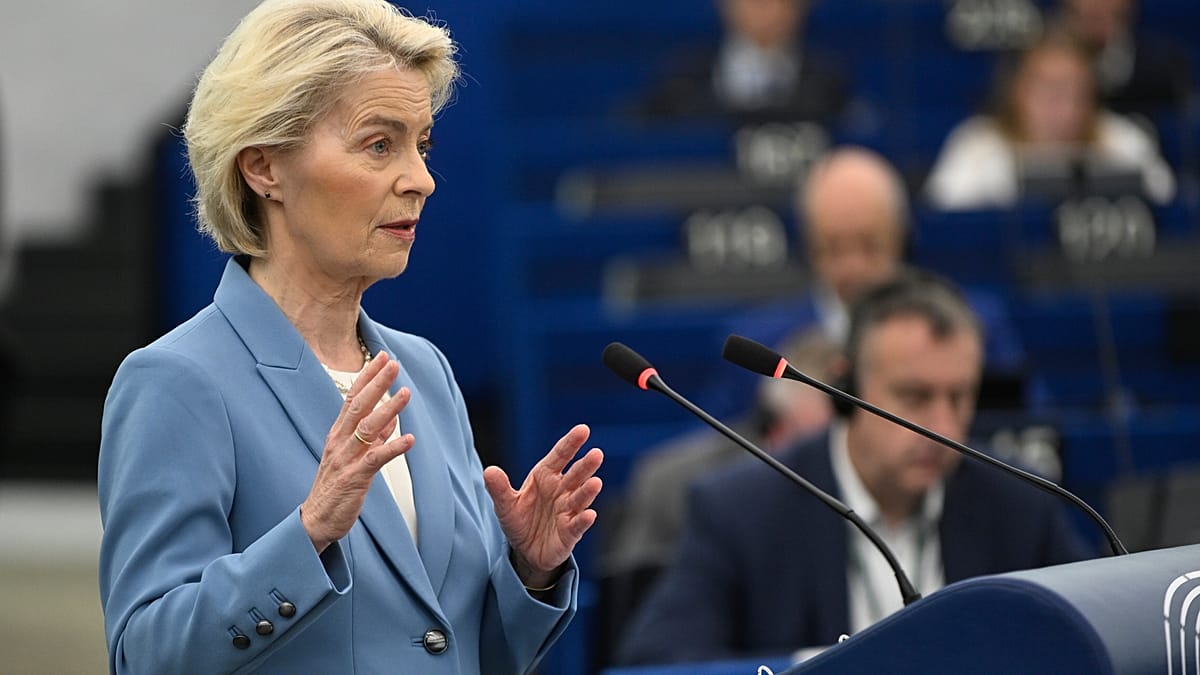
Commission President Ursula von der Leyen pushed back on Tuesday, acknowledging "the difficult budgetary situation in Member States" but cautioning against large cuts. "It would risk cutting deep into critical priorities that we all together have agreed on," she told the European Parliament, while also calling for new EU revenue sources. Most governments want a deal this year ahead of elections in 2027, including the Italian push for fiscal flexibility amid the energy crisis. The debate over the next MFF also comes as defence spending pressures mount across the continent, adding another layer of complexity to the negotiations.