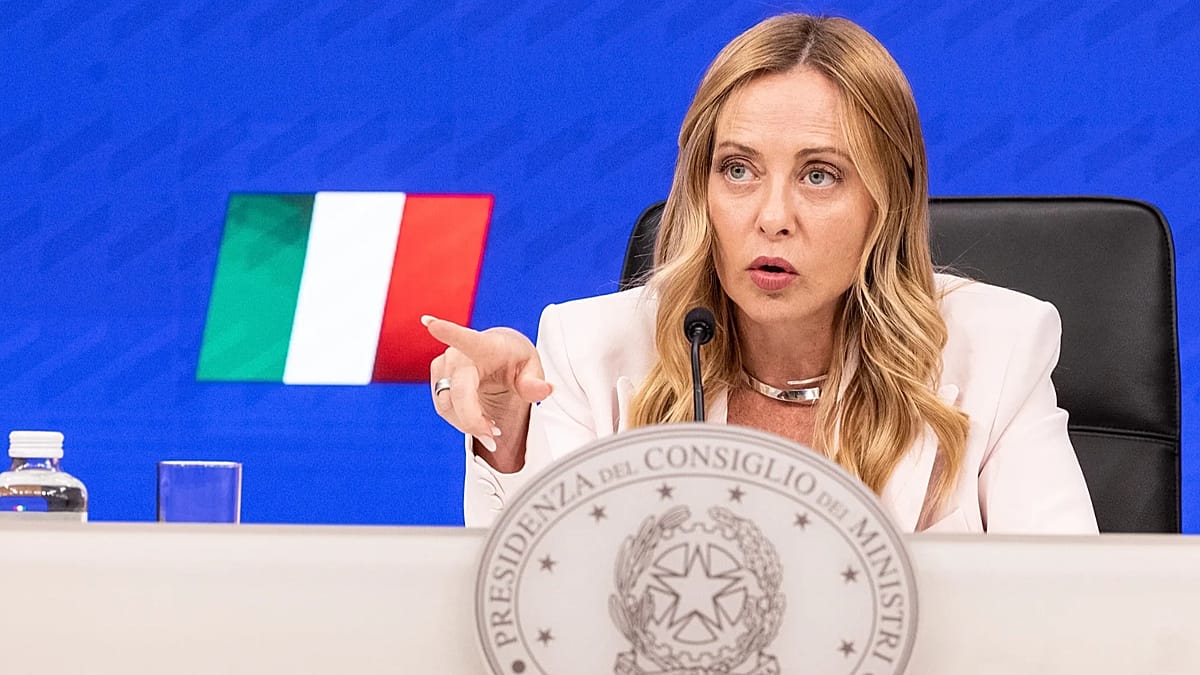
Italian Prime Minister Giorgia Meloni has again pressed the European Commission to relax the bloc's fiscal rules, arguing that the latest surge in energy prices is squeezing households and businesses and that current spending limits are too rigid. In a letter to Commission President Ursula von der Leyen, seen by Euronews, Meloni warned that the prolonged Middle East crisis has left European energy markets “extremely tight,” with oil prices up nearly 80% and gas prices rising as much as 156%.
“Against this backdrop, the agreed net expenditure paths under the European fiscal framework leave limited room to alleviate the impact on households and firms without resorting to tightening measures at a time of significant downside risks for the economy,” Meloni wrote. The appeal comes as Italy heads toward national elections next year, and as Rome holds one of the highest debt-to-GDP ratios in the EU, second only to Greece, which has recently made a similar request for flexibility.
Inflation windfall vs. spending limits
The core of Meloni's argument is that higher inflation automatically boosts government revenue, particularly from indirect taxes like VAT, but EU rules make it difficult to recycle that windfall into temporary energy support. Under the bloc's revised fiscal framework, national spending paths are set in nominal terms, so governments cannot simply increase expenditure when inflation exceeds initial forecasts. At the same time, certain outlays—such as inflation-indexed pensions—rise automatically, eating into the available headroom.
Meloni contends that this creates a paradox: governments collect more tax revenue because prices are higher, but using that extra money to fund measures that reduce energy costs can be classified as discretionary fiscal action and thus run afoul of agreed limits. She is asking Brussels to recognise that some of the additional spending is not a deliberate choice but a mechanical consequence of inflation, and to allow at least part of those extra revenues to be used for “temporary and targeted measures” to soften the blow of high energy prices—an approach EU officials have repeatedly recommended.
The Italian leader noted that spending directly affected by inflation exceeding the assumptions in Italy's budget plan amounts to 20.4% of GDP, with a further 12% of GDP in other expenditure expected to come under pressure by 2027. She acknowledged the need to respect Italy's commitments under the excessive deficit procedure and to comply with the corrective net expenditure path, but insisted that the current framework leaves too little room for manoeuvre.
“We are mindful of the risk of amending newly introduced fiscal rules that pursue a goal we all share, debt sustainability. We are also fully mindful of Italy's commitments under the ongoing excessive deficit procedure and of the need to comply with the corrective net expenditure path,” the letter reads.
The request echoes a similar appeal from Athens, as Greece presses Brussels for fiscal leeway amid the same energy shock. Meanwhile, Italy's inflation climbed to 4.2% in September, the highest in three years, adding to the pressure on households and on the government's budget planning.
The Commission has not yet responded publicly to Meloni's letter. However, the issue is likely to be discussed at the upcoming EU emergency energy talks, where member states are expected to weigh further measures to stabilise prices. Some officials have also signalled openness to releasing strategic oil reserves, as Brussels signals openness to releasing oil reserves under pressure from Washington.
Economists are divided on whether Meloni's proposal would undermine the credibility of the EU's fiscal rules, which were reformed only last year to give countries more flexibility while ensuring debt sustainability. Allowing inflation-driven revenue to be spent on energy relief could set a precedent for other high-debt members, potentially weakening the framework's enforcement. But supporters argue that without such flexibility, governments may be forced to adopt pro-cyclical tightening that deepens an economic downturn.
For Italy, the stakes are high. The country's debt-to-GDP ratio stands at around 140%, and its economy has been sluggish for years. The energy shock, exacerbated by geopolitical tensions, threatens to push the country into recession just as the government prepares for elections. Meloni's letter is a clear signal that she intends to fight for more room to act, even if it means challenging the Commission's interpretation of the rules.
The Commission has yet to issue a formal response, but the coming weeks will show whether Brussels is willing to bend its own rules to accommodate one of its largest member states. The outcome could have significant implications for the future of EU fiscal governance and for the bloc's ability to respond to external shocks.