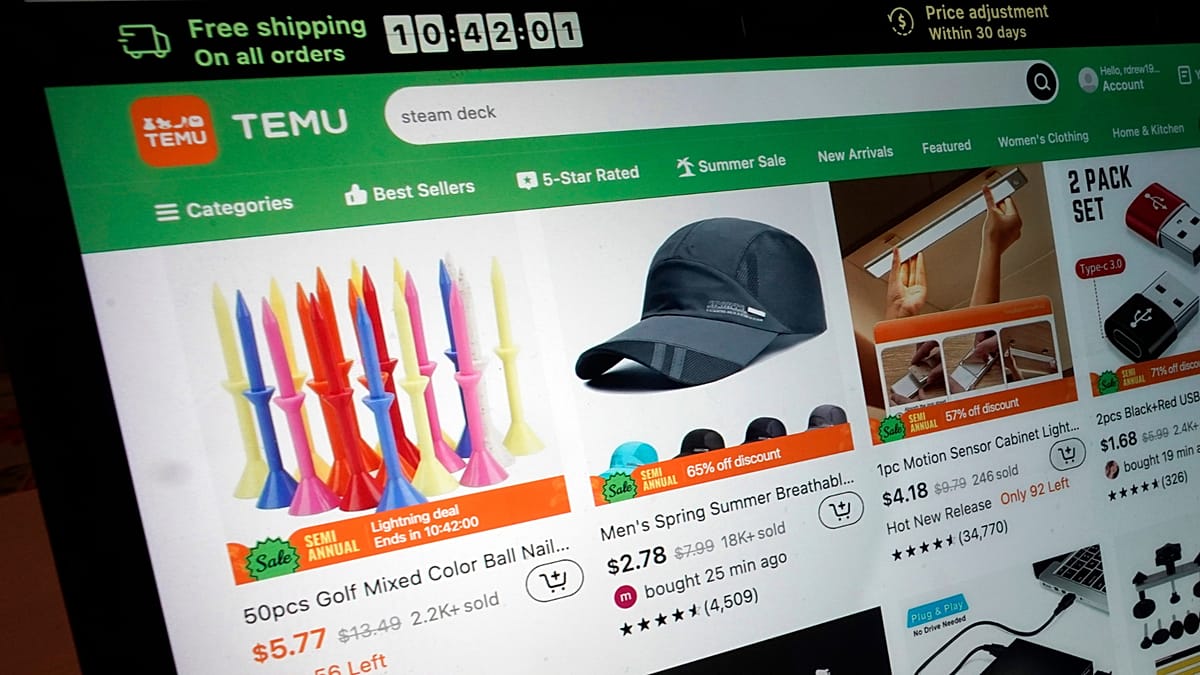
For years, European consumers could order ultra-cheap clothing and accessories from Chinese e-commerce giants like Shein, Temu, and Aliexpress without paying a single euro in customs duties. That era ended this month as the European Union closed a long-standing loophole that allowed billions of tax-free parcels to flood the continent.
Under the new rules, the exemption for low-value parcels—previously those valued under €22—has been eliminated. Instead, a flat-rate customs duty of €3 now applies to each product category within a single order, rather than once per parcel. For a shopper buying a shirt, sunglasses, and a bag in one transaction, that means a €9 customs charge on a bundle that previously entered Europe completely free of charge.
The European Commission framed the change as a necessary correction to a structural imbalance. Non-EU platforms were exploiting the exemption to ship millions of individual packages directly from Chinese factories to European doorsteps, bypassing customs duties entirely. This created severe unfair competition for local retailers, which are legally required to pay domestic taxes and comply with strict safety standards.
Why the EU Acted Now
The decision reflects growing frustration in Brussels and among member states over the scale of untaxed imports. According to EU estimates, the volume of low-value parcels entering the bloc has surged tenfold in recent years, reaching over two billion shipments annually. The vast majority originate from Chinese platforms that have built their business models on speed and rock-bottom prices.
Beyond the economic argument, the EU also cited health and environmental concerns. Ultra-cheap fast fashion is often made from non-biodegradable synthetic materials that shed microplastics during washing. Individual air-freight deliveries generate a substantial carbon footprint. Regulatory tests have repeatedly revealed toxic levels of heavy metals and chemicals in consumer products sold by these platforms.
The move aligns with broader EU efforts to tighten oversight of digital commerce and protect European consumers. In parallel, Brussels has been pushing for stricter rules on data sovereignty and cloud services, as seen in its recent crackdown on US cloud giants to boost European tech autonomy.
For European retailers, the change is a long-overdue leveling of the playing field. Small and medium-sized businesses in cities like Milan, Paris, and Berlin have struggled to compete with platforms that could undercut prices by 30 to 50 percent simply by avoiding customs. The new duty, while modest, signals that the EU is prepared to defend its internal market against what it sees as predatory pricing.
Consumers, however, will feel the pinch. A €5 dress from Shein will now carry a €3 customs charge, effectively increasing its price by 60 percent. For frequent shoppers, the cumulative cost could be significant. The European Consumer Organisation (BEUC) has warned that the change may disproportionately affect lower-income households, which are more likely to rely on ultra-cheap online retailers.
Environmental groups have welcomed the move. The European Environmental Bureau noted that the tax exemption effectively subsidized the fast-fashion industry's most wasteful practices. By removing it, the EU is sending a signal that the true cost of cheap clothing—including pollution and waste—must be accounted for.
The new rules apply to all non-EU e-commerce platforms, including those based in the United Kingdom, Switzerland, and Norway, as well as China. British travellers, still grappling with post-Brexit customs complexities, may find the change adds another layer of confusion when ordering from EU-based sites. A recent analysis highlighted how a decade after Brexit, British travellers still grapple with confusing EU rules.
Implementation will be phased over the coming months, with customs authorities in member states expected to ramp up inspection capacity. The European Commission has pledged to monitor the impact on both consumers and businesses, and may adjust the flat rate if unintended consequences emerge.
For now, the message from Brussels is clear: the era of tax-free e-commerce from outside the EU is over. Whether that will meaningfully reduce the flood of cheap goods—or simply push platforms to adjust their pricing strategies—remains to be seen.