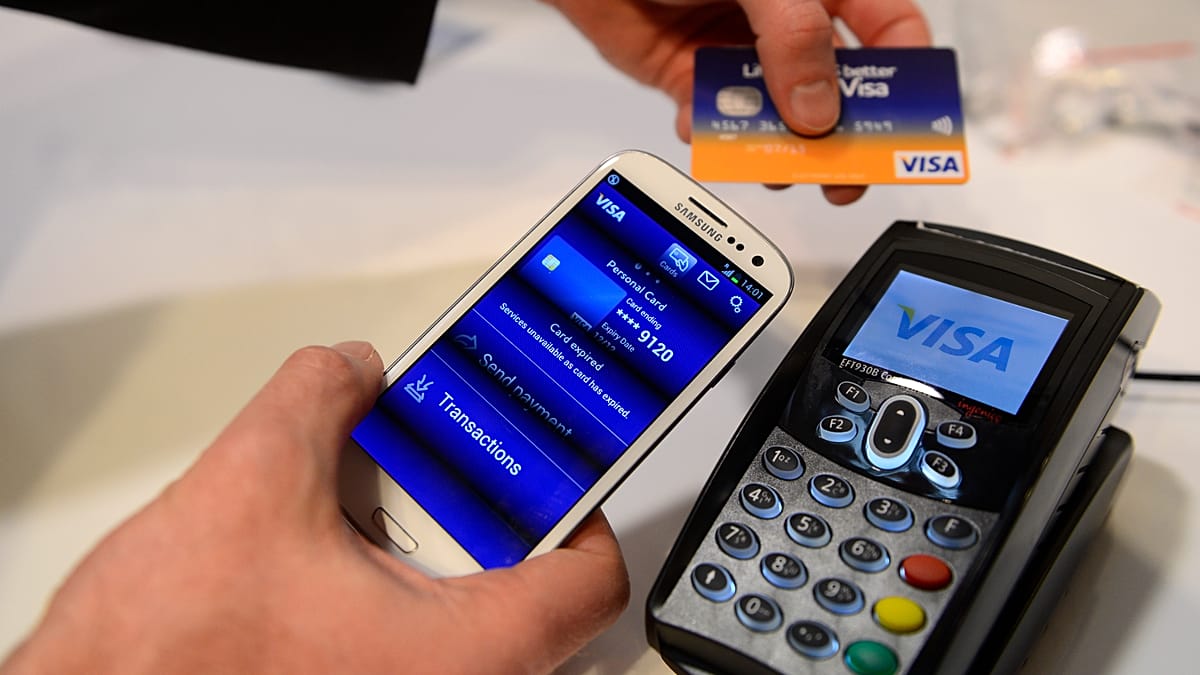
Every year, Europeans swipe, tap, and click their way through billions of euros in card payments, yet the vast majority of those transactions are processed outside the continent. Visa and Mastercard, two American giants, handle roughly 61% of card payments in the euro area and nearly all cross-border card transactions, according to the European Central Bank (ECB).
For decades, this dominance was seen as a fair trade-off for the efficiency these networks provided. But in an era of geopolitical fragmentation, EU leaders are increasingly viewing this dependence as a vulnerability that can no longer be ignored. The fear is that payment infrastructure could be weaponised, just as energy supplies and trade routes have been.
Christine Lagarde, president of the ECB, has been blunt about the stakes. In July, she told Euronews: "We predominantly rely on US, but also sometimes Chinese, networks to process payments. We need a European solution because we want to be sovereign at home." Her remarks underscore a broader shift in thinking across the bloc.
The cost of dependence
The argument for a European payment system is not only about geopolitics. It is also about money and data. Every time a European uses a card, the transaction data is stored outside the EU, often in the US, where it can be used to build consumer profiles. Retailers, meanwhile, complain that network fees have risen sharply, with terms set by companies operating beyond the EU's reach.
Direct payments between bank accounts, which bypass card networks, could inject much-needed competition and lower costs for businesses and consumers. This is one of the promises of the digital euro, an electronic form of central bank money designed to complement cash and existing banking services, not replace them.
The project has gained urgency as global powers increasingly use economic tools for leverage. Mario Draghi, former ECB president, warned in a report that interdependence has shifted from a mechanism of mutual restraint to a tool of influence and control. His words were echoed by Canadian Prime Minister Mark Carney at the World Economic Forum in Davos, who said: "The great powers have started to use economic integration as a weapon, tariffs as leverage, financial infrastructure as coercion."
The digital euro takes shape
The digital euro is now in its final negotiation phase between the European Parliament and member state governments. The ECB will provide the underlying infrastructure, while commercial banks and payment service providers will offer digital euro services to customers. Merchants are expected to pay lower fees than they currently do for card transactions.
Piero Cipollone, a member of the ECB's executive board, told Spain's El País in January that geopolitical tensions "clearly increase the level of risk" and strengthen the case for a system "built on European technology and infrastructure, entirely under our control."
The most intense negotiations are expected this autumn, with final approval targeted by the end of the year. A pilot programme is due to start in 2027, involving 36 payment service providers, and the digital euro should become available for retail payments from 2029. Portugal is notably well represented in the pilot, with Caixa Geral de Depósitos (CGD), Banco Comercial Português (BCP), and the payments company Unicre all selected to participate.
Beyond the digital euro, the EU is exploring other avenues to reduce reliance on foreign networks. Private interoperability initiatives and models like Brazil's PIX, a fast and cheap instant payment system, are being studied as potential templates. The goal is not just to create a European alternative, but to ensure that Europeans can pay anywhere in the world without depending on US-controlled infrastructure.
The push for payment sovereignty is part of a broader effort to secure Europe's digital future, which also includes securing critical networks and investing in AI gigafactories. As the bloc seeks to assert its strategic autonomy, the ability to process payments independently is becoming a cornerstone of its economic resilience.
For ordinary Europeans, the digital euro may seem like a technical detail. But the stakes are high: if the US were to cut off payment services, as it did in Russia after sanctions, the disruption would be severe. In Russia, where Visa and Mastercard accounted for 60% of payments, their withdrawal left citizens unable to access funds or buy basic goods. Europe does not want to find itself in a similar position.
The road to payment autonomy is neither quick nor easy. It requires political will, technical innovation, and international cooperation. But as the world becomes more fragmented, the ability to pay without permission is emerging as a defining feature of sovereignty.