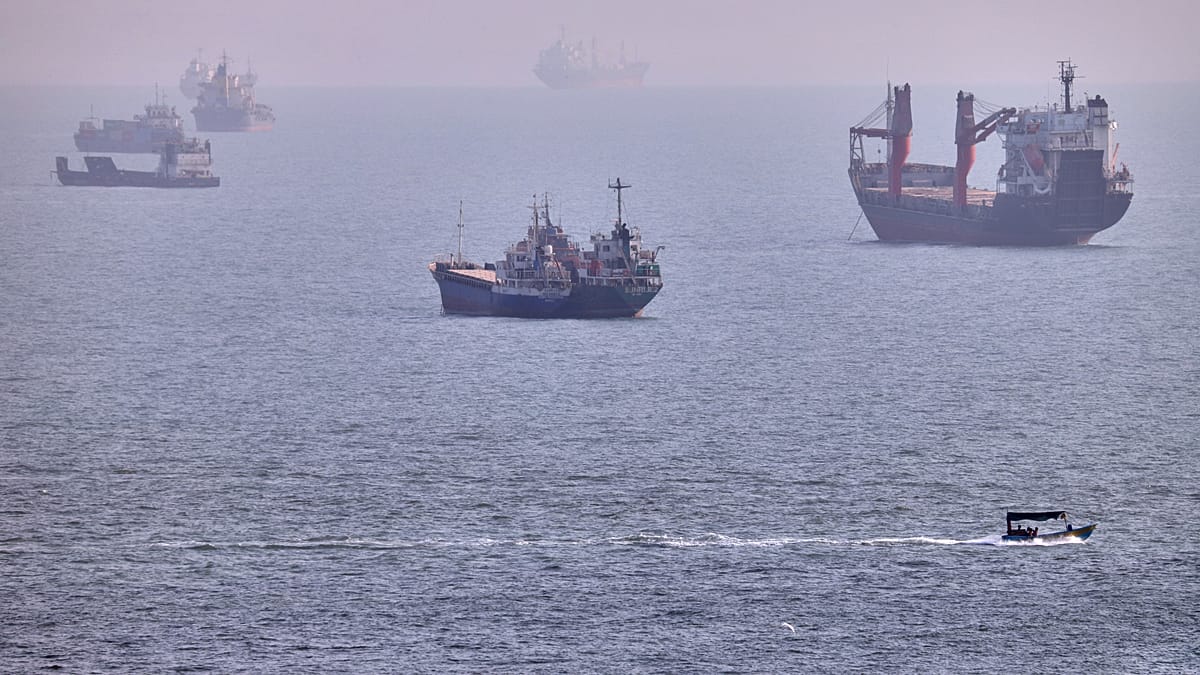
Two of the world's most closely watched energy forecasters offered starkly different visions for 2026 on Wednesday, as the prolonged closure of the Strait of Hormuz continues to reshape global oil markets.
The International Energy Agency (IEA), based in Paris, now projects that worldwide oil consumption will decline by 1.6 million barrels per day (mb/d) next year—the first annual drop since the pandemic brought the global economy to a standstill. That marks a downgrade of 510,000 barrels per day from its July estimate.
In contrast, the Organization of the Petroleum Exporting Countries (OPEC) still expects demand to grow, albeit at a slower pace than previously thought. The producer group trimmed its 2026 growth forecast for a fourth consecutive month, to 580,000 barrels per day from 780,000. The divergence between the two institutions now stands at roughly 2.2 mb/d—a chasm that reflects fundamentally different readings of how the conflict in the Gulf is affecting consumption.
Supply disruptions and falling stocks
The IEA's pessimism is rooted in the supply side. Global production rose by 2.4 mb/d in July to 101.5 mb/d, but that remained 6.3 mb/d below year-earlier levels. Around 8.3 mb/d of Gulf output is still shut in, with the Strait of Hormuz effectively closed again since early July after renewed attacks on tankers and infrastructure.
Gulf production climbed to 23.9 mb/d, yet regional exports fell by 2.1 mb/d to 15 mb/d. Loadings, which had been running at about 20 mb/d, have slumped to roughly 12 mb/d. With no deal in sight to reopen the waterway or secure passage through the Bab el-Mandeb strait, the IEA has again cut its supply forecasts and now expects output to fall by 4.3 mb/d this year.
Observed global oil stocks also dropped by 69 million barrels in July to just under 7.9 billion—down 410 million barrels since the war began. The tightening market has contributed to rising prices, which in turn are dampening demand, particularly in price-sensitive emerging economies.
A shared bet on 2027
Where the two forecasters find common ground is the following year. OPEC now expects demand to grow by 2.2 mb/d in 2027, an upgrade from its previous forecast of 1.94 mb/d. The IEA goes further, projecting growth of 2.4 mb/d.
That inversion is notable: the more bearish forecaster for this year is actually more bullish for the next. The IEA interprets the current damage as a blockage rather than a collapse—oil that cannot reach buyers, not demand that has vanished. Once the Strait of Hormuz reopens, the agency argues, the rebound could be steep. OPEC, which never accepted that consumption fell much, has less ground to make up.
The standoff over Hormuz has broader implications for European energy security, as the continent relies heavily on Gulf crude and liquefied natural gas. Qatar has reported progress in talks between Iran and Oman on reopening the strait, but no breakthrough has been confirmed. Meanwhile, oil and bond yields have climbed as the US and Iran trade compensation demands, adding to market uncertainty.
The IEA's latest report also highlights the impact on European refiners, who are paying more for alternative crude from the Atlantic basin and the North Sea. Some European ports have seen increased tanker traffic as buyers reroute around the Cape of Good Hope, but logistics bottlenecks and higher freight costs are squeezing margins.
For now, the two forecasters remain far apart, and the gap matters for policymakers from Brussels to Berlin who are trying to gauge the trajectory of energy prices and inflation. The European Central Bank, already grappling with elevated inflation, will be watching these numbers closely as it sets monetary policy for the eurozone.
As the closure drags on, the IEA warns that the risk of a supply crunch remains acute, while OPEC insists that the market will rebalance. The coming months will test which vision is closer to reality.