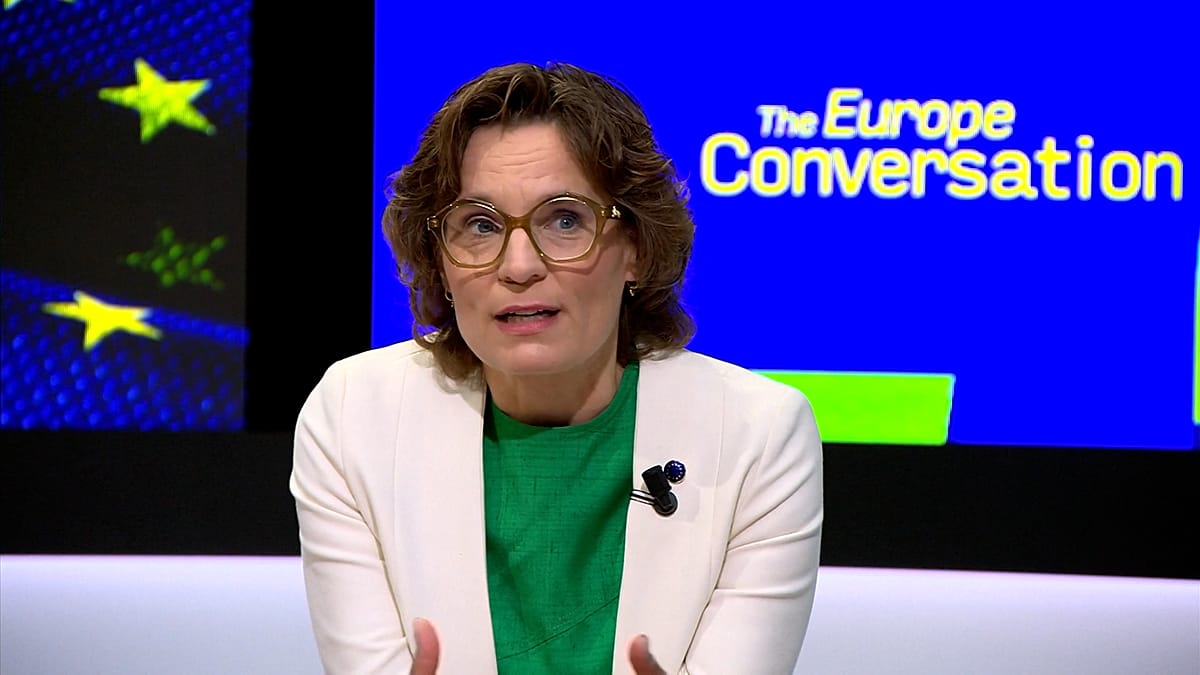
European Commissioner for Environment, Water Resilience and a Competitive Circular Economy, Jessika Roswall, has called for a fundamental shift in how the European Union approaches security, arguing that environmental policy must be woven into the bloc's defence strategy. In an interview with Euronews, the Swedish commissioner insisted that Brussels must “connect the dots” between ecological, economic, and security interests.
“There are a lot of examples,” Roswall said. “Water is not only a resource. We need water for our daily lives; we need it for energy production; we need it for food production. And when water gets scarce, we are in trouble, and that eventually is also a security threat to us.” She added that on a global scale, water scarcity is already driving conflicts.
Peatlands as Border Defences
One concrete example of this nexus is emerging along the EU's eastern frontier. Poland, Finland, and Lithuania are exploring the restoration and re-flooding of drained peatlands as a dual-purpose measure: to capture carbon and to create boggy terrain that would impede the advance of heavy military equipment such as tanks. “We see how you can turn wetlands into border controls, and make it more difficult for an invasion to pass,” Roswall noted. In Lithuania, the ministries of defence and environment are already collaborating on the initiative.
This approach reflects a broader recognition that biodiversity loss, crop failure, floods, and droughts all carry security implications. A recent report from the UK’s Department for Environment, Food and Rural Affairs (DEFRA), which involved input from intelligence agencies MI5 and MI6, concluded that natural degeneration is the primary threat to the United Kingdom's national security. “The effects, of course, are the same for many other countries,” Roswall said. The report warned that without major intervention, biodiversity loss could trigger geopolitical instability, economic insecurity, conflict, migration, and intensified competition for resources.
“We need to understand that the risk of not investing in nature comes with an economic risk, but also with a security risk,” Roswall argued. “That's why I think we don't have a choice on whether to invest in our future; we need to do it.”
Resource Dependency as a Vulnerability
The commissioner also highlighted Europe's reliance on external suppliers for critical inputs. The US conflict with Iran and the subsequent Iranian blockade of the Strait of Hormuz exposed the bloc's dependence on imported fertilisers, driving up costs for European farmers. “That again shows us that dependency comes with a cost,” Roswall said, noting that Europe is similarly reliant on non-EU countries for energy and critical raw materials.
In this context, the forthcoming Circular Economy Act — scheduled for proposal in late 2026 — is positioned as a tool for strategic autonomy. The legislation aims to increase the proportion of materials recovered from waste for reuse and reduce the share of virgin materials imported for products like electronics. “It is not only Europe that needs these critical raw materials. The fight for these materials is getting tougher,” Roswall explained. “We need to be more self-sufficient, and circularity plays a crucial role in using the materials that we have in Europe more efficiently. We are a goldmine, actually, but we don't use it.”
To make this work, the EU wants to create a single market for secondary raw materials — recycled materials recovered from waste. “We need to make the business case for secondary materials, because virgin materials are cheaper today than secondary materials, but they are also scarce and being weaponised,” Roswall said. “So we need to get rid of this dependency, and for this, consumers, policymakers and businesses need to have a change in mindset.”
The commissioner’s remarks come amid broader debates about European defence spending and strategic autonomy. As Baltic states face radar shortages and UK Prime Minister Keir Starmer warns of a potential Russian threat to NATO by 2030, the integration of environmental policy into defence planning is gaining traction as a pragmatic, cost-effective measure.