Brussels — The European Union's much-vaunted Pact on Migration and Asylum has stumbled out of the gate. In its first year of operation, only 1,283 asylum seekers will be relocated between member states, according to EU and diplomatic sources. That figure is a far cry from the 30,000 annual minimum that the European Commission had originally proposed, and it underscores how deeply national governments have hollowed out the pact's core principle of mandatory solidarity.
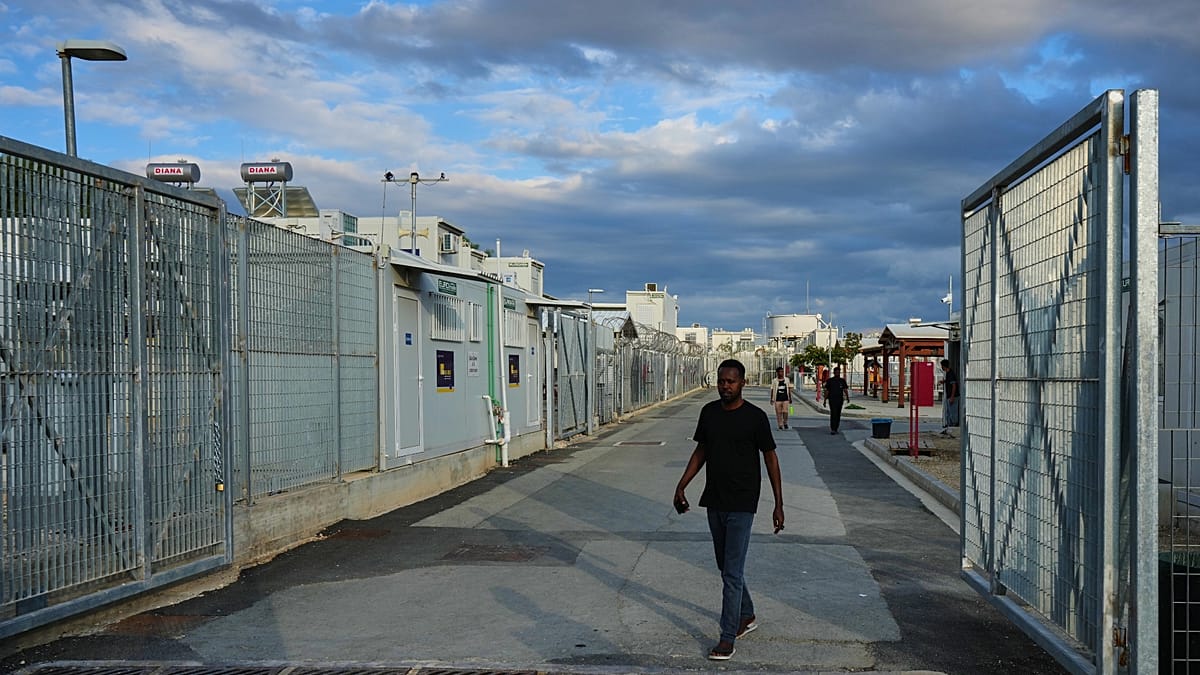
The numbers are stark. While the Commission had called for 30,000 relocations from Italy, Spain, Greece, and Cyprus — the countries deemed to be under migratory pressure — only 562 transfers have taken place so far, all from Cyprus to Lithuania, Romania, Bulgaria, and France. A diplomat confirmed that additional flights from Cyprus are scheduled before the end of the year, bringing the total to 1,283. That is a minuscule share of the 669,000 asylum applications lodged across the EU in 2025.
How member states watered down solidarity
The pact's central mechanism, the Asylum and Migration Management Regulation, requires the Commission to propose an annual solidarity pool. This pool combines a quota of relocations from frontline countries with a quota of financial contributions, which can also be delivered as 'alternative solidarity measures' such as funding infrastructure or equipment. The legal minimum is 30,000 relocations and €600 million in financial support, with each member state assigned a 'fair share' based on population and GDP.
For 2026, Spain, Italy, Greece, and Cyprus were classified as under pressure. The Czech Republic, Croatia, Austria, and Poland secured exemptions because they were deemed to face significant migratory situations themselves. The remaining 18 countries were required to contribute, with Denmark outside the scheme. But member states immediately argued that the first round should be scaled back proportionately, since the new rules would only apply from mid-2026. In December 2025, interior ministers agreed on 21,000 relocations and €420 million in financial contributions — already a reduction from the Commission's proposal.
Even that reduced target proved largely aspirational. Hungary and Slovakia refused to contribute anything, an apparent breach of the mandatory solidarity principle that the Commission has yet to sanction. Of the countries required to contribute, only seven agreed to accept relocated asylum seekers, while eight opted for financial support alone. The total number of pledged relocations fell below 9,000, dramatically shrinking the support available to the frontline states.
Member states also exploited a legal mechanism known as the 'responsibility offset.' Under this scheme, a country can take charge of 'secondary movement' asylum seekers already on its territory — people who should have applied in their first EU country of arrival. This allows contributing countries to count these cases toward their solidarity obligations without physically transferring anyone from the frontline.
Nina Gregori, director of the EU Agency for Asylum (EUAA), confirmed to Euronews that contributing countries had struck bilateral agreements with frontline states to use this mechanism. 'The offset [has been] used for solidarity from Spain, Italy and Greece, so no physical transfers or relocation of asylum seekers [from these countries] is happening in this first policy cycle,' she said. As a result, Cyprus is the only frontline country from which asylum seekers have actually been relocated. The EUAA helped transfer 253 people from Cyprus to Romania and another 80 to Bulgaria.
The meagre numbers raise serious questions about the pact's credibility. The EU has been under intense pressure to manage migration humanely, and the pact was touted as a balanced solution that would ease the burden on southern member states. But the first year suggests that mandatory solidarity is, in practice, optional. The Commission has so far refrained from launching infringement procedures against Hungary and Slovakia, despite their outright refusal to participate.
Some observers see a parallel with other EU migration debates, such as the growing interest in Rwanda-style deportation deals and the controversy over return hubs. The Council of Europe has warned that migration crackdowns must not erode human rights, a concern that resonates as the pact's solidarity mechanisms falter.
For now, the pact's first year is a sobering lesson in European politics: when push comes to shove, national interests often trump collective commitments. The Commission may need to take a harder line if it wants the pact to deliver on its promises — but with elections looming in several member states, political will may remain scarce.