BRUSSELS — The European Commission on Wednesday unveiled measures that will allow EU member states to exempt certain energy-related expenditures from standard fiscal rules, offering a calibrated response to Italy's demands for greater leeway to combat soaring energy costs. The move aims to balance the need for strategic investment with the bloc's commitment to fiscal discipline.
The relaxation applies to countries that have already activated a temporary EU rule permitting higher defence spending without penalty. Under the new provisions, these governments can request that part of their fiscal flexibility also cover investments aimed at reducing dependence on imported fossil fuels — such as electricity grids, renewable energy infrastructure, storage, interconnections, and industrial electrification.
Economy Commissioner Valdis Dombrovskis framed the package as a response to geopolitical uncertainty. "We present this package at a moment of profound geopolitical uncertainty and intensifying global competition," he said. "Competitiveness and fiscal sustainability go hand in hand. Both are essential to Europe's long-term prosperity, resilience, and sovereignty."
Limited Scope, Strategic Intent
Despite the concession, the Commission's flexibility remains tightly constrained. Only 0.3 percent of GDP per year — out of a total 1.5 percent annual allowance — can be allocated to energy resilience measures between 2026 and 2028, with a cumulative ceiling of 0.6 percent of GDP over the three-year period. This design prevents governments from using energy spending as a backdoor to significantly expand deficits, preserving the credibility of EU fiscal rules that require deficits below 3 percent of GDP and debt below 60 percent.
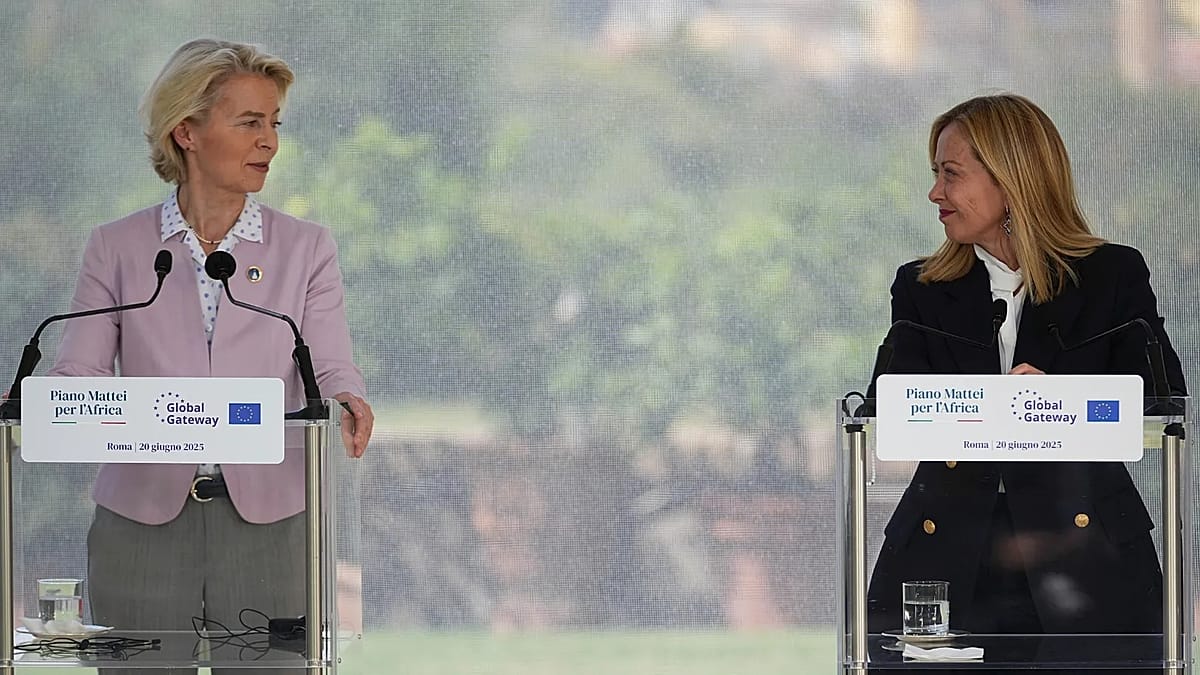
The announcement comes as Italy, with the EU's second-highest debt-to-GDP ratio after Greece, struggles to subsidise households and businesses without breaching fiscal limits. Prime Minister Giorgia Meloni recently accused the EU of being a "bureaucratic giant" that sacrifices competitiveness for ideological approaches, and threatened to withhold support for the bloc's defence investment tool unless energy costs were addressed.
Italian Foreign Affairs Minister Antonio Tajani welcomed the move as a diplomatic victory. "The European Commission has welcomed Italy’s proposals for greater flexibility to tackle the challenges of the energy crisis," he wrote on X. "This is another success for the Italian government, a result of our credibility in Europe."
The broader context includes ongoing global disruptions from the conflict involving Iran, which has driven oil prices up by around 70 percent and kept European gas prices roughly 45 percent above pre-war levels, according to the IMF. While less severe than the 2022 shock, these increases continue to weigh on growth across the continent.
Several EU governments have responded by lowering energy taxes, a move IMF Deputy Director Helge Berger warned could discourage efficiency and fuel switching. The Commission's limited flexibility aims to avoid such pitfalls while still offering relief.
The decision also intersects with other EU priorities. As Brussels prepares new sanctions on Russia and pushes for defence spending, the energy flexibility may help maintain cohesion among member states. For more on related geopolitical dynamics, see Hungary Signals Flexibility on Ukraine EU Talks as Brussels Prepares New Russia Sanctions.
Italy's industrial strategy remains under scrutiny, with the Commission expected to press Rome on reforms. The energy flexibility could provide breathing room, but long-term solutions require structural changes. For background, see Brussels to Press Italy on Industrial Strategy and Tax Reform.
The broader energy shock also affects growth forecasts across Europe. The EBRD recently cut its outlook due to the Iran conflict, as detailed in EBRD Cuts Growth Forecast as Iran Conflict Drives Energy Shock Across Europe and Beyond.