STRASBOURG — The European Parliament rose as one on Tuesday to honor a firefighter who died while battling wildfires in Greece, a moment that set the tone for Ursula von der Leyen's annual State of the Union address. The Commission president used the occasion to promise concrete EU action on the growing threat of wildfires, which have ravaged southern Europe with increasing ferocity in recent years.
The ovation came after von der Leyen acknowledged the sacrifice of the firefighter, whose name was not officially released but whose death underscored the human cost of climate-driven disasters. "We owe them more than applause," she said, referring to the thousands of firefighters across the continent who face ever more dangerous conditions.
Climate at the core
In her speech, von der Leyen placed climate change at the center of her political agenda, ahead of other pressing issues such as artificial intelligence and migration. This marked a deliberate choice, signaling that the European Commission intends to treat the climate crisis as the defining challenge of its mandate.
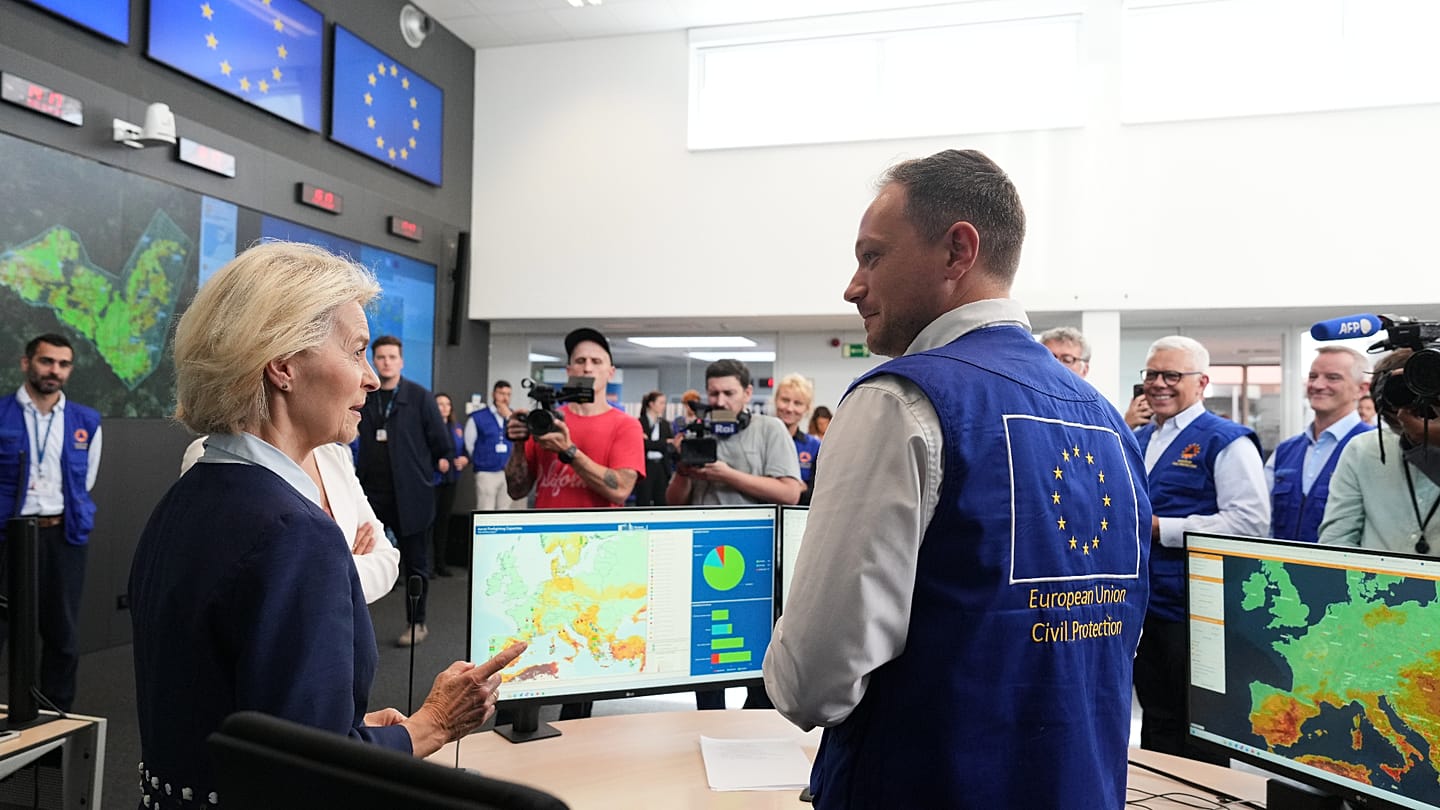
The president outlined plans for a dedicated EU wildfire strategy, which would include better coordination of firefighting resources across member states, pre-positioning of aircraft and equipment in high-risk regions, and increased funding for prevention and reforestation. She also called for a "European civil protection mechanism" that could respond more swiftly to disasters, building on the existing RescEU system.
Von der Leyen's emphasis on climate was welcomed by environmental groups, but some MEPs argued that the EU's current commitments are insufficient. "We need more than promises; we need binding targets and real investment," said a Green MEP from Germany, who spoke on condition of anonymity.
The speech also touched on the broader geopolitical context, including the war in Ukraine and the EU's enlargement agenda. Von der Leyen reiterated the bloc's support for Kyiv and stressed the need for unity in the face of external threats.
On artificial intelligence, she reiterated her call for a phased rollout of frontier AI models, arguing that Europe must lead in setting safety standards while fostering innovation. Her remarks came as the EU's AI Act moves toward implementation, with member states and the European Parliament negotiating final details.
Migration, a perennial issue for the bloc, received less attention than in previous years. Von der Leyen acknowledged the need for a common approach but offered few new proposals, focusing instead on the external dimension and partnerships with countries of origin and transit.
The address was delivered in a chamber still marked by the mixed results of past promises. A year after her last State of the Union, some initiatives have stalled, and the Commission faces criticism over its handling of rule-of-law issues in Poland and Hungary.
For many observers, the standing ovation for the fallen firefighter was more than a gesture of respect; it was a recognition that climate change is no longer a distant threat but a present danger. As wildfires become more frequent and intense, from the hills of Portugal to the islands of Greece, the EU's ability to act collectively will be tested.
Von der Leyen's promise of action will now be measured against the EU's track record. The bloc has set ambitious targets to cut emissions by 55% by 2030, but implementation remains uneven. The new wildfire strategy, if realized, could become a tangible example of European solidarity in the face of a shared crisis.
As the session adjourned, MEPs filed out of the hemicycle in Strasbourg, the weight of the moment still palpable. The firefighter's death, and the ovation that followed, may well become a defining image of this parliamentary term — a reminder of what is at stake as Europe confronts a warming world.