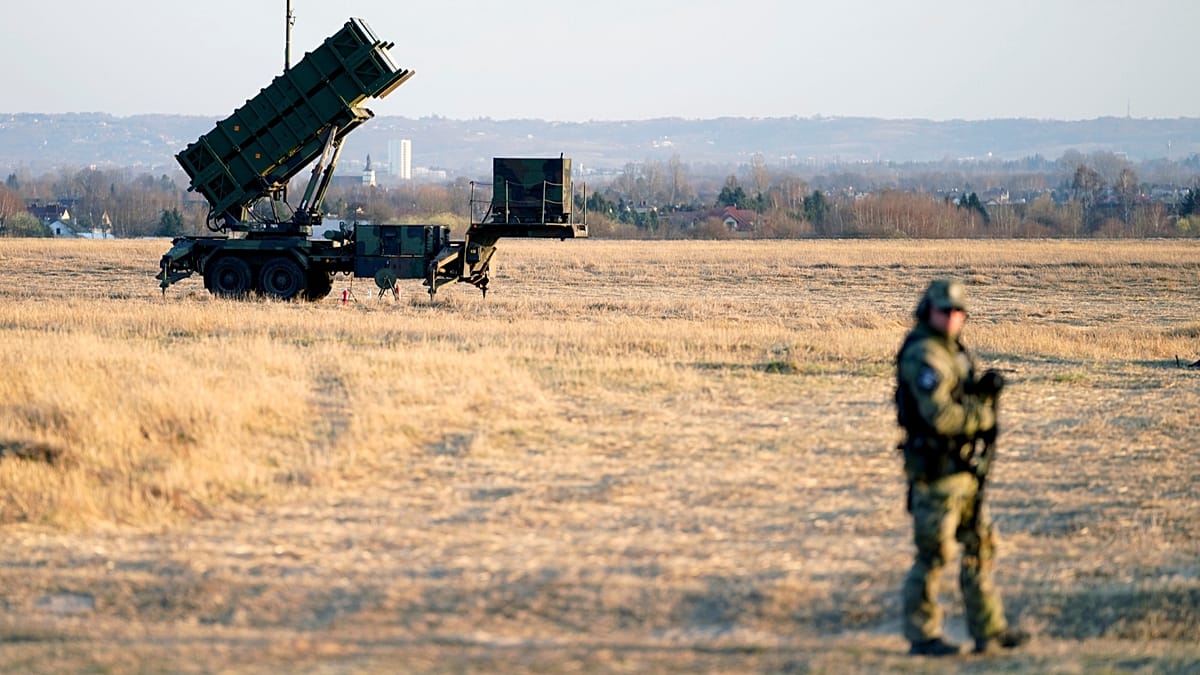
As Ukraine braces for another winter of Russian missile strikes, the European Commission is set to intensify pressure on EU member states holding significant stocks of Patriot interceptor missiles to transfer them to Kyiv. EU officials told Euronews that the issue will be a central topic at an informal defence ministers' meeting on Tuesday in County Wicklow, Ireland.
Spain and Greece, in particular, are expected to face calls to part with some of their interceptor stocks. Ukrainian President Volodymyr Zelenskyy said in late August that deliveries of Patriot interceptors had declined even as Russian attacks intensified. He estimated that Kyiv needs around 300 interceptors to defend against what is shaping up to be a brutal winter in the third year of Russia's full-scale invasion.
The United States, a key supplier of Patriot systems, has been forced to draw heavily on its own reserves to support Israel in its conflict with Iran. This has reduced the pool of interceptors available to replenish allies, including Ukraine, at a critical moment.
Reluctance in Madrid and Athens
Spanish Prime Minister Pedro Sánchez said earlier this year that Madrid had pledged to donate five Patriot missiles to Ukraine. Greek Prime Minister Kyriakos Mitsotakis, however, has resisted previous pressure to transfer any of Athens' six Patriot batteries, arguing they are essential for defending Greek airspace.
One EU diplomat, speaking on condition of anonymity due to the sensitivity of the matter, said the issue of Madrid and Athens holding onto their interceptors is not new. But it is gaining urgency as Zelenskyy's appeals grow louder, with the air-defence system becoming the "debate of the summer," the diplomat said.
The European External Action Service (EEAS), the EU's diplomatic arm, is also in talks with Japan and South Korea to encourage them to share some of their stocks with Ukraine. However, diplomats are wary that potential tensions with China could limit how much these Asian allies are willing to contribute. Greece may also be reluctant to deplete its stockpile amid rising tensions with Turkey in recent months.
Three EU diplomats agreed that Ukraine's shortage of Patriot interceptors is a "big issue" with broader questions about how to fill the gap. "What this will look like, I am not sure," one diplomat said, adding that Tuesday's meeting is informal and therefore not expected to produce formal conclusions.
Broader defence concerns
The effectiveness of Europe's own defences, particularly in the wake of a series of hybrid threats, is also expected to be a key focus of the talks. Moldova, an EU candidate country, was recently shaken by a series of drone incursions. Five unmanned aerial vehicles entered the country's airspace on 27 August, prompting a defiant response from President Maia Sandu.
Meanwhile, a European Commission official revealed to Euronews that Kyiv is considering using the next funding envelope of the €90 billion support loan to purchase anti-ballistic systems, which could be either Patriots or the Franco-Italian SAMP/T NG system. This comes as Ukraine faces a €23 billion budget gap that pressures the EU to disburse funds earlier than planned.
The push for more interceptors is part of a broader debate on how to sustain Ukraine's air defence. Some EU member states have revived discussions on using frozen Russian assets to finance military support, though legal hurdles remain. The EU is also exploring ways to boost its own defence industrial capacity, as highlighted by Italy's Leonardo setting up a unit in Kyiv to tap into Ukraine's drone warfare expertise.
As the meeting in Ireland approaches, the pressure on Greece and Spain is likely to intensify. But with both countries citing national security concerns, it remains unclear whether they will yield to the EU's calls. The outcome of Tuesday's talks could set the tone for how Europe addresses Ukraine's air-defence needs in the coming months.