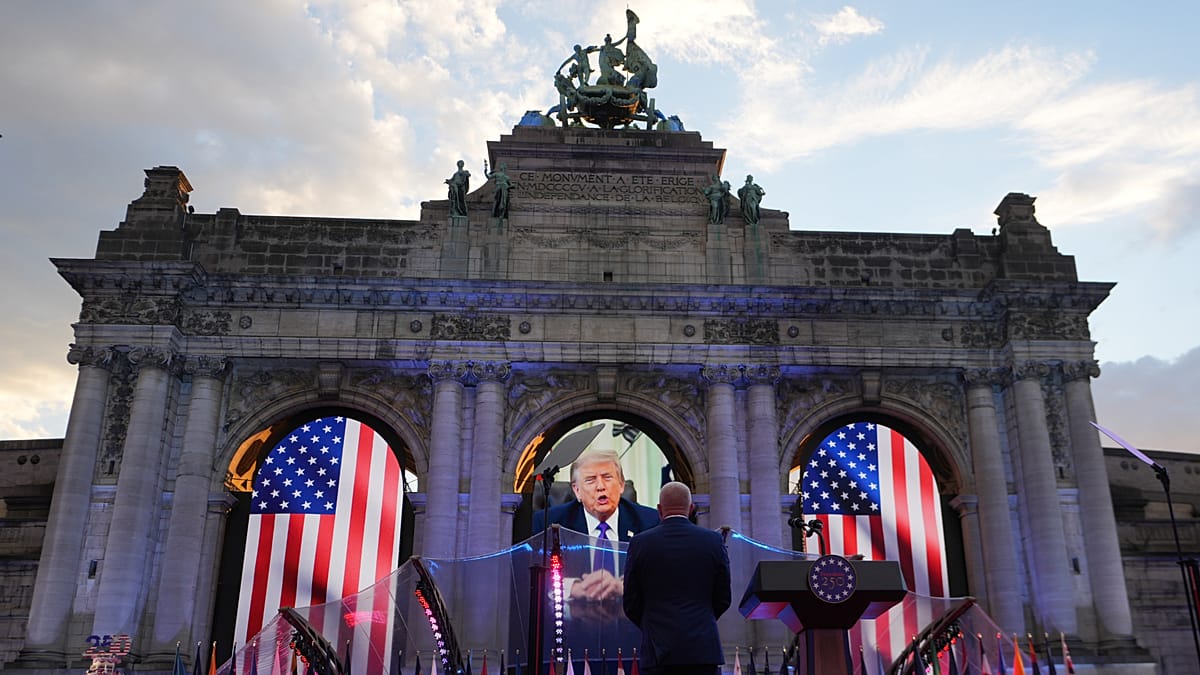
When EU Energy Commissioner Dan Jørgensen lands in Houston this week for the G20 energy ministerial, he will walk into a room where the tectonic plates of global energy policy are grinding against each other. Hosted by the Trump administration from 14–16 September under the banner of “energy abundance,” the meeting is explicitly designed to champion expanded oil and gas production, deregulation, and a rollback of environmental rules that Washington sees as obstacles to investment.
For Brussels, the gathering is an uncomfortable reminder of how far apart the transatlantic partners have drifted on energy strategy. The EU’s approach is rooted in the conviction that energy security comes from reducing dependence on imported fossil fuels—through electrification, renewables, grid upgrades, and efficiency gains. Washington, by contrast, argues that security is best guaranteed by producing more oil, gas, and electricity at home, and by easing the regulatory burden on energy companies.
The contrast is stark, and it is made more awkward by the guest list. Russia, a full G20 member despite its war against Ukraine, will have an official at the table—likely Energy Minister Sergey Tsivilyov, though the White House has not confirmed the name. Venezuela, whose oil sector is central to Washington’s recent diplomatic overtures toward Caracas, is also attending. For Jørgensen, who has repeatedly framed energy independence as a strategic imperative, the presence of these two countries underscores the geopolitical entanglements that the EU is trying to escape.
“For sure it’s a very uncomfortable situation, but he will pass the EU’s message,” a European Commission official told Euronews, speaking on condition of anonymity. “Russia is part of the G20 and the ongoing Presidency was responsible” for the attendance, the official added.
Washington’s message: more supply, fewer rules
The Trump administration has used its G20 presidency to push a pro-production agenda. Interior Secretary Doug Burgum, who is representing Washington in Houston, has previously dismissed G20 energy meetings as exercises in “climate extremism.” This time, he told reporters, the focus is on “increasing supply and increasing security.” The administration has also announced plans to relax US carbon-emissions limits on coal- and gas-fired power plants, a move that aligns with the “energy abundance” theme.
For the EU, this is a direct challenge to its climate leadership. Jørgensen arrives in Houston to defend a model that treats fossil-fuel dependence as a vulnerability, not a strength. But with European gas prices hovering around €83 per megawatt-hour—up from roughly €31 before the recent Middle East escalation—and Brent crude above $100 a barrel, the immediate pressures of high energy costs are hard to ignore.
The European Central Bank has warned that gas prices are becoming an inflation problem, and European consumers are feeling the pinch at the pump. In this context, Washington’s message of abundance may resonate more than Brussels’ longer-term transition narrative.
A delicate diplomatic dance
The presence of Russian and Venezuelan officials turns the meeting into a geopolitical minefield. The EU has been working to end its reliance on Russian fossil fuels, and Baltic leaders have long warned about the risks of engaging with Moscow. Yet Russia remains a G20 member, and the host presidency has the authority to invite whomever it chooses.
Venezuela’s participation is equally fraught. Washington is seeking to deepen energy ties with Caracas and encourage a revival of Venezuelan oil production, even as it continues to pressure the Maduro government. For the EU, which has maintained sanctions on Venezuela, this creates an awkward juxtaposition.
Romanian MEP Virgil-Daniel Popescu, a member of the European People’s Party, urged Jørgensen to avoid a public spat with Washington over the meeting’s name. “The useful line is a shared one: more energy, more security, more production at home. Nuclear and renewables belong together. Gas that replaces a risky import is a security project, not a fight against the transition,” Popescu told Euronews. “The test in Houston is whether we can talk abundance without amnesia—without forgetting Ukraine, and without forgetting that dependence, on fuel or on technology, is still the strategic risk.”
That sentiment captures the EU’s dilemma. Brussels wants to be seen as a constructive partner, not a spoiler, but it also cannot endorse a vision of energy security that ignores the climate crisis or the lessons of Europe’s over-reliance on Russian gas. Recent claims of a Russia-Ukraine energy truce have done little to ease European concerns about Moscow’s reliability as a supplier.
As the G20 meeting unfolds, Jørgensen will have to walk a fine line: defending the EU’s clean-energy transition while acknowledging the immediate pressures of high prices and supply fears. Whether he can persuade Washington to see the value of decarbonisation remains an open question. But for Europe, the stakes are clear—energy policy is not just about economics, but about security, sovereignty, and the future of the continent.