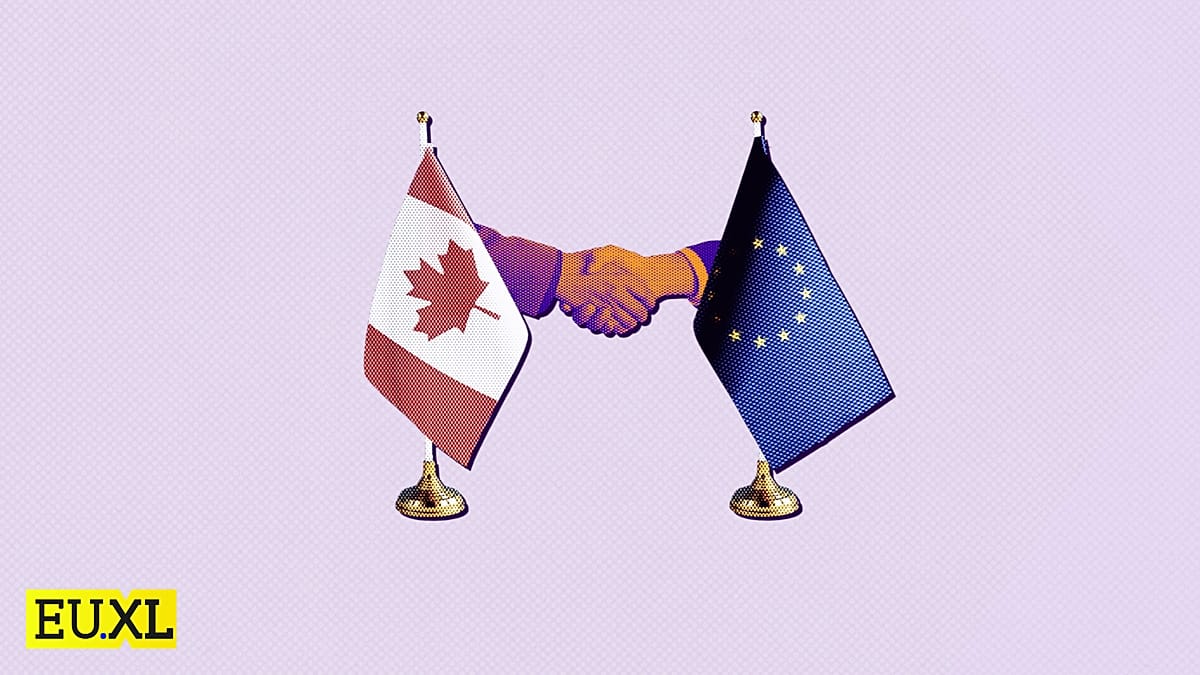
When Ursula von der Leyen stood before the European Parliament on 16 September and proposed an ‘Alliance for the Future’ with Canada, she opened the door to a concept that has no legal definition in the EU treaties: ‘associate membership’. The phrase suggests a relationship deeper than the comprehensive trade deals the bloc already has with Ottawa, but what it would actually entail remains unclear.
Canada would be the first country to hold such a status, but it would not automatically gain EU citizenship, freedom of movement, a seat at the Commission table, or voting rights in the Council or Parliament. Any associate arrangement would have to be negotiated from scratch, with the details hammered out over years of talks.
Building blocks already in place
Canada is not starting from zero. The Comprehensive Economic and Trade Agreement (CETA) has removed duties on 99% of tariff lines, and Canadian research teams can already lead projects funded under Horizon Europe. Since August, Canadian firms have been eligible to participate in EU-funded defence procurement, a sign of growing security cooperation.
The economic rationale is clear. According to Ottawa, 71.7% of Canada’s goods exports in 2025 went to the United States, while the EU is its second-largest trading partner, with bilateral trade worth roughly $178 billion. Brussels, for its part, is keen to secure access to critical minerals, boost defence production capacity, and gain a reliable partner in the Arctic, where Russia’s presence is expanding.
Yet the political path is steep. An association agreement would require unanimity among the 27 member states and the consent of the European Parliament. Several diplomats have told reporters that national capitals were not consulted before von der Leyen’s announcement, and Germany has already questioned the label. CETA itself, provisionally applied since 2017, still awaits ratification in ten member states, a reminder of how contentious such deals can be.
The timing is also delicate. Donald Trump has threatened tariffs if he sees the arrangement as hostile to US interests, adding a layer of transatlantic tension. For Canada, diversifying away from its overwhelming reliance on the US market is a strategic priority, but the EU’s internal politics could slow any progress.
Some observers see the proposal as a way to strengthen the rules-based international order at a moment when traditional alliances are under strain. Others worry it could dilute the meaning of EU membership, blurring the line between full members and privileged partners. The proposed model would be unprecedented, and its implications for the EU’s institutional balance are far from settled.
For now, the idea remains a political signal rather than a concrete plan. Von der Leyen’s initiative may be aimed at sending a message to Washington and Beijing, but turning it into reality will require navigating the EU’s complex decision-making machinery. As transatlantic realignment continues, the EU and Canada are exploring new ways to cooperate, but the road to associate membership is likely to be long and uncertain.
In the meantime, the EU’s own budget talks are stalling, and member states are clinging to familiar positions, as budget negotiations drag on. Adding a new category of membership to the mix may not be the most pressing issue, but it reflects a broader debate about how the EU should engage with like-minded democracies beyond its borders.
Whether Canada ever becomes an associate member remains to be seen. What is clear is that the proposal has put the question on the table, and it will not go away quietly.