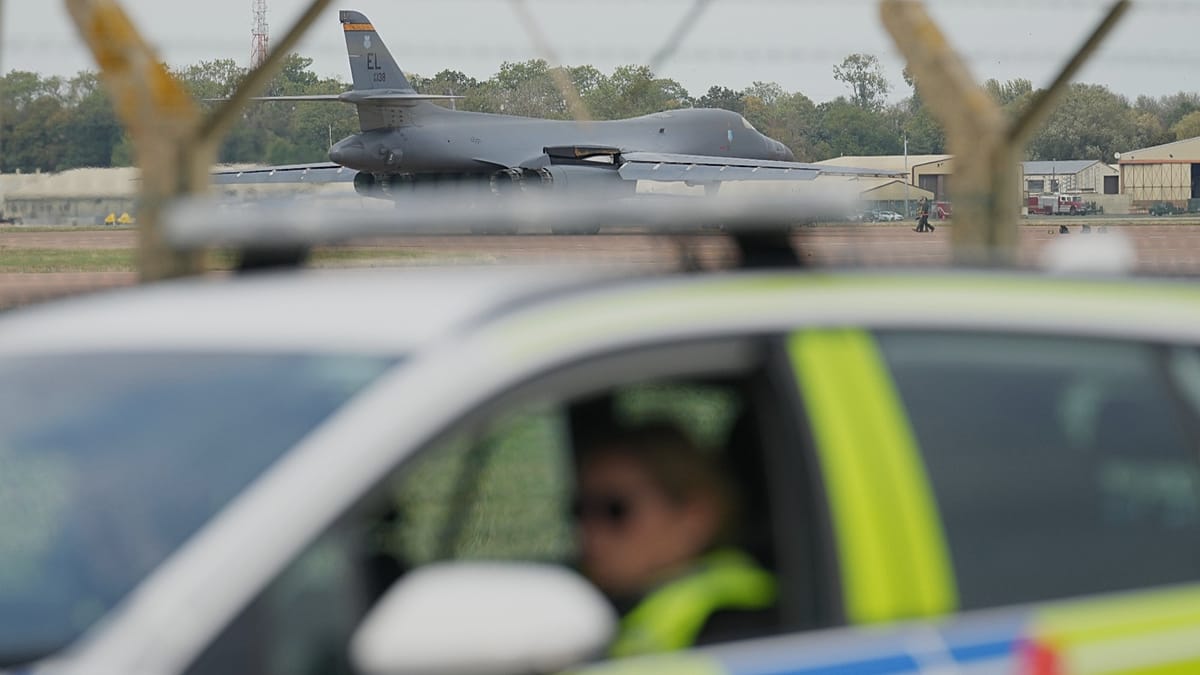
Israeli Prime Minister Benjamin Netanyahu has claimed that Israel provided Britain with intelligence about an alleged Iranian plot to attack RAF Fairford, only to see London respond with sanctions on Israeli settlement products. Speaking to Fox News late on Wednesday, Netanyahu described the sequence of events as evidence of what he called "anti-Israel propaganda" within the British government.
"You want to hear how absurd things are there and how far the anti-Israel propaganda has gone?" Netanyahu told host Sean Hannity. "We gave the Brits the intel that there was going to be an attack and it's an Iranian-sponsored attack. And pretty much the next day, they slapped sanctions on us."
The remarks come amid a tense period in UK-Israel relations. On 8 September, the government of Prime Minister Andy Burnham announced sanctions on goods produced in Israeli settlements in the occupied West Bank, citing a surge in settler violence against Palestinians. Foreign Secretary Ed Miliband described the violence as ethnic cleansing, a charge Israel rejects.
Fairford incident and investigation
The alleged plot centred on RAF Fairford, a base in Gloucestershire, about 160 kilometres west of London, used by the US military for operations in the ongoing conflict with Iran. On 29 September, a local resident reported seeing masked men near vans heading towards the base. Police arrested five British men on suspicion of explosives and terrorism offences, but after three days of searches, including by a bomb disposal team, they found no explosives. They did, however, retrieve a "quantity of petrol," according to police.
On Wednesday, The Times reported that one of the five suspects had tipped off police himself before the group was apprehended, a claim that has added to the confusion surrounding the case. All five have been released on bail.
British Prime Minister Andy Burnham said there were "strong indications" that Iran was involved in suspicious activity near the base. Iran's embassy in London "categorically rejects and strongly condemns" the speculation, and Foreign Minister Abbas Araghchi posted on X that Burnham was "barking up the wrong tree."
US President Donald Trump has also suggested a possible Iranian role, and his Secretary of State Marco Rubio indicated that intelligence agencies were aware of the suspects. UK officials have remained tight-lipped about the investigation.
The incident has strained an already complex relationship. Britain did not join the US and Israel in the war against Iran that began on 28 February, and initially refused Trump's request to use UK bases for strikes. However, in March, then-Prime Minister Keir Starmer agreed to allow US forces to use British bases for what he called "defensive" operations against Iranian missiles and launch sites, following Iranian attacks on UK interests and Gulf allies. American B-1 and B-52 bombers have since flown missions from Fairford, the only mainland UK base used for this purpose.
Iran has warned that it considers any base used to attack its territory a legitimate target. The episode has also highlighted the broader European security dilemma, as the continent grapples with the fallout of the Iran conflict and the hybrid threats from other adversaries.
Netanyahu's comments come as he faces renewed scrutiny over his handling of security threats, including warnings before the October 7 attacks. His government has also been criticised for expanding settlements, which the EU and most member states consider illegal under international law.
The UK's decision to impose sanctions on settlement goods has been welcomed by pro-Palestinian groups but criticised by Israel and its allies. Burnham, who took office in late July, has adopted a tougher line on Israel than his predecessor, arguing that previous policies did not sufficiently address Palestinian rights.
As the investigation continues, the affair underscores the delicate balance European nations must strike between their security alliances and their commitments to international law and human rights. For now, the full picture of what happened at RAF Fairford remains unclear, but the political fallout is already being felt in London, Jerusalem, and Tehran.