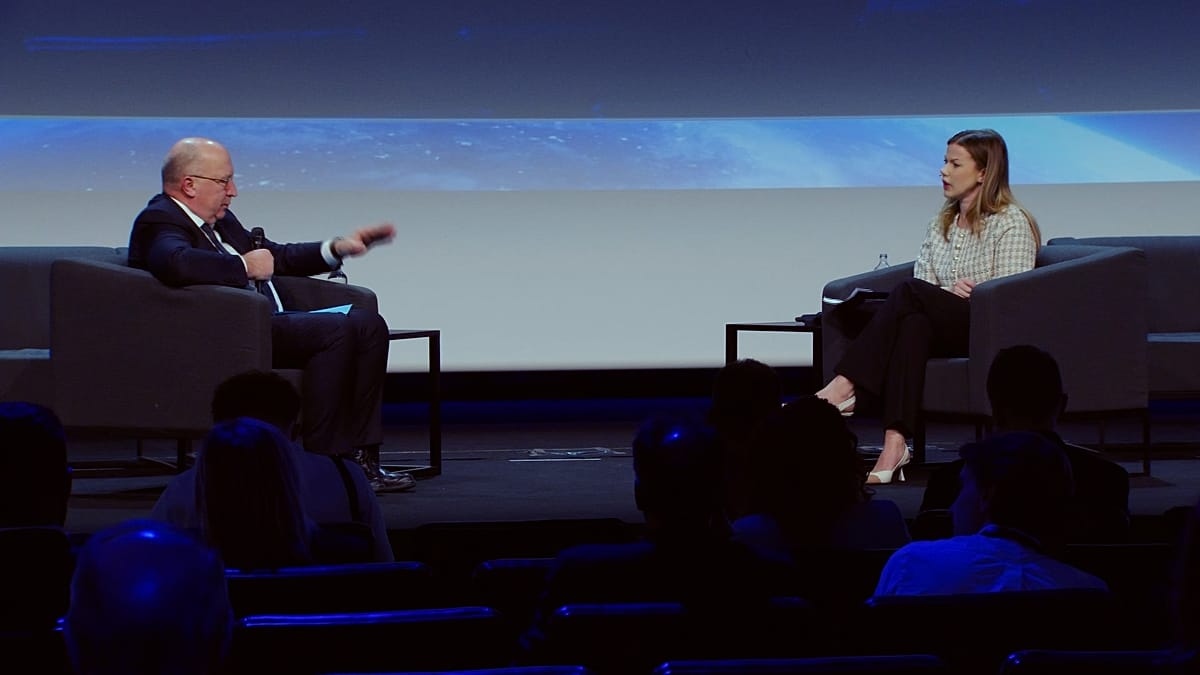
European Commissioner for Defence and Space, Andrius Kubilius, has delivered a sobering assessment of the bloc's strategic autonomy, stating that its ambitious satellite communications programme remains years away from rivalling existing private systems like SpaceX's Starlink. Speaking at the European Space Conference in Brussels, Kubilius outlined a timeline where the EU's multi-orbital constellation, IRIS², will only become operational "around 2029".
A Stopgap in the Stars
To bridge this multi-year gap, the European Union is activating its Governmental Satellite Communications programme (GOVSATCOM). Kubilius described this as a "first step" and a necessary precursor to provide secure satellite connectivity amid rising geopolitical threats. "To avoid having an empty space now for several years... we definitely need to develop some precursor capabilities," he told Euronews.
The Commissioner framed this technological lag within a broader, urgent strategic dilemma. He pointed to the recent US national defence strategy, which clearly prioritises the Indo-Pacific and Western Hemisphere. This shift, Kubilius argued, means Washington will likely "ask Europeans to take more responsibility" for continental defence, potentially diminishing the American military presence across Europe.
"When we have IRIS², it will be better than Starlink," Kubilius asserted. However, he immediately conceded that "for the time being, the EU is not there yet."
The Dependency Dilemma
Kubilius identified a critical vulnerability in what he termed "strategic enablers"—capabilities like space-based services, air refuelling, and heavy airlift—where Europe remains "quite heavily dependent" on the United States. Building indigenous capacity in these areas is, therefore, a matter of "utmost importance and urgency." The GOVSATCOM initiative is a move in that direction, though he acknowledged its service volume and quality are lower than what IRIS² promises.
This dependency extends far beyond satellites. The Commissioner highlighted the pivotal role of the approximately 100,000 US troops stationed in Europe, calling them the "backbone military force" capable of swift movement across the continent. He questioned whether the EU's collection of 27 national armies could effectively replace this cohesive, standing force, especially in a crisis.
Recalling former EU foreign policy chief Josep Borrell's characterisation of some national forces as "bonsai armies"—"very nice, very costly, but small"—Kubilius cast doubt on their collective efficacy. The core challenge, he stated, is facing a "battle-tested" military force from Russia, which he called "the biggest threat in conventional terms for European security." The EU side, he noted, lacks comparable recent combat experience. This strategic reality underscores calls from figures like Estonian President Alar Karis for a rapid EU defence buildup to reinforce deterrence.
The path forward, as outlined by Kubilius, is one of rational but accelerated capacity-building. The EU cannot immediately replace the US nuclear umbrella or its troop deployments, but it must develop the foundational capabilities to ensure it is not left defenseless. This technological and military push must also integrate hard-won lessons from current conflicts, a point emphasised by former Finnish Prime Minister Sanna Marin regarding Ukraine's battlefield experience.
While the IRIS² project charts a course for a more autonomous European future in space and defence, the coming years will test the bloc's ability to manage risk and dependency. As Kubilius's remarks make clear, the journey toward strategic sovereignty is a long-term endeavour, fraught with immediate challenges that require pragmatic, unified action from all twenty-seven member states.