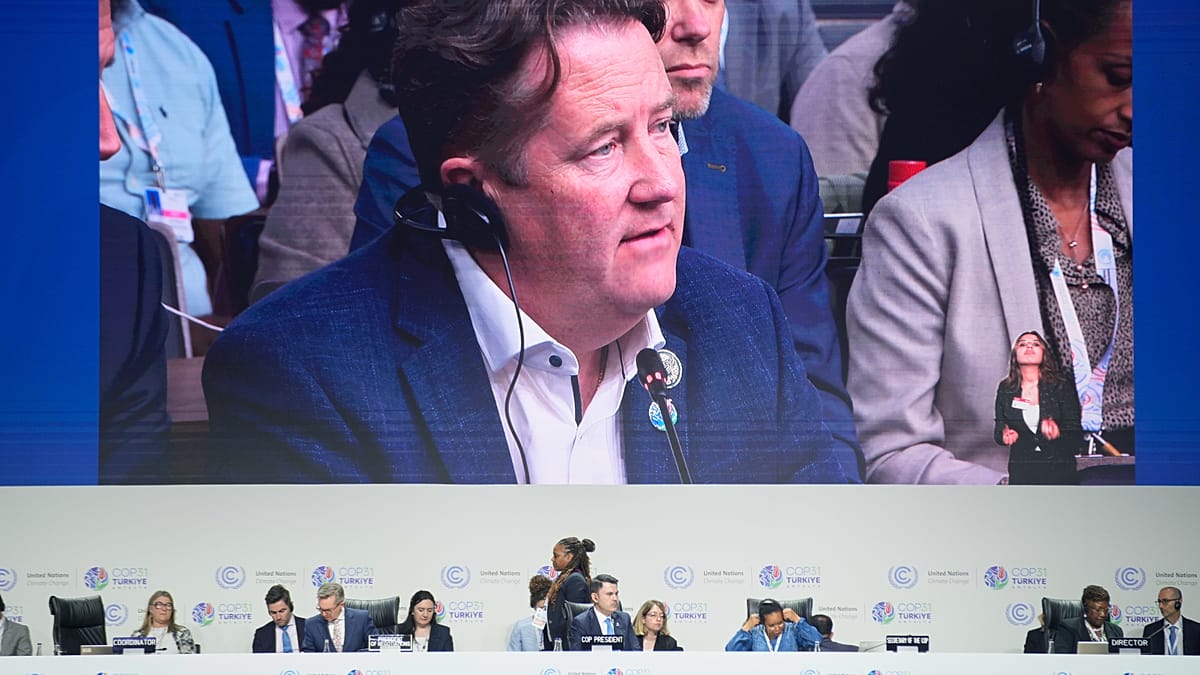
The European Commission is preparing a sweeping overhaul of the UN climate summit process, warning that the current system is becoming ineffective because a single country can block an agreement among nearly 200 parties. The move follows the chaotic COP31 conference in Antalya, Turkey, which ended without a political declaration reaffirming the commitment to transition away from fossil fuels agreed at COP28 in Dubai.
Brussels argues that the failure exposed deeper flaws in the process, from a lack of transparency and cumbersome decision-making to the inability of annual summits to translate existing commitments into action. “If we want to save the COP, it needs to reform itself,” a senior Commission official said during a briefing after the negotiations.
The Commission will draw up its reform proposals in consultation with EU member states. It wants to ensure that work outside the formal negotiations—through coalitions of willing countries—continues to advance the climate transition that governments have so far struggled to deliver through consensus. Despite the COP31 fiasco, several EU countries, including Finland, Denmark, Portugal, and Spain, have unveiled their own roadmaps to phase out fossil fuels.
Overhauling the COP system
The EU says there needs to be more transparency about how negotiations are conducted, when proposals are introduced, and why positions change. “The minister from Ghana objected to the very significant lack of transparency and democratic process in the COP. So we are far from alone in saying this. Preparing for the next COP means that we have to immediately draw the lessons from what happened,” the senior Commission official added.
The lack of visibility over decision-making also became a source of frustration during COP31, with Brussels saying its plans will try to overcome negotiating deadlocks. Under the current consensus-based system, a single country can prevent an agreement from being adopted, even when a large majority of parties support it. Brussels wants to explore ways to address this problem while preserving the democratic legitimacy of the multilateral process.
The Commission is also concerned that countries are repeatedly reopening political agreements instead of delivering on them, particularly the COP28 commitment to transition away from fossil fuels, which was later endorsed by the UN summit in Santa Marta, Colombia. As the collapse in Antalya showed, the divisions over fossil fuels remain deep.
The Commission says the EU and a coalition of more than 130 countries sought to reaffirm the Dubai agreement, including its commitments to triple renewable energy capacity, double energy efficiency improvements, and transition away from fossil fuels. But negotiations broke down over resistance from a group led by Saudi Arabia, which Brussels accused of seeking to replace the fossil fuel transition language with a greater emphasis on carbon capture and storage.
The proposed text included a target for carbon capture on a gigaton scale by 2035, which the EU considered “unacceptable” because it risked allowing continued fossil fuel use. “That is simply impossible to achieve and impossible to accept, because this would have given a lifeline to the continuation of fossil energy in the energy system,” the senior Commission official argued.
The Commission estimates that between 80 and 90 countries objected to the final proposed political declaration, including all 27 EU member states, the UK, Norway, and Switzerland, as well as more than 40 least developed countries. Japan, Canada, and Egypt also supported the objections politically, according to the EU's assessment.
Brussels rejects COP31's total failure
Brussels insisted the failure to agree on the declaration does not mean the entire summit was unsuccessful. The senior Commission official cited decisions on other parts of the climate agenda, including carbon markets and the $103 billion pledged by development banks for climate finance, as positive steps forward. However, the breakdown has intensified questions about whether the UN process can maintain political momentum on climate action when countries remain deeply divided over the future of fossil fuels.
The Commission also wants to streamline the expanding range of issues discussed at climate summits. An increasing number of working groups and parallel initiatives are diverting attention from the core task of reducing emissions and implementing the Paris Agreement, the senior Commission official said. Trade measures have consumed significant negotiating energy despite not being central to the original purpose of the COP process, the Commission noted.
As Brussels pushes for reform, it is also mindful of the broader geopolitical context. The EU's efforts to preserve multilateral climate diplomacy come at a time when domestic pressures and public debates over security and spending are competing for attention. Yet the Commission insists that reforming the COP process is essential to keep the world on track to meet the Paris Agreement goals.