The European Centre for Disease Prevention and Control (ECDC) is dispatching two epidemiologists to the heart of the ongoing Ebola outbreak in the Democratic Republic of the Congo (DRC). The deployment, announced on Monday, aims to bolster surveillance and the overall response to the epidemic, according to ECDC chief Pamela Rendi-Wagner.
This move is part of a broader European effort that has been active since the outbreak began in May. The ECDC has already sent experts to support the Africa Centres for Disease Control and Prevention, conducted an assessment of exit screening at airports in the DRC and Uganda in June, and deployed specialists to South Sudan.
The latest figures from health authorities show more than 7,600 confirmed infections and over 3,670 deaths, with nearly 80% of cases concentrated in Ituri province. Rendi-Wagner stressed the severity of the situation, noting that the outbreak "has already cost so many lives."
Risk to Europe remains low
Despite the ongoing crisis, the ECDC maintains that the risk to European citizens is very low. The virus spreads through direct contact with infected bodily fluids, including blood, secretions, and organs, as well as through contaminated bedding or clothing. While sporadic importations to the European Union cannot be ruled out, the agency says that "multiple independent importations are unlikely even in a pessimistic scenario in which the number of cases continue to rise in the affected regions."
This assessment aligns with the broader European approach to global health security, which has seen the EU support outbreak responses in Africa while safeguarding its own citizens. The recent West Nile virus outbreaks in Greece and Cyprus highlight the continent's ongoing vigilance against infectious diseases.
Vaccine trials begin in Ituri
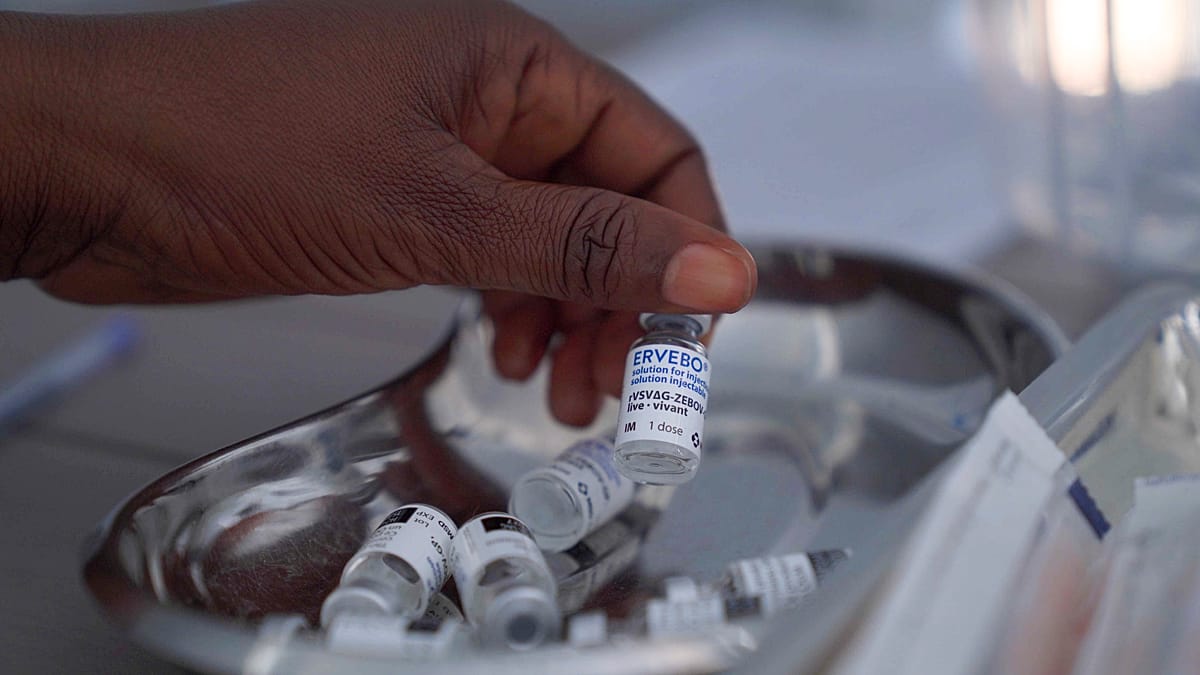
On the same day, the World Health Organisation (WHO) announced the start of a research vaccination programme in Ituri for the Ervebo vaccine, the only licensed Ebola vaccine. The programme targets health workers and other frontline personnel at heightened risk of exposure.
Some 20,000 doses of Ervebo have been allocated to study its effectiveness against the Bundibugyo virus, which is responsible for the current outbreak and for which no licensed vaccine or treatment exists. This is part of a larger batch of 70,000 doses made available to Congolese authorities for outbreak response and related research.
The vaccine has proven "highly effective" against the Ebola Zaire virus in past outbreaks, but its ability to provide "meaningful protection" against Ebola Bundibugyo disease remains unproven, the UN said in a statement. The trial will provide crucial data on whether Ervebo can be repurposed to combat this distinct strain.
The deployment of European experts and the launch of clinical trials underscore the international community's commitment to containing the outbreak. As the ECDC continues to monitor the situation, its experts will work alongside local and international teams to strengthen surveillance and response efforts in the affected regions.
For Europe, the focus remains on preventing the virus from spreading beyond the DRC's borders while supporting research that could lead to new tools against Ebola. The outcome of the Ervebo trials will be closely watched by public health officials across the continent and the world.